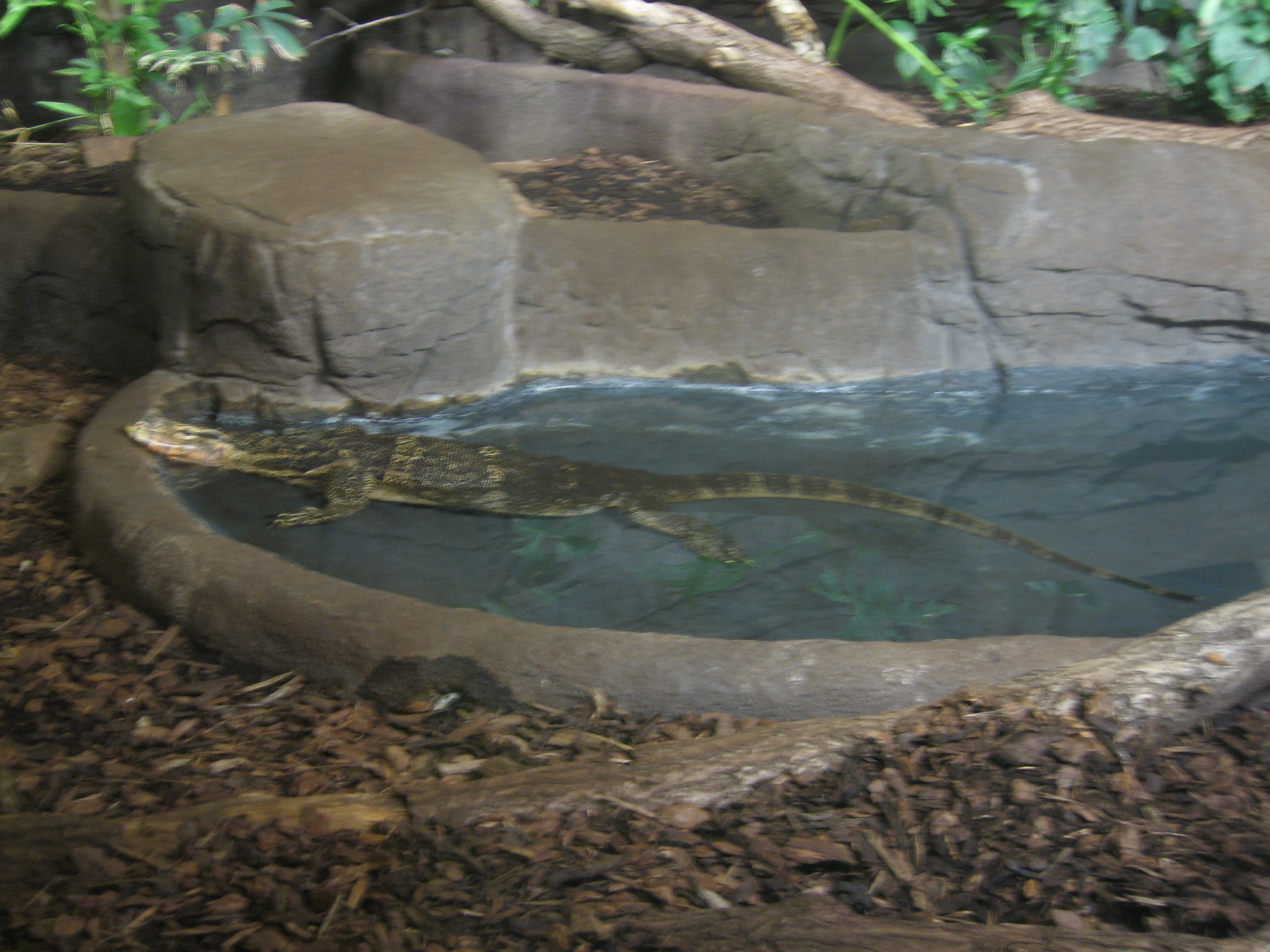
A giant, highly intelligent, semi-aquatic Asian monitor and one of the largest lizards on Earth. Captive-bred individuals can become remarkably tame, but their enormous size, power, and space needs make them an advanced, legally regulated commitment (restricted in places such as Hawaii and some other jurisdictions).
ℹ️
Educational only. KinStation content is reviewed by licensed veterinarians but cannot replace an in-person exam. Always consult a licensed veterinarian or board-certified specialist for diagnosis, treatment, or any decision affecting your pet's health.
🩺 Need expert help with your asian water monitor?
Connect with a specialist near you or ask a licensed vet — never substitute online guidance for hands-on care in an emergency.
One of the largest lizards in the world: commonly 1.5-2 m (5-6.5 ft) and occasionally more (up to ~2.5 m), with heavy adults exceeding 20 kg. Males larger than
Lifespan
12–20 years
Social needs
solo
Native region
South and Southeast Asia (India and Sri Lanka through Indochina, Malaysia, and Indonesia)
Origin
Old World
Climate
🌴 Tropical
Water type
💧 Freshwater
Family
Varanidae
Genus
Varanus
Part of the Monitor lizards
Monitors (genus Varanus) are large, intelligent, powerful Old World lizards with high heat, space, and enrichment needs. Many species reach impressive sizes and are strictly for experienced keepers; some are legally restricted.
From the minimum an animal needs to be kept humanely, up to the ideal setup. Bigger is almost always better — minimums are floors, not targets.
Photo coming soon
Minimum
Adult floor-room enclosure
12 × 6 × 6 ft (custom)
Varanus salvator reach 6–9 ft and are highly intelligent semi-aquatic monitors. Minimum is a custom 12×6×6 with deep pool, deep substrate, basking surface 50 °C, 10–12% UVB. Expert-only.
Photo coming soon
Recommended
Dedicated reptile room
16 × 8 × 8 ft with pool
Dedicated reinforced room with large swimming pool, deep substrate, climbing structure, and full thermal/UVB gradient. Two-keeper handling. Diet is very large.
Ideal
Indoor/outdoor enclosure
Indoor room + outdoor pen, seasonal
Indoor reinforced room paired with seasonal predator-proof outdoor enclosure with deep pool. Most keepers should not own this species — they are wild zoo-grade animals.
FakirNL / CC BY-SA 4.0 (Wikimedia Commons)
Life & growth stages
How this animal changes through its life — each stage often has its own care, diet and space needs.
Photo coming soon
Egg / Neonate
Most reptiles lay leathery- or hard-shelled eggs incubated by ambient warmth, though some snakes and lizards give live birth. Incubation temperature can influence sex and development in many species.
Photo coming soon
Hatchling
Hatchlings emerge as fully formed miniatures of the adult, often using an egg tooth to slit the shell. They are independent from birth but small and vulnerable, and may show brighter or different juvenile patterning.
Photo coming soon
Juvenile
Juveniles grow steadily, shedding their skin periodically as they enlarge. Coloration and proportions shift toward the adult form, and growth rate depends heavily on temperature, diet, and basking/UVB access.
Adult
Adults reach the species' full length and mass and become sexually mature. Many reptiles show sex differences in size, coloration, or features (such as larger heads, hemipenal bulges, or femoral pores), and continue to shed throughout life.
Habitat & enclosure
Adults need a custom, room-sized enclosure (commonly 3.7 m / 12 ft long or larger) with a large heated pool deep enough to fully submerge, sturdy basking platforms, deep substrate, and robust, escape-proof construction. Provide a basking surface of 49-54 C (120-130 F), ambient around 29-32 C (85-90 F), a cool retreat, and high humidity (70-90%). Strong UVB is required.
Substrate
Use a deep, moisture-retentive mix of topsoil and sand (with cypress or coir) that supports burrowing and holds humidity. The large water section needs strong filtration and an easily cleaned bottom. Given their size and waste output, plan substrate depth, drainage, and cleaning access carefully.
Equipment & setup
Essentials: very high-output basking heat on a thermostat, strong UVB, pond-grade aquatic filtration plus a water heater for the large pool, accurate thermometers/hygrometer, and an extremely sturdy, escape-proof, lockable enclosure built to contain a powerful, intelligent giant lizard.
Diet
Carnivorous and opportunistic. Offer varied whole prey such as fish, rodents, chicks, crayfish, shellfish, and insects, emphasizing leaner items to avoid obesity. Feed portions and frequency that keep the animal lean and active rather than bulky. Supplement with calcium as appropriate. Avoid a monotonous all-rodent diet.
Behavior & temperament
Diurnal, exceptionally intelligent, and strong swimmers and climbers. Captive-bred, well-socialized water monitors are among the more trainable large lizards and can become genuinely tame, but they remain powerful animals with sharp claws, a strong tail, and a serious bite that demand experience and respect. House singly; they are not social. Provide enrichment to engage their intelligence.
Health
Obesity is extremely common in captivity and shortens lifespan; also watch for metabolic bone disease, thermal burns, respiratory infection, and skin problems from poor water quality. Provide correct high basking temps, large clean filtered water, generous space, and a varied lean diet. Quarantine and parasite-screen new animals.
Tips, DIY & hacks
Plan the enclosure and budget before acquiring one; an adult water monitor needs a dedicated room-sized build with a swimming pool, not a tank. Choose a captive-bred, well-handled juvenile and invest in daily, consistent interaction to develop tameness. Check local, state, and national laws, as large monitors are restricted or banned in some jurisdictions (for example, listed as a restricted animal in Hawaii) and require responsible, lifelong commitment.