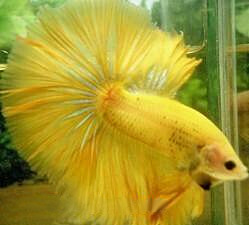
Bettas, also called Siamese fighting fish, are tropical freshwater labyrinth fish from Southeast Asia. They require heated, filtered tanks despite their reputation for surviving in tiny bowls.
ℹ️
Educational only. KinStation content is reviewed by licensed veterinarians but cannot replace an in-person exam. Always consult a licensed veterinarian or board-certified specialist for diagnosis, treatment, or any decision affecting your pet's health.
🩺 Need expert help with your betta?
Connect with a specialist near you or ask a licensed vet — never substitute online guidance for hands-on care in an emergency.
Bettas are labyrinth-breathing freshwater fish from Southeast Asia, ranging from the famously aggressive domestic Siamese fighting fish to many subtle, peaceful wild species. They favor warm, soft, calm, well-covered tanks and are renowned for bubble-nest spawning.
From the minimum an animal needs to be kept humanely, up to the ideal setup. Bigger is almost always better — minimums are floors, not targets.
Photo coming soon
Minimum
Heated, filtered tank
5 gal (≈ 19 L)
Bowls and tiny 'betta cubes' are not acceptable. A betta needs a heated (24–27 °C), gently filtered, cycled 5-gallon tank with live or silk plants and resting spots near the surface.
Recommended
Planted nano tank
10 gal (≈ 38 L), planted
A 10-gallon planted tank gives stable water parameters, gentle flow, hides, and surface cover. More water volume means a more forgiving, enriching environment.
JohnnyMrNinja / CC BY-SA 3.0 (Wikimedia Commons)
Photo coming soon
Ideal
Aquascaped tank
15–20 gal, aquascaped
A larger aquascaped tank with dense planting, leaf litter, and resting ledges lets a betta patrol, explore, and build bubble nests. Possible tankmates only with careful research.
Life & growth stages
How this animal changes through its life — each stage often has its own care, diet and space needs.
Photo coming soon
Egg
Fish eggs are small, translucent spheres, often laid in clutches on plants, substrate, or in a nest — or carried/brooded by a parent in livebearing and mouth-brooding species. A dark eye spot and the curled embryo become visible inside as development progresses.
Photo coming soon
Fry
Newly hatched fry are tiny and semi-transparent, frequently still carrying a yolk sac that fuels them before they feed freely. They lack full fin structure and adult coloration, staying near cover until they can swim and forage on their own.
Photo coming soon
Juvenile
Juveniles look like miniature adults but with developing fins and muted or different markings; many species shift pattern and color as they mature. Growth is rapid at this stage given clean water and steady feeding.
Adult
Adults show the species' full size, finnage, and mature coloration, and are sexually mature. Many fish develop sex-specific differences in size, color, or fin shape, which can intensify during breeding.
Color & pattern variants
Natural variants occur in the wild; selectively bred (man-made) variants were developed in captivity.
Like goldfish, bettas suffer from a damaging myth — that they thrive in tiny cups or vases because they survive in small puddles in the wild. In reality, a healthy betta needs a properly sized, heated, filtered aquarium. Many keepers recommend a minimum of several gallons, fully cycled, with a stable tropical temperature and gentle filtration. Bettas are native to warm waters of Southeast Asia and become sluggish and prone to illness when kept cold.
Filtration should provide gentle flow, because bettas are not strong swimmers and their long fins are easily buffeted by a strong current; a baffled outflow helps. Furnish the tank with soft silk or live plants and smooth hides, avoiding sharp plastic plants that snag and tear delicate finnage. A resting spot near the surface, such as a broad leaf, is appreciated.
Two features of betta biology shape their housing. They breathe air at the surface using a labyrinth organ, so unobstructed surface access is essential; and they are accomplished jumpers, so a secure lid (with room for the warm, humid air they gulp) is mandatory. A stable, warm, clean, gently filtered tank is the foundation of betta wellbeing.
Substrate
Smooth fine gravel or sand is gentle on their flowing fins; dark substrate enhances color, and planting with soft live plants like Anubias, java fern, or floating plants gives cover without sharp edges.
Equipment & setup
A heated, filtered tank of at least 5 gallons with a heater set to 78-80F and a low-flow filter (sponge or baffled) since bettas dislike strong current. A tight lid with a small air gap is essential because they are labyrinth breathers and skilled jumpers.
Diet
Bettas are carnivores with small stomachs, built to eat protein-rich prey. A high-quality betta-specific pellet makes a convenient staple, supplemented several times a week with frozen or freeze-dried foods such as bloodworms, daphnia, or brine shrimp for variety and enrichment. Plant-based flake foods designed for community fish are a poor fit for a carnivore.
Portion control matters more than many owners expect. A betta's stomach is roughly the size of its eye, so a few small pellets once or twice a day is plenty; many keepers also include a weekly fasting day to support digestion. Overfeeding both bloats the fish and fouls the water.
The most common feeding mistakes are simply too much food and too little variety. Uneaten food breaks down and degrades water quality quickly in a small tank, so feed modestly, watch that everything is eaten, and remove any leftovers. Soaking dried foods before feeding can help reduce digestive and buoyancy issues.
Behavior & temperament
The betta's species name, 'fighting fish,' reflects real biology: males are territorial and will fight other males and sometimes any similar-looking fish, which is why males must always be housed alone — never two together. Females can occasionally be kept in a carefully managed, heavily planted 'sorority,' but this requires space, lots of cover, and constant monitoring, and is not a beginner project.
Flaring — spreading the gills and fins in a dramatic display — is normal territorial behavior and is sometimes even used as brief 'exercise' with a mirror, but chronic flaring at a tankmate or reflection signals ongoing stress and should be reduced. A relaxed betta cruises, explores, and rests on plants and decorations.
Despite their pugnacity toward rivals, bettas are notably interactive with their keepers. Many learn to recognize the person who feeds them, swim to the front of the tank in greeting, follow a finger along the glass, and can even be trained to perform simple tricks. This responsiveness is a big part of their popularity. Building a calm routine and providing enrichment keeps a betta engaged and reduces stress behaviors.
Health
As with all aquarium fish, the foundation of betta health is stable, warm, clean water, so a test kit and a reliable heater are essential. Most betta illness is downstream of chilling, poor water quality, or stress, and a consistent maintenance routine prevents the majority of problems. Quarantining new fish or plants helps avoid introducing disease.
Common conditions include fin rot (often from poor water quality), ich (white spot), velvet (a fine gold-dust parasitic disease), swim-bladder disorders, and dropsy, a serious sign of internal disease marked by a swollen body and raised scales. Bettas' long fins also make fin damage and subsequent infection relatively common.
Warning signs that something is wrong include clamped fins, lethargy or lying on the bottom, loss of color, refusal to eat, white spots or a dusty gold sheen, frayed or receding fins, and abnormal buoyancy. The first step for nearly all of these is to check and correct the water and temperature; aquatic veterinary guidance is valuable for diagnosis and treatment, which should not be guesswork.
Tips, DIY & hacks
Add a betta hammock, broad leaf, or floating log near the surface for resting, and use silk or live plants instead of plastic to avoid tearing fins. A current-baffled filter outlet (sponge over the nozzle) keeps them comfortable, and a small mirror used briefly provides flaring enrichment without stress.
Origin & history
The betta (Betta splendens) originates in the shallow waters, rice paddies, and slow streams of Thailand and neighboring parts of Southeast Asia. In its homeland the fish has a long history tied to its combative nature: wild and early domesticated bettas were bred and staged in organized contests, a pastime popular enough that it was, by some accounts, regulated and taxed by Siamese rulers — the origin of the name 'Siamese fighting fish.'
Over generations, breeders selected away from fighting prowess and toward spectacular color and finnage, producing the rainbow of modern varieties: the flowing veiltail, the symmetrical halfmoon, the spiky crowntail, the compact plakat, and an ever-expanding palette of colors and patterns. Today the betta is one of the most popular and recognizable aquarium fish in the world, and it holds the status of Thailand's national aquatic animal.
Anecdotes & owner lore
Community experience and cultural notes — not veterinary advice. Every animal is an individual; treat these as colour, not care instructions.
Betta keepers quickly learn their fish has a personality. A betta will often rush to the front glass the moment its owner appears, 'dancing' for food, and many learn to follow a fingertip back and forth or to swim through a hoop for a treat — behavior that wins bettas a devoted following despite their reputation as solitary brawlers. The dramatic full flare, gills and fins spread like a Spanish fan, is a showstopper that owners sometimes prompt briefly with a mirror, marveling at how a two-inch fish can look so imperious.
The betta's split reputation — ferocious fighter, exquisite ornament — runs through its whole history, from the betting contests of old Siam to the glamour of modern halfmoon show fish prized for symmetry and color. Owners also share quieter observations: the way a healthy betta builds delicate rafts of bubbles at the surface (a male's nest-building instinct, a sign of a content fish), the favorite leaf it returns to for a nap, and the slow, deliberate cruise of a fish that clearly regards the tank — and the room beyond it — as its personal kingdom.
Common ailments
Ich (white spot disease) — common
Fin rot — very common
Dropsy — rare
Velvet disease — common
Reviewed and signed off by: KinStation Editorial - pre-launch draft (pending DVM review)