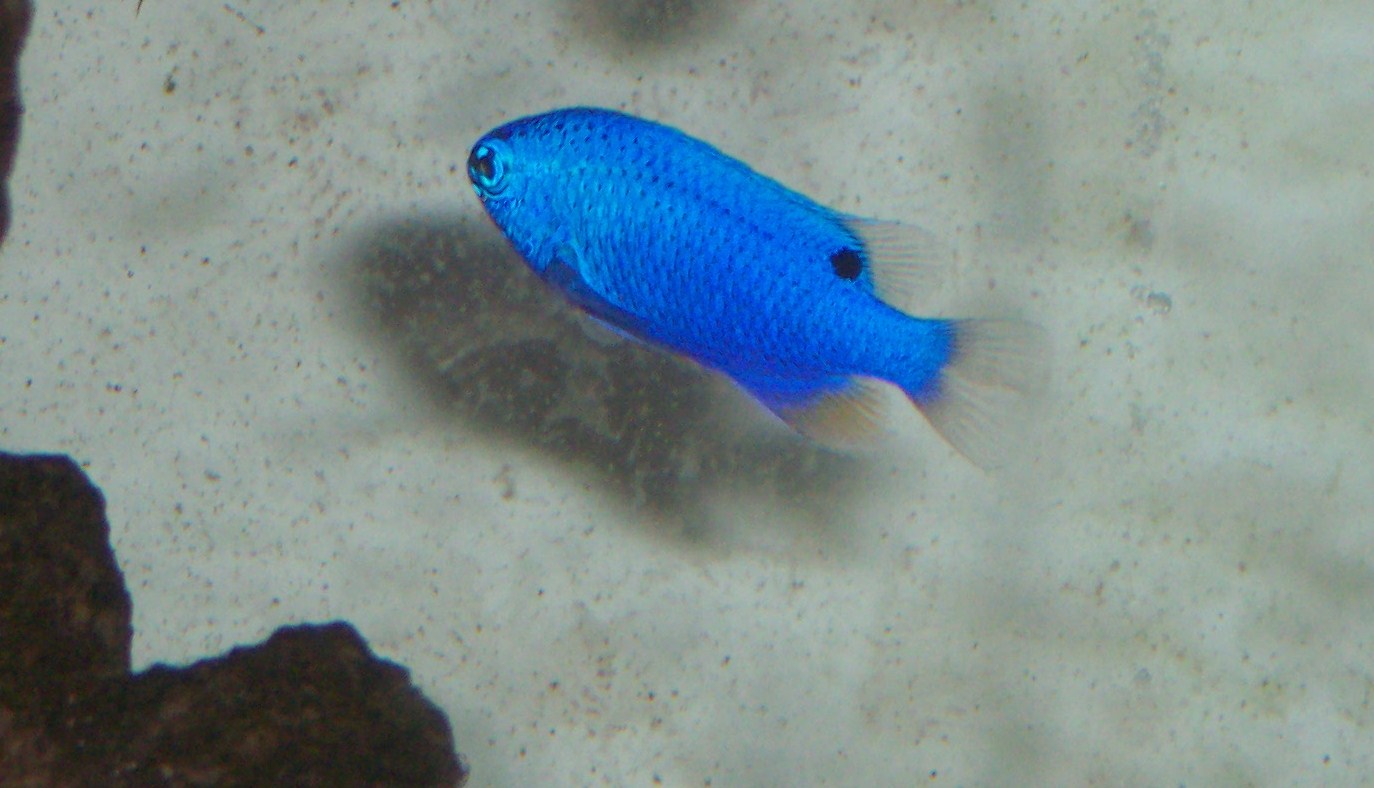
An electric-blue reef fish that is one of the cheapest and hardiest marine species sold, but also one of the most aggressive for its size. Males often carry an orange tail (and sometimes face); females and juveniles are usually all blue. Stunning and reef-safe, but its feistiness makes stocking order and tankmate choice critical.
ℹ️
Educational only. KinStation content is reviewed by licensed veterinarians but cannot replace an in-person exam. Always consult a licensed veterinarian or board-certified specialist for diagnosis, treatment, or any decision affecting your pet's health.
🩺 Need expert help with your blue damselfish?
Connect with a specialist near you or ask a licensed vet — never substitute online guidance for hands-on care in an emergency.
Indo-Pacific: from the eastern Indian Ocean across the western and central Pacific
Origin
Old World
Climate
🌴 Tropical
Water type
🌊 Marine
Family
Pomacentridae
Genus
Chrysiptera
Part of the Damselfish & Chromis
Small, hardy, often brilliantly colored reef fish of the family Pomacentridae, including the schooling chromis and the bolder damsels. Popular, inexpensive, and largely reef-safe, they range from peaceful planktivores to feisty, territorial species.
From the minimum an animal needs to be kept humanely, up to the ideal setup. Bigger is almost always better — minimums are floors, not targets.
Photo coming soon
Minimum
Single damsel reef
30 gal / 114 L reef
Chrysiptera cyanea is hardy but aggressive. A 30-gallon reef with ample live rock for territories is the minimum. Single specimen — they ruthlessly defend territory against same-species rivals.
Recommended
Larger reef community
55 gal / 208 L reef
55-gallon reef with rock-rich aquascape and tankmates added before the damsel, so it doesn't claim the whole tank. Reef-safe and bulletproof, but the wrong tankmates suffer.
Glmory / Public domain (Wikimedia Commons)
Photo coming soon
Ideal
Mature display reef
75 gal+ / 284 L+ display reef
Established 75-gal+ reef where multiple territories exist and a small group can coexist (introduced together, with overstocking buffering aggression). Excellent splash of colour.
Life & growth stages
How this animal changes through its life — each stage often has its own care, diet and space needs.
Photo coming soon
Egg
Fish eggs are small, translucent spheres, often laid in clutches on plants, substrate, or in a nest — or carried/brooded by a parent in livebearing and mouth-brooding species. A dark eye spot and the curled embryo become visible inside as development progresses.
Photo coming soon
Fry
Newly hatched fry are tiny and semi-transparent, frequently still carrying a yolk sac that fuels them before they feed freely. They lack full fin structure and adult coloration, staying near cover until they can swim and forage on their own.
Photo coming soon
Juvenile
Juveniles look like miniature adults but with developing fins and muted or different markings; many species shift pattern and color as they mature. Growth is rapid at this stage given clean water and steady feeding.
Adult
Adults show the species' full size, finnage, and mature coloration, and are sexually mature. Many fish develop sex-specific differences in size, color, or fin shape, which can intensify during breeding.
Habitat & enclosure
House a single blue damsel in at least 110 litres (30 gallons); their aggression scales down only with space and abundant cover. Keep temperature 24-27 C (75-82 F), pH 8.1-8.4, specific gravity 1.020-1.026 (salinity ~30-35 ppt), with ammonia and nitrite zero and nitrate low.
Provide plenty of live rock with caves and crevices to break sightlines and give the fish a defensible territory, which reduces bullying. Moderate flow and standard reef lighting suit it well; this is an undemanding, adaptable fish.
Substrate
A fine aragonite sand bed over plentiful live rock is ideal, providing the caves and territory the fish relies on. Dense, well-structured rockwork is the single best tool for managing its aggression.
Equipment & setup
A cycled marine system with live rock, a protein skimmer, a reliable heater, and a powerhead for moderate flow is more than adequate. Standard reef LED lighting is fine; this hardy fish has no special equipment demands.
Diet
An unfussy omnivore that eagerly accepts marine flake and pellet, frozen mysis and brine shrimp, chopped meaty foods, and marine algae or nori. Feed once or twice daily. In the wild it feeds on zooplankton, small invertebrates, and algae.
Behavior & temperament
Reef-safe with corals and most invertebrates, but notoriously territorial and aggressive toward other fish, especially in smaller tanks and toward newcomers or its own kind. Best kept as a single specimen; groups usually fight until one dominates unless the tank is large with heavy rockwork. Add it last so it cannot claim the whole tank, and avoid pairing it with shy or slow species. Its boldness can stress peaceful community fish, so choose robust, similarly assertive tankmates.
Health
Extremely hardy and disease-resistant, but still capable of carrying or developing marine ich and marine velvet, so quarantine even tough damsels. The main practical 'health' issue is the stress and injury it inflicts on tankmates, and the difficulty of catching it from established rockwork if it must be removed. Keep water parameters stable to maintain its already strong immunity. (Health information is educational only and not a substitute for advice from an aquatic veterinarian.)
Tips, DIY & hacks
Add the blue damsel last in your stocking plan so established tankmates can hold their own. Provide a maze of rockwork to diffuse aggression, and be aware it can be very hard to recapture, so consider its temperament before adding it. Drip-acclimate and quarantine despite its toughness, as it can introduce disease to a clean system.