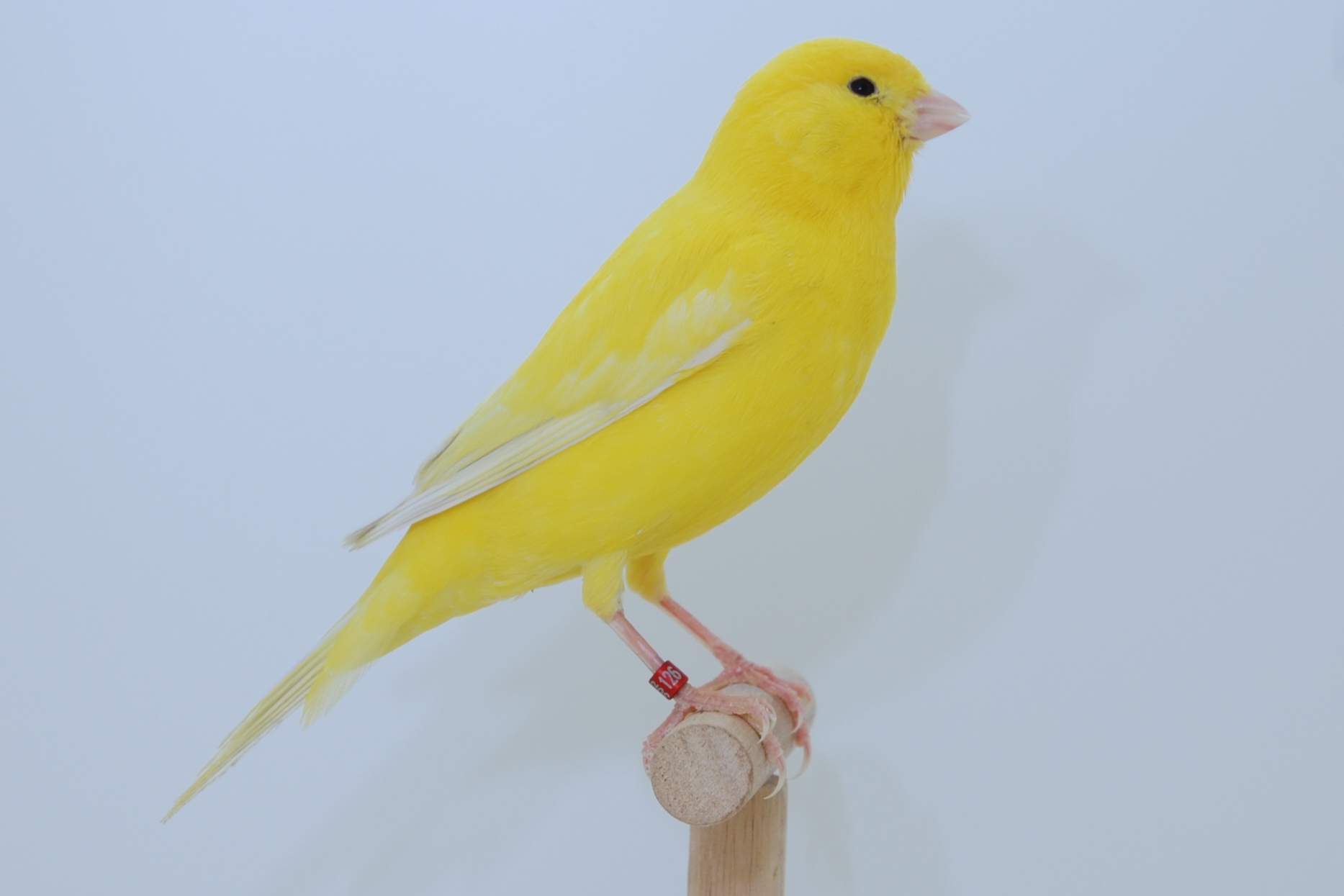
The domestic canary is a small, hardy songbird kept for centuries for its melodious song. A hands-off but rewarding pet, it needs a long flight cage and, for males, space to sing.
ℹ️
Educational only. KinStation content is reviewed by licensed veterinarians but cannot replace an in-person exam. Always consult a licensed veterinarian or board-certified specialist for diagnosis, treatment, or any decision affecting your pet's health.
🩺 Need expert help with your domestic canary?
Connect with a specialist near you or ask a licensed vet — never substitute online guidance for hands-on care in an emergency.
domesticated (worldwide); wild ancestor (Atlantic canary) from the Canary Islands, Madeira and the Azores
Origin
Old World
Climate
🍂 Temperate
Family
Fringillidae
Genus
Serinus
Part of the Canaries
Domesticated finches of the genus Serinus bred for centuries as song, color and type (form) birds.
More canaries coming soon.
Sounds & video
🔊 What does a domestic canary sound like?
Serinus canaria forma domestica - audio 01 ies
Frank Vincentz · Wikimedia Commons · CC BY-SA 3.0
🎬 Video
Serinus canaria forma domestica - video 01 ies
Frank Vincentz · Wikimedia Commons · CC BY-SA 3.0
Habitat & space requirements
From the minimum an animal needs to be kept humanely, up to the ideal setup. Bigger is almost always better — minimums are floors, not targets.
Photo coming soon
Minimum
Wide flight-style cage
≈ 24 × 16 × 18 in (60 × 40 × 45 cm)
Canaries fly horizontally, so a cage wider than it is tall with multiple wood/natural perches at different heights is the welfare floor — taller round cages waste space and stress the bird. Provide a stable room temperature (18–24 °C), daily out-of-cage flight or a much larger cage, a shallow bath, and varied perch diameters to protect feet. Canaries can be kept singly, but males are best housed alone or in roomy same-sex/mixed groups since rival males fight.
Recommended
Flight cage
≈ 36 × 18 × 24 in (90 × 45 × 60 cm)
A long flight cage lets a canary actually fly between perches, which is essential for fitness and natural behaviour. Add natural-branch perches, swings, foraging, a daily bath, full-spectrum lighting, and keep temperatures stable away from draughts and kitchen fumes. This space supports singing condition and prevents the boredom and obesity common in cramped cages.
lwolfartist / CC BY 2.0 (Wikimedia Commons)
Photo coming soon
Ideal
Indoor/garden aviary
Walk-in aviary, ≥ 6 ft long
A planted indoor or outdoor aviary with real flying distance, natural branches, foliage, and bathing is the most natural setup and produces the healthiest, most vocal birds. Outdoors needs a frost-free, draught-free shelter, predator-proofing, and protection from extreme heat or cold. Canaries can be colony-housed here outside the breeding season, though breeding males still need separating to avoid fighting.
Life & growth stages
How this animal changes through its life — each stage often has its own care, diet and space needs.
Photo coming soon
Egg
Birds develop inside a hard-shelled egg incubated by the parent(s). Egg size, shell color, and clutch size vary by species; the embryo develops over days to weeks before hatching.
Photo coming soon
Hatchling / Chick
Hatchlings are either altricial — naked, blind, and dependent on parents (typical of parrots and songbirds) — or precocial — downy, mobile, and self-feeding soon after hatching (typical of poultry and waterfowl). Down gives way to the first feathers.
Photo coming soon
Juvenile / Fledgling
Fledglings grow in their juvenile plumage and begin to fly and feed themselves, though they may still beg from parents at first. Juvenile feathering is often duller than the adult and is replaced as the bird matures.
Adult
Adults attain full body size and mature plumage, and are capable of breeding. Many species show distinct adult coloration, and in sexually dimorphic birds males and females differ in plumage, size, or markings.
Color & pattern variants
Natural variants occur in the wild; selectively bred (man-made) variants were developed in captivity.
Canaries are flight birds whose welfare depends on **horizontal flight length** rather than cage height — they fly side to side and do not climb cage bars like parrots.
- **Minimum** — a single canary needs a flight cage no smaller than about 24×16×16 in (61×41×41 cm), with the long axis horizontal and clear for flying, and bar spacing of about 1.0–1.3 cm (3/8–1/2 in). Avoid round 'ornamental' cages and tall narrow ones, which deny proper flight.
- **Recommended** — a flight cage 30–36 in (76–91 cm) or more in length, with perches at the ends to encourage flying across the span and varied perch diameters.
- **Ideal** — a long indoor or outdoor flight that lets the bird truly fly; canaries thrive with room to exercise.
Keep them in a stable, draft-free spot with natural daylight cycles, which strongly influence molting and song, and provide a shallow bath dish. As with all birds, keep them away from PTFE/Teflon fumes, smoke, and aerosols.
Substrate
Line the cage tray with plain paper towel or newspaper for easy daily changes and droppings monitoring; avoid sand sheets or grit on the floor since canaries do not need grit and loose substrate just hides waste. Keep the bare wire grate above the liner so birds cannot pick through soiled material.
Equipment & setup
Use a wide flight-style cage with horizontal bars and multiple natural-wood perches of varying diameters (canaries fly more than they climb), a shallow bath dish, and full-spectrum/UVB lighting on a 10-14 hour photoperiod to support song and breeding cycles. They tolerate normal room temperatures (around 18-24 C) and need no supplemental heat if kept out of drafts.
Diet
Base the diet on a quality **canary seed mix** (canary grass seed with small millets), supplemented with **egg food** for protein (especially during molt and breeding), fresh leafy greens and vegetables, sprouted seed, and a source of grit, cuttlebone, and minerals for calcium. Formulated pellets can also be offered and are encouraged by many avian vets to broaden nutrition beyond seed. Greens and variety help prevent the nutritional problems of an all-seed diet. Provide fresh water daily for drinking and bathing. Avoid avocado, chocolate, caffeine, and salt.
Behavior & temperament
Canaries are primarily admired for their song: males sing to establish territory and attract mates, and selective breeding has produced renowned 'song' breeds. They are largely hands-off birds — generally not tamed or handled, but enjoyed for their voice, color, and lively activity. Males are usually kept individually because two males will compete and may fight, and a solo male typically sings best; females sing little. Canaries are not flock-dependent in the way finches are and often do perfectly well housed alone, though they should never be cramped. Song naturally diminishes during the annual molt, which is normal and not a sign of illness.
Health
Use an avian veterinarian familiar with small songbirds. Canaries are hardy but, like other small passerines, are susceptible to **air sac mites** (causing clicking, wheezing, and open-mouthed breathing), scaly-face/leg mites, and respiratory infections, and they can suffer the nutritional problems of seed-only diets. They are sensitive to drafts, sudden temperature swings, and poor air quality. The annual molt is a demanding period requiring good nutrition and rest. Quarantine new birds, keep the cage clean, and seek prompt veterinary care for any fluffed, lethargic, or labored-breathing bird, as small birds deteriorate quickly.
Tips, DIY & hacks
Vary perch thickness and add a few springy fresh willow or fruit-tree twigs to exercise feet and prevent bumblefoot; offer a clip-on bath two to three times a week, which canaries love and which keeps plumage in song condition. Cuttlebone and a separate cup of greens (dandelion, broccoli) are cheap, effective calcium and vitamin sources.
Origin & history
The domestic canary descends from the wild island canary (Serinus canaria) of the Macaronesian islands — the Canary Islands, Madeira, and the Azores. After Spanish sailors brought the birds to Europe in the 15th and 16th centuries, centuries of selective breeding produced a remarkable range of 'type,' 'color,' and 'song' breeds, from the rolling song of the Roller to the bright plumage of color canaries. Canaries also have a notable place in industrial history: their sensitivity to toxic gases made them living detectors in coal mines, the origin of the phrase 'canary in a coal mine.' Today they are among the most widely kept cage birds in the world.
Anecdotes & owner lore
Community experience and cultural notes — not veterinary advice. Every animal is an individual; treat these as colour, not care instructions.
The canary's cultural footprint is enormous for so small a bird: the 'canary in a coal mine,' beloved cartoon canaries, and the canary-yellow color named after it all trace back to this little finch. Breeders speak with real reverence about song lineages, and serious 'song canary' competitions are judged on the structure and quality of a male's tune much as one might judge a musical performance. Owners often describe the simple daily pleasure of a male canary tuning up in a sunny window, and the small seasonal sadness when the bird falls quiet during its molt — followed by the satisfaction of the song returning, often even richer, once new feathers are in.
Common ailments
Scaly face / leg mites (Knemidocoptes) — common
Air sac mites — common — Loss of song with 'clicking' breathing is a classic warning sign.
Reviewed and signed off by: KinStation Editorial — pre-launch draft (pending DVM review)