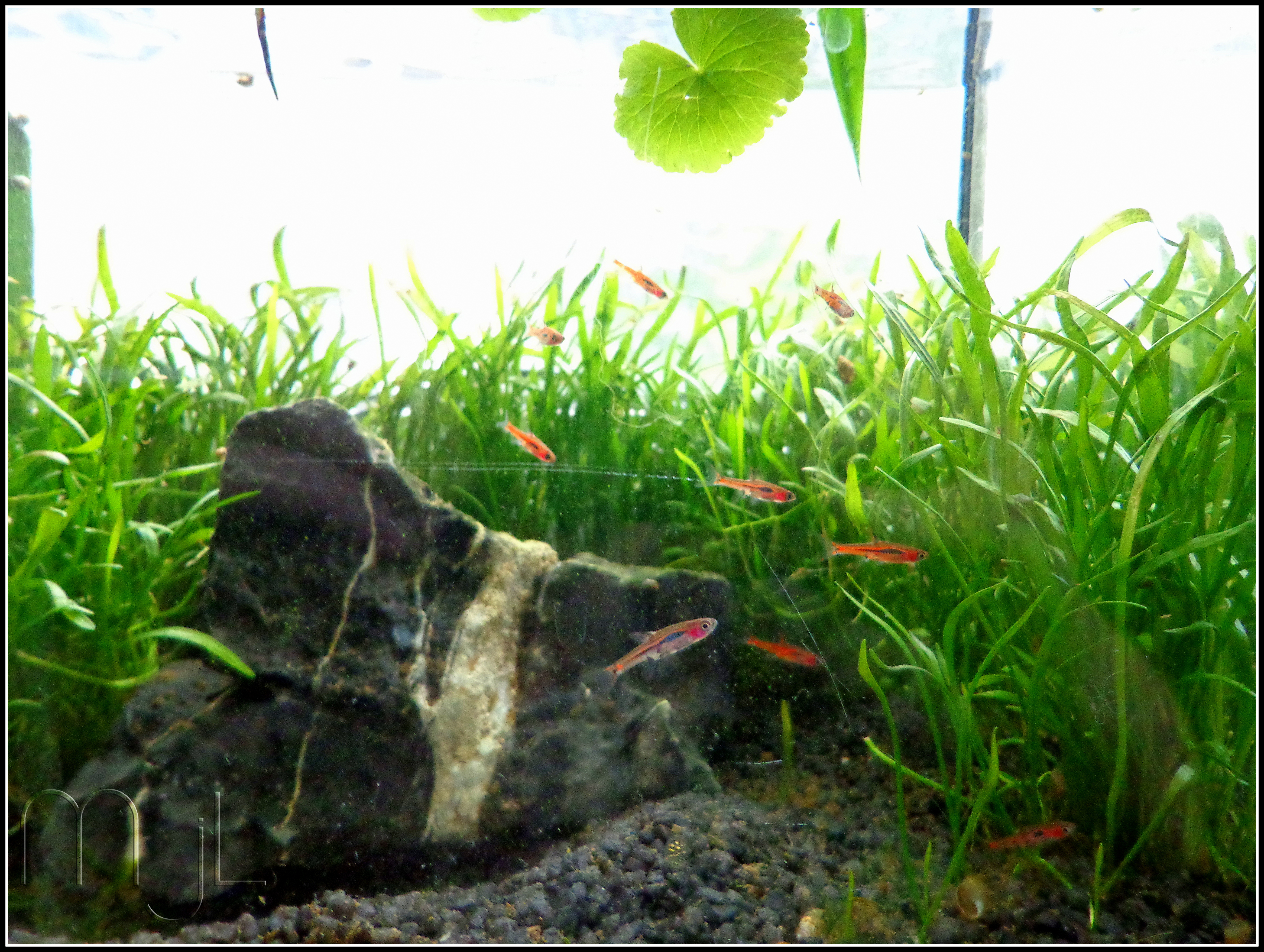
One of the smallest and most intensely colored nano fish, the chili rasbora is a glowing red micro-rasbora from the blackwater peat swamps of Borneo. It is perfect for planted nano and shrimp tanks but is sensitive to water quality and needs soft, acidic, mature conditions to truly shine.
ℹ️
Educational only. KinStation content is reviewed by licensed veterinarians but cannot replace an in-person exam. Always consult a licensed veterinarian or board-certified specialist for diagnosis, treatment, or any decision affecting your pet's health.
🩺 Need expert help with your chili rasbora?
Connect with a specialist near you or ask a licensed vet — never substitute online guidance for hands-on care in an emergency.
Tiny — around 1.5-2 cm (0.6-0.8 in); males are a vivid deep red with a dark lateral stripe, females duller and rounder.
Lifespan
4–6 years
Social needs
group
Native region
Southwestern Borneo, Indonesia (Kalimantan peat-swamp forests)
Origin
Old World
Climate
🌴 Tropical
Water type
💧 Freshwater
Family
Cyprinidae
Genus
Boraras
Part of the Rasboras
Small, peaceful schooling cyprinids — from tiny nano species to mid-sized community fish — that show their best color and behavior in groups within soft, well-planted tanks.
From the minimum an animal needs to be kept humanely, up to the ideal setup. Bigger is almost always better — minimums are floors, not targets.
Minimum
Planted nano shoal
10 gal / 38 L planted
Boraras brigittae reaches only 0.7 in. A 10-gallon planted nano with a shoal of 8+, soft acidic blackwater, leaf litter, and very gentle filtration. Easily out-competed — species-only or peaceful tiny shrimp/snail tank.
VivienneHarper / CC BY-SA 3.0 (Wikimedia Commons)
Photo coming soon
Recommended
Aquascaped blackwater
15 gal / 57 L aquascaped
15-gal aquascaped blackwater nano with a shoal of 12+, mosses, driftwood, leaf litter, and dim lighting. Bright crimson colour appears in stable tannin-stained water.
Photo coming soon
Ideal
Borneo peat biotope
20 gal+ / 76 L+ biotope
Borneo peat-swamp biotope with deep leaf litter, very soft acidic water, dim light, and a large shoal of 20+. Closest to wild blackwater stream conditions.
Life & growth stages
How this animal changes through its life — each stage often has its own care, diet and space needs.
Photo coming soon
Egg
Fish eggs are small, translucent spheres, often laid in clutches on plants, substrate, or in a nest — or carried/brooded by a parent in livebearing and mouth-brooding species. A dark eye spot and the curled embryo become visible inside as development progresses.
Photo coming soon
Fry
Newly hatched fry are tiny and semi-transparent, frequently still carrying a yolk sac that fuels them before they feed freely. They lack full fin structure and adult coloration, staying near cover until they can swim and forage on their own.
Photo coming soon
Juvenile
Juveniles look like miniature adults but with developing fins and muted or different markings; many species shift pattern and color as they mature. Growth is rapid at this stage given clean water and steady feeding.
Adult
Adults show the species' full size, finnage, and mature coloration, and are sexually mature. Many fish develop sex-specific differences in size, color, or fin shape, which can intensify during breeding.
Habitat & enclosure
A peaceful nano species suited to tanks from about 40 L (10 gal); a larger group in a small footprint looks best. They want soft, acidic blackwater: temperature 24-28 C (75-82 F), pH 4.0-6.5 and low hardness, with gentle flow and dim, planted surroundings. A mature, stable tank is essential — they do poorly in newly set-up systems.
In the wild they live in shaded, tannin-stained peat-swamp forest pools and slow streams of southwestern Borneo, where the water is acidic, soft and full of leaf litter.
Substrate
A dark fine sand or soil substrate with leaf litter (catappa/oak leaves) and botanicals recreates their tannin-rich home and intensifies their red. Dense planting with mosses and floating plants provides cover and security.
Equipment & setup
Use a gentle filter — a sponge filter is ideal and shrimp/fry-safe — with low flow. A reliable heater is needed for tropical temperatures; subdued lighting with floating plants, plus optional botanicals/peat for soft acidic blackwater conditions, brings out the best color.
Diet
Micropredator with a tiny mouth — foods must be small. Offer crushed micro-flake, powdered/nano pellets and especially small live and frozen foods such as microworm, baby brine shrimp, cyclops and daphnia. Frequent tiny feedings keep them well-fed and colorful.
Behavior & temperament
Extremely peaceful and a little shy; keep in a group of at least 8-10 (more is better) so males display and color up against each other. Ideal tankmates are other small, calm nano fish (other Boraras, pygmy rasboras, ember tetras) and dwarf shrimp — never house with anything large enough to eat them or boisterous enough to outcompete them at feeding.
Health
Sensitive to ammonia/nitrite and to swings in pH and hardness, so only add to a fully cycled, stable tank. Watch for ich and bacterial/fungal issues from chilling or poor quality; their small size makes them quick to decline, so consistency and gentle acclimation are key. Quarantine and drip-acclimate new arrivals.
Tips, DIY & hacks
Drip-acclimate slowly, as they react badly to sudden parameter changes. They will spawn continuously in a mature, heavily planted/mossy tank, scattering eggs among plants; a dense shrimp-tank-style setup lets a few fry survive without intervention. Tannins from catappa leaves both color the water and help keep these blackwater fish healthy.