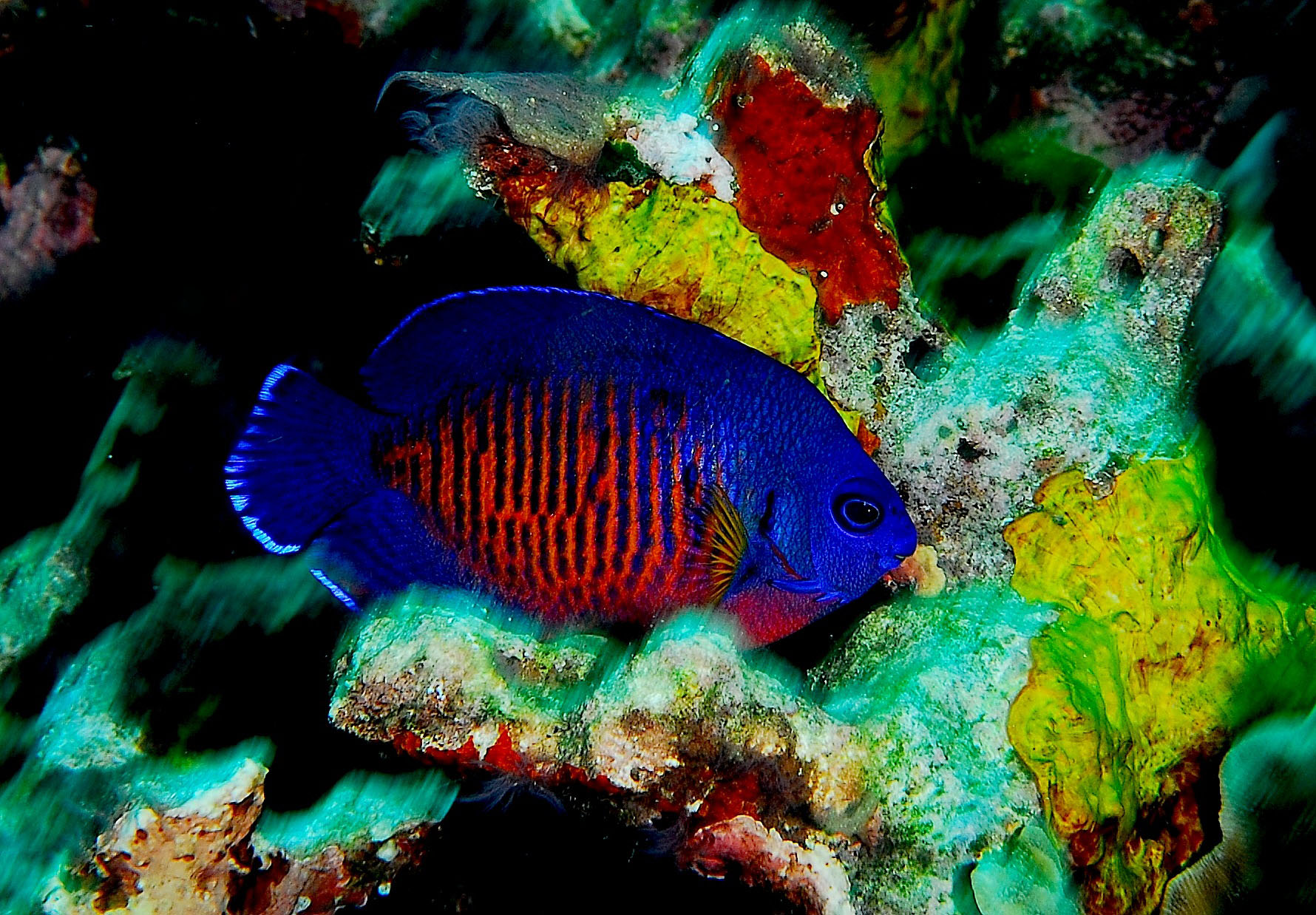
The coral beauty is one of the hardiest and most popular dwarf (pygmy) angelfish, prized for its deep blue-purple body washed with orange. It is a great first angelfish but is only conditionally reef-safe and needs plenty of mature live rock to graze.
ℹ️
Educational only. KinStation content is reviewed by licensed veterinarians but cannot replace an in-person exam. Always consult a licensed veterinarian or board-certified specialist for diagnosis, treatment, or any decision affecting your pet's health.
🩺 Need expert help with your coral beauty angelfish?
Connect with a specialist near you or ask a licensed vet — never substitute online guidance for hands-on care in an emergency.
Colorful reef-associated marine fish kept for their beauty and grazing behaviors. This grouping spans dwarf (Centropyge) angelfish and similar reef species that need mature live-rock systems, stable water chemistry, and careful attention to reef compatibility.
From the minimum an animal needs to be kept humanely, up to the ideal setup. Bigger is almost always better — minimums are floors, not targets.
Photo coming soon
Minimum
Reef-cautious tank
70 gal / 265 L reef-cautious
Centropyge bispinosa is one of the hardier dwarf angels. 70-gal minimum reef-cautious with mature live rock and abundant film algae for grazing. Generally reef-safe but may nip LPS/clams.
Recommended
Mature reef display
100 gal / 379 L reef
100-gal mature reef with deep aquascape, varied algae and pod growth, and stable peaceful community. Single specimen per tank.
Tappinen / CC BY-SA 3.0 (Wikimedia Commons)
Ideal
Established display reef
125 gal+ / 473 L+ mature reef
Mature 125-gal+ display reef with consistent nutrient cycle, varied algae, and minimal coral nipping pressure. Long-lived and colourful in stable systems.
Tylwyth Eldar / CC BY-SA 4.0 (Wikimedia Commons)
Life & growth stages
How this animal changes through its life — each stage often has its own care, diet and space needs.
Photo coming soon
Egg
Fish eggs are small, translucent spheres, often laid in clutches on plants, substrate, or in a nest — or carried/brooded by a parent in livebearing and mouth-brooding species. A dark eye spot and the curled embryo become visible inside as development progresses.
Photo coming soon
Fry
Newly hatched fry are tiny and semi-transparent, frequently still carrying a yolk sac that fuels them before they feed freely. They lack full fin structure and adult coloration, staying near cover until they can swim and forage on their own.
Photo coming soon
Juvenile
Juveniles look like miniature adults but with developing fins and muted or different markings; many species shift pattern and color as they mature. Growth is rapid at this stage given clean water and steady feeding.
Adult
Adults show the species' full size, finnage, and mature coloration, and are sexually mature. Many fish develop sex-specific differences in size, color, or fin shape, which can intensify during breeding.
Habitat & enclosure
House a single coral beauty in a mature reef or fish-only tank of at least 110 L (30 gal), ideally larger, with abundant live rock for grazing and refuge. Keep tropical reef parameters: 23-27 C (74-80 F), pH 8.1-8.4, salinity 1.023-1.026 SG, with moderate flow. Standard reef lighting is fine; the fish itself has no special light demand but thrives where lighting supports algae and live-rock biofilm.
Substrate
Aquascape with plenty of mature, porous live rock arranged into caves and overhangs for grazing and hiding. A fine aragonite sand bed completes a natural reef look and supports beneficial fauna.
Equipment & setup
Run a protein skimmer plus biological filtration on a stable reef system, with a heater (and chiller if needed) holding temperature steady. Provide moderate, varied flow from powerheads or a return pump, and standard reef lighting; a tight-fitting lid helps prevent jumping during acclimation.
Diet
Omnivorous micro-grazer. Offer a varied diet of marine algae and spirulina-based foods (including dried nori), plus mysis, brine shrimp, and prepared angelfish/omnivore formulas with added sponge and tunicate matter. Feed small amounts 2-3 times daily; constant access to live-rock algae and biofilm keeps it healthiest.
Behavior & temperament
Generally peaceful but can be feisty and territorial, especially toward other dwarf angels or similar-shaped fish; keep only one Centropyge per modest tank unless the system is large. Only conditionally reef-safe: many individuals ignore corals, but some nip LPS, zoanthid, and clam mantles or pick at SPS polyps. Watch closely when first added to a reef and provide ample grazing to reduce temptation.
Health
Susceptible to marine ich (Cryptocaryon) and marine velvet (Amyloodinium), especially when stressed by poor water quality or shipping; quarantine all new arrivals. Otherwise hardy if drip-acclimated and kept in stable, well-oxygenated water. Avoid copper-sensitive medication overdoses, as angelfish can be more sensitive than many other reef fish.
Tips, DIY & hacks
Drip-acclimate slowly and quarantine for 2-4 weeks before adding to the display. Add the coral beauty to a well-established tank with mature live rock so it always has algae to graze, which reduces stress and coral nipping. Adding it last among peaceful tankmates helps minimize territorial squabbles.