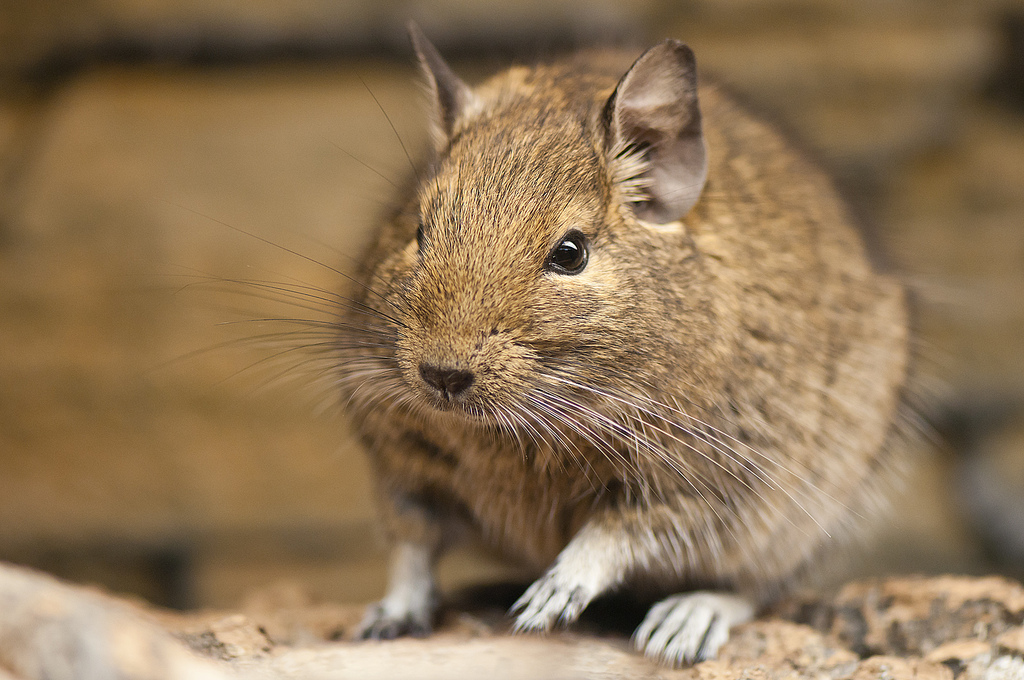
A highly social, diurnal Chilean rodent that lives in colonies, communicates with complex calls, and needs a sugar-free diet to avoid the diabetes it is famously prone to.
ℹ️
Educational only. KinStation content is reviewed by licensed veterinarians but cannot replace an in-person exam. Always consult a licensed veterinarian or board-certified specialist for diagnosis, treatment, or any decision affecting your pet's health.
🩺 Need expert help with your degu?
Connect with a specialist near you or ask a licensed vet — never substitute online guidance for hands-on care in an emergency.
Medium rodent: ~25-31 cm including tail, 170-300 g
Lifespan
6–10 years
Social needs
group
Native region
South America (semi-arid matorral shrublands of central Chile, below ~1,200 m)
Origin
New World
Climate
⛅ Subtropical
Family
Octodontidae
Genus
Octodon
Part of the Degus
Diurnal, highly social caviomorph rodents from Chile in the family Octodontidae. Kept as long-lived, intelligent colony pets, degus are defined by their need for companionship, constant gnawing, and a strictly sugar-free, high-fiber diet to avoid diabetes.
More degus coming soon.
Habitat & space requirements
From the minimum an animal needs to be kept humanely, up to the ideal setup. Bigger is almost always better — minimums are floors, not targets.
Minimum
Tall multi-level cage for a pair
≥ 100 × 50 × 100 cm, bar spacing ≤ 2 cm
Degus are diurnal, social rodents — keep in a same-sex pair or small group, never alone. Use a tall multi-level cage with solid (not wire) shelves to prevent bumblefoot, a sand bath, wood gnaws, and a SOLID-running wheel (≥ 28 cm, no rungs).
Avatar / CC BY-SA 3.0 (Wikimedia Commons)
Photo coming soon
Recommended
Large dedicated cage with deep digging tray
≈ 120 × 60 × 150 cm, multi-level
Roomier multi-level cage with platforms, ramps, a sand bath, dig tray with safe substrate, and several hides. Degus need lots of chew material — they have constantly growing teeth and prone to dental disease on poor diets.
Photo coming soon
Ideal
Walk-in aviary-style enclosure
Walk-in cage / converted aviary, 1.5–2 m tall
Walk-in or converted aviary with deep substrate dig zones, branches, platforms, a permanent sand bath, and a generous solid wheel. Diet must be strictly low-sugar (diabetes-prone), so cage enrichment is the main behavioural outlet.
Life & growth stages
How this animal changes through its life — each stage often has its own care, diet and space needs.
Photo coming soon
Newborn
Newborn mammals are nursed on their mother's milk. Many are born helpless — blind, deaf, and sparsely furred (altricial, as in dogs, cats, and rodents) — while others stand and follow within hours (precocial, as in hoofed livestock).
Photo coming soon
Juvenile
After weaning, juveniles grow quickly and become increasingly active, playful, and independent. Adult coat, proportions, and (in many species) the permanent teeth come in as they approach full size.
Photo coming soon
Adult
Adults reach full body size and sexual maturity, with the species' mature coat and build. Sexual dimorphism — differences in size, mane, horns, or markings — is pronounced in some mammals and subtle in others.
Senior
Senior animals show aging signs such as graying fur, reduced activity, and a greater need for veterinary monitoring of joints, teeth, and organ function. Lifespan and the onset of old age vary widely by species and size.
Color & pattern variants
Natural variants occur in the wild; selectively bred (man-made) variants were developed in captivity.
Degus need a large, tall, multi-level wire cage with a solid base; a minimum of roughly 90 x 60 x 60 cm for a pair, but bigger is much better, with bar spacing small enough to prevent escape. Avoid all-plastic enclosures and plastic accessories because degus gnaw constantly and will destroy and ingest them. Provide deep, dust-extracted paper or aspen substrate, sturdy wooden platforms and ledges, hides, branches for climbing and chewing, and a large solid-surface wheel (around 28-30 cm) to protect their backs.
Keep them at a moderate room temperature of about 18-24 C, away from direct sun and high humidity, as they are sensitive to heat stress and heatstroke above the mid-20s C. They require a daily sand bath (chinchilla sand, not dust) to keep their coat clean and oil-free. No UVB or water features are needed; a hide-rich, securely escape-proof layout suits these intelligent, agile animals.
Substrate
Provide a deep layer of aspen, hemp, or paper-based bedding for digging and burrowing, over solid (never wire) flooring to protect their feet. Avoid cedar and pine. A dust bath with chinchilla sand keeps their coat in good condition and should be offered regularly.
Equipment & setup
House in a large multi-level wire cage with solid floors/shelves and a big solid-surface wheel (30cm+) since they are very active and diurnal. Keep at a stable, moderate temperature below about 20-24C and out of direct sun, as they tolerate heat poorly. Offer unlimited grass hay, a guinea-pig or degu pellet, and abundant wood and forage to chew.
Diet
Degus are herbivores adapted to a high-fiber, low-sugar, low-starch diet, and they cannot metabolize sugar properly. Grass hay (timothy or similar) should make up the bulk of intake and be available at all times, supplemented with a small daily portion of a degu- or chinchilla-appropriate pellet and modest amounts of safe leafy greens and dried herbs.
Critically, avoid all sugary and starchy foods: fruit, carrots, sweet vegetables, grains, nuts, seeds, and commercial sugary treats can trigger diabetes. Provide constant fresh water and plenty of safe wood and hay for gnawing, since their teeth grow continuously and healthy degu teeth are normally orange.
Behavior & temperament
Degus are diurnal, intelligent, and intensely social, living in colonies in the wild and showing a rich repertoire of vocalizations. They must be kept in same-sex pairs or groups (or neutered mixed groups); keeping one alone causes stress, depression, and self-harming behavior. They form strong bonds, allogroom, and dust-bathe communally.
They are active, curious, and trainable, and benefit greatly from enrichment: digging boxes, climbing branches, tunnels, foraging toys, a large wheel, and out-of-cage time in a secure, supervised space. Handle gently and never grab or pull the tail, which can deglove (shed its skin) and will not regrow, leaving a permanent stump.
Health
Diabetes is the signature health problem; signs include excessive drinking and urination, weight loss, and cataracts (cloudy eyes), and prevention rests entirely on a strict no-sugar, high-fiber diet. Dental disease and malocclusion are also common, so unlimited hay and chewable wood are essential, and pale or white (rather than orange) teeth can signal a problem.
Other concerns include obesity, bumblefoot from wire or dirty flooring, heatstroke in warm rooms, respiratory infections, and tail injuries from improper handling. Because suitable insurance and exotic-savvy vets can be hard to find for degus, choose your vet in advance and monitor weight, eyes, teeth, and water intake regularly.
Tips, DIY & hacks
Degus are highly prone to diabetes, so strictly avoid all sugary and fruit treats and any molasses-coated foods. They are intensely social and must be kept in same-sex pairs or groups, becoming depressed and unhealthy if housed alone. Provide plenty of gnawing material and dig boxes; their teeth are normally orange, and pale white teeth can signal illness.