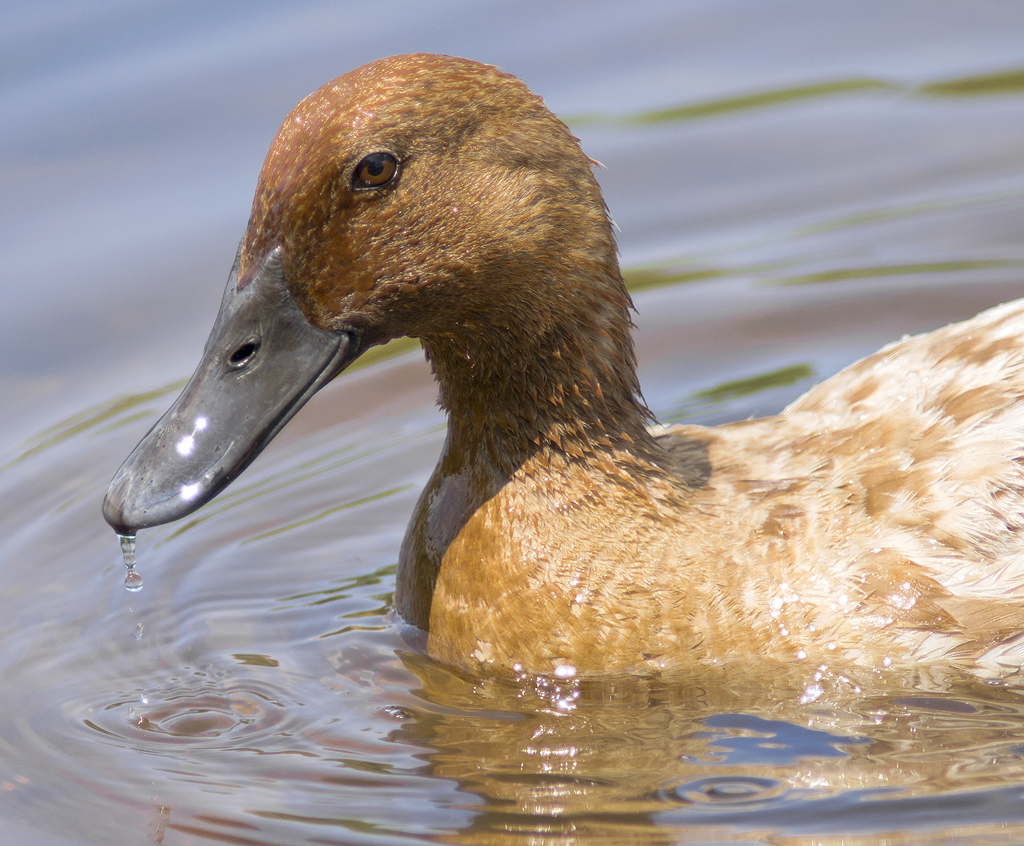
Friendly, hardy waterfowl descended from the wild mallard, kept for eggs, meat, pest control, and as charming pets. They need swimming water and a flock, but are more disease-resistant and weather-hardy than chickens.
ℹ️
Educational only. KinStation content is reviewed by licensed veterinarians but cannot replace an in-person exam. Always consult a licensed veterinarian or board-certified specialist for diagnosis, treatment, or any decision affecting your pet's health.
🩺 Need expert help with your domestic duck?
Connect with a specialist near you or ask a licensed vet — never substitute online guidance for hands-on care in an emergency.
Bantam Call ducks ~0.6 kg; Khaki Campbell ~2 kg; Pekin and heavy breeds 3.5-5 kg. Most domestic breeds too heavy to fly well.
Lifespan
8–12 years
Social needs
group
Native region
Domesticated from the wild mallard of the Northern Hemisphere; most domestic breeds developed in Europe and Asia
Origin
Old World
Climate
🍂 Temperate
Family
Anatidae
Genus
Anas
Part of the Ducks
Domestic waterfowl kept for eggs, meat, pest control, and companionship. Most breeds descend from the wild mallard (Muscovies are the exception) and share a love of water, a flock-loving nature, and famous weather-hardiness.
From the minimum an animal needs to be kept humanely, up to the ideal setup. Bigger is almost always better — minimums are floors, not targets.
Photo coming soon
Minimum
Standard backyard duck setup
6 sq ft shelter + 20 sq ft run per bird, kiddie-pool water
For a generic domestic duck (Anas platyrhynchos domesticus), provide at least 6 sq ft of predator-proof shelter per bird and a 20 sq ft outdoor run with a kiddie pool or tub deep enough to submerge the head. Bathing water is non-negotiable — ducks clean nostrils and eyes by dunking.
Photo coming soon
Recommended
Shelter + grass run + bathing pool
8 sq ft shelter + 50 sq ft grass run + 100 gal pool, per bird
A walk-in shelter with deep-litter straw, a generous grass run, and a 100-gal stock-tank or kiddie pool large enough to swim a few strokes. Maintain a sex ratio of 1 drake per 4–5 ducks to prevent over-mating injuries. Keep in pairs/trios — ducks are flock animals.
Photo coming soon
Ideal
Pasture flock with pond
¼ acre+ rotated pasture + pond, flock of 3–6
Quarter-acre or larger rotated pasture with a natural pond or large stock-tank pool, hedge shade, and a deep-bedded shelter. Ducks reach peak welfare and lay best on grass with constant bathing access — closest to natural behavior.
Life & growth stages
How this animal changes through its life — each stage often has its own care, diet and space needs.
Photo coming soon
Egg
Birds develop inside a hard-shelled egg incubated by the parent(s). Egg size, shell color, and clutch size vary by species; the embryo develops over days to weeks before hatching.
Photo coming soon
Hatchling / Chick
Hatchlings are either altricial — naked, blind, and dependent on parents (typical of parrots and songbirds) — or precocial — downy, mobile, and self-feeding soon after hatching (typical of poultry and waterfowl). Down gives way to the first feathers.
Photo coming soon
Juvenile / Fledgling
Fledglings grow in their juvenile plumage and begin to fly and feed themselves, though they may still beg from parents at first. Juvenile feathering is often duller than the adult and is replaced as the bird matures.
Adult
Adults attain full body size and mature plumage, and are capable of breeding. Many species show distinct adult coloration, and in sexually dimorphic birds males and females differ in plumage, size, or markings.
no rights reserved via iNaturalist — https://www.inaturalist.org/observations/16238282
Color & pattern variants
Natural variants occur in the wild; selectively bred (man-made) variants were developed in captivity.
Ducks need a **predator-proof house** for night shelter (they don't roost — they sleep on the ground, so floor space matters: ~**0.4-0.5 m²/bird**) plus daytime range and **open water for swimming and preening**. A child's pool, pond, or large tub works — water deep enough to dunk their heads and submerge keeps eyes, nostrils, and feathers healthy. Provide shade, and gentle ramps in/out of water to prevent drowning of ducklings. Fencing must exclude foxes, raccoons, dogs, and hawks; ducks are slow on land and very vulnerable at night. Most heavy domestic breeds **cannot fly**, simplifying fencing, but lightweight breeds and Call ducks can.
Substrate
Use **straw, pine shavings, or hemp** in the house — ducks are very wet and bedding needs frequent changing or a deep-litter approach with good drainage. Avoid slippery floors (cause splayed legs) and damp, ammonia-laden litter. Around water sources, **gravel, sand, or deep wood chips** help manage the constant mud ducks create. Keep sleeping areas dry even though their day areas will be soggy.
Equipment & setup
Provide a **large open waterer or trough** (deep enough to submerge the head) plus a **swimming vessel** (kiddie pool, stock tank, or pond) — a drain plug or pump makes refills easy. A simple **predator-proof night house** with a secure latch is essential. Ducklings need a **brooder with heat plate/lamp** but get wet fast, so use a heat-plate setup and a shallow, marble-filled water dish to prevent chilling and drowning. In freezing climates, heated waterers and deep dry bedding keep them comfortable; ducks handle cold far better than heat.
Diet
Feed a **waterfowl- or all-flock ration**; standard chicken layer feed can be used short-term but ducks need more **niacin (vitamin B3)** than chickens — supplement with brewer's yeast for ducklings to prevent leg deformities. Offer **grit** for grinding and **oyster shell** separately for layers. Ducks love foraging slugs, snails, worms, and greens, making them superb garden pest controllers (keep them off tender seedlings). **Water must always be available right next to feed** — ducks need to wet their food to swallow safely and can choke on dry feed without it. Avoid bread, which is junk food for waterfowl.
Behavior & temperament
Ducks are **gregarious flock birds** — keep at least two or three. They are generally calm, comical, and can become very tame with early handling, following keepers and 'talking' (hens quack loudly; drakes are raspy and quiet). Keep a balanced sex ratio — **too many drakes to hens leads to over-mating injuries and even drowning**; aim for roughly 1 drake per 4-6 hens, or keep drakes/hens separate. They dabble, splash, and forage constantly and are messy with water. Bonded flocks panic if separated.
Health
Ducks are robust but watch for **niacin-deficiency leg problems** in ducklings, **bumblefoot** from hard/dirty surfaces, **wet feather** (loss of waterproofing from dirty water or oil-gland issues), **angel wing** (twisted wing tip from over-rich diets in growth), **botulism** from stagnant water, and reproductive issues in heavy-laying hens. Internal/external parasites occur but less than in chickens. They are relatively resistant to many respiratory diseases but can carry and shed **avian influenza**; maintain biosecurity and clean water. Use a poultry/avian vet.
Tips, DIY & hacks
Site water on **gravel or a drainable pad** to control the inevitable mud, and use a sump-pump-emptied stock tank for easy cleaning. Add **niacin (plain brewer's yeast)** to duckling feed to guarantee strong legs. Keep your **drake-to-hen ratio low** to prevent mating injuries. Runner and Khaki Campbell ducks are top layers (often out-laying chickens); Pekins are friendly all-purpose pets; Call ducks are tiny, loud ornamental favorites. **Check ordinances** — some areas regulate waterfowl or ponds. Provide a ramp into any deep water and never let ducklings swim unsupervised.