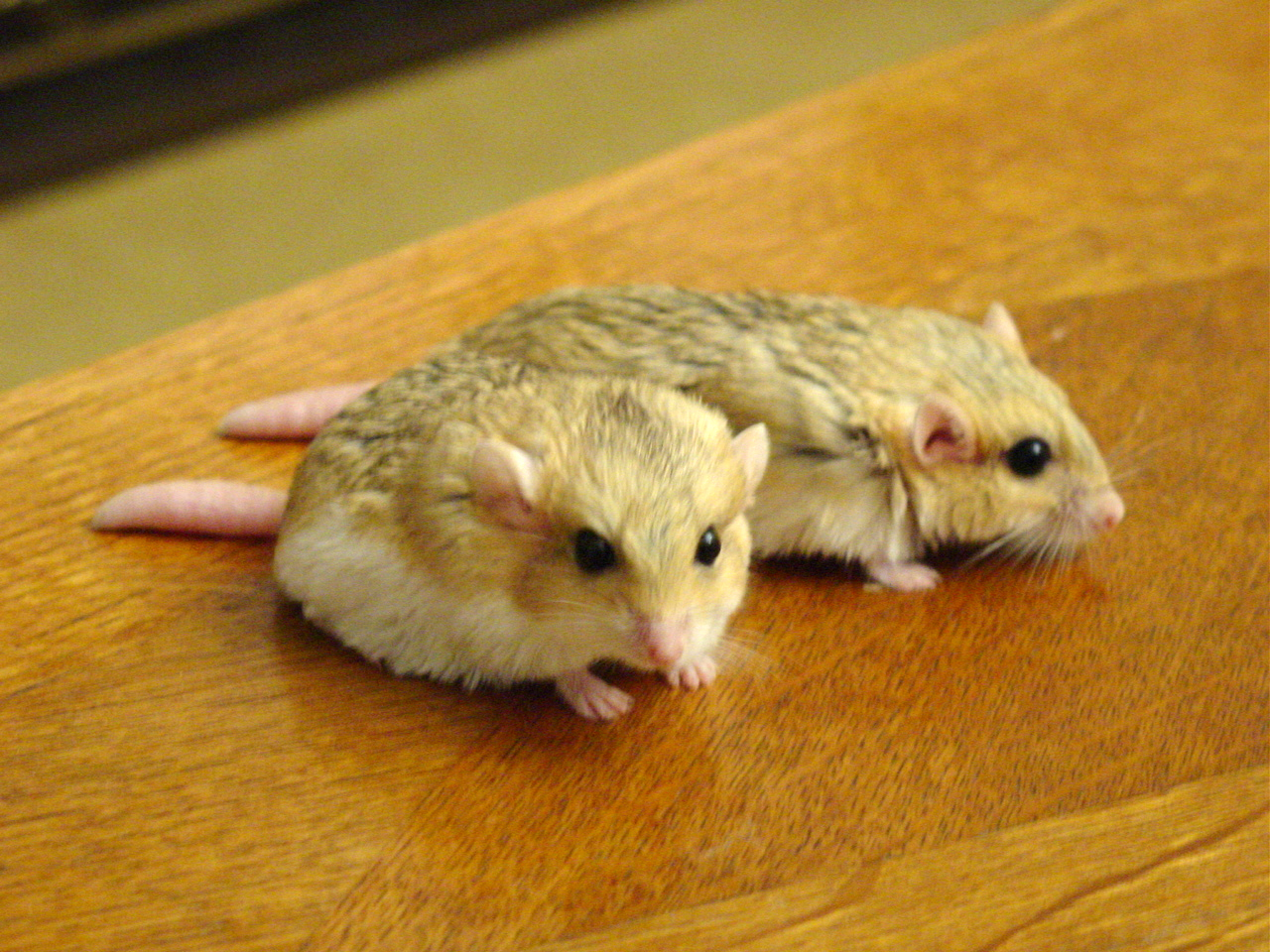
A docile, hamster-like desert gerbil with a distinctive club-shaped fat-storing tail; calm and rarely bites, insectivorous in the wild, and usually best kept singly due to same-sex aggression.
ℹ️
Educational only. KinStation content is reviewed by licensed veterinarians but cannot replace an in-person exam. Always consult a licensed veterinarian or board-certified specialist for diagnosis, treatment, or any decision affecting your pet's health.
🩺 Need expert help with your fat-tailed gerbil?
Connect with a specialist near you or ask a licensed vet — never substitute online guidance for hands-on care in an emergency.
Small-medium: ~10 cm body plus ~5 cm club-shaped tail, 30-80 g
Lifespan
4–6 years
Social needs
solo
Native region
North Africa (northern Sahara: Egypt, Libya, Tunisia, Algeria, Morocco, Western Sahara)
Origin
Old World
Climate
🏜️ Arid
Family
Muridae
Genus
Pachyuromys
Part of the Gerbils
Burrowing desert and steppe rodents of the subfamily Gerbillinae kept as active, dry-climate small pets. They are adapted to arid conditions, love to dig and sand-bathe, and range from the social Mongolian gerbil to the docile, insectivorous fat-tailed duprasi.
From the minimum an animal needs to be kept humanely, up to the ideal setup. Bigger is almost always better — minimums are floors, not targets.
Photo coming soon
Minimum
Glass tank with deep bedding
60 × 30 × 30 cm tank, 15+ cm bedding
Duprasi (fat-tailed gerbils) are desert burrowers — glass or acrylic tank with deep dry bedding, sand bath area, hides, and very low humidity. Solitary or sibling pair only; introductions are difficult.
Photo coming soon
Recommended
Larger tank with sand layer
80 × 40 × 40 cm with 20 cm substrate
Larger tank with a deeper substrate layer (mix of aspen and chinchilla sand), permanent sand bath, hides, gnaws, and a silent solid wheel. Avoid plastic shelves they can chew.
Photo coming soon
Ideal
Bioactive desert vivarium
100 × 50 × 50 cm bioactive desert setup
Bioactive desert-style vivarium with very deep dry substrate for multi-chamber burrowing, rock structures, and varied hides. Low humidity and dust-free sand are essential — duprasi develop respiratory and skin issues in damp setups.
Life & growth stages
How this animal changes through its life — each stage often has its own care, diet and space needs.
Photo coming soon
Newborn
Newborn mammals are nursed on their mother's milk. Many are born helpless — blind, deaf, and sparsely furred (altricial, as in dogs, cats, and rodents) — while others stand and follow within hours (precocial, as in hoofed livestock).
Photo coming soon
Juvenile
After weaning, juveniles grow quickly and become increasingly active, playful, and independent. Adult coat, proportions, and (in many species) the permanent teeth come in as they approach full size.
Photo coming soon
Adult
Adults reach full body size and sexual maturity, with the species' mature coat and build. Sexual dimorphism — differences in size, mane, horns, or markings — is pronounced in some mammals and subtle in others.
Senior
Senior animals show aging signs such as graying fur, reduced activity, and a greater need for veterinary monitoring of joints, teeth, and organ function. Lifespan and the onset of old age vary widely by species and size.
Color & pattern variants
Natural variants occur in the wild; selectively bred (man-made) variants were developed in captivity.
Duprasi need a large, secure glass tank or bar-free enclosure (a long aquarium-style tank works well) with a tight-fitting mesh lid, since a solid-sided enclosure prevents chewing out and allows deep, safe substrate. Provide a thick layer (15-30 cm+) of dig-friendly substrate such as a paper/aspen mix, with a sand bath area (children's play sand or chinchilla sand, not dust) that they use to keep their fur clean and degreased. Add hides, tunnels, chews, and a solid-surface wheel.
As Northern Sahara desert animals, they need warm, dry conditions; keep them at roughly 20-25 C, well away from damp and cold drafts, with low humidity. They burrow in the wild and appreciate deep substrate for tunneling. No UVB or water features are required, but a dry, warm, escape-proof, sand-equipped setup is key to their welfare.
Substrate
Provide deep (15 cm or more) sandy substrate, ideally a mix of children's play sand and paper-based or aspen bedding so they can dig stable burrows. A separate shallow dish of chinchilla sand for sand-bathing keeps their coat clean and oil-free. Avoid dusty or cedar/pine shavings, which irritate their respiratory system.
Equipment & setup
House them in a large glass tank or deep-base bin cage (60 x 30 cm minimum) with a secure mesh top, kept around 20-24 C with no heat lamp normally needed indoors. Add a solid-surface 20 cm+ running wheel (no rungs), ceramic hide, and gnaw items; they tolerate handling better than Mongolian gerbils. Keep humidity low and ventilation good, as they are a desert species prone to respiratory issues in damp conditions.
Diet
Unlike herbivorous gerbils, duprasi are largely insectivorous in the wild, so live or dried insects (mealworms, crickets, and similar) should be a regular and important part of the diet rather than an occasional treat, alongside a good gerbil/hamster grain mix and small amounts of safe vegetables.
Offer insects several times a week to meet their protein needs, scatter dry food to encourage foraging, and provide constant fresh water. Keep sugary foods to a minimum and supply chews and safe wood to wear down the continuously growing incisors.
Behavior & temperament
Duprasi are famously placid and are often compared to Syrian hamsters in handling temperament: docile, slow-moving for a gerbil, and rarely prone to biting, which makes them appealing to keepers who want a calm small mammal. They are largely nocturnal/crepuscular and enjoy digging, sand-bathing, and foraging.
Toward their own species they can be aggressive and even cannibalistic, so although some keepers attempt carefully introduced young same-sex pairs, solo housing is the safest default and fighting requires immediate separation. Enrich with deep digging substrate, a sand bath, tunnels, foraging for insects, and a wheel; handle gently and support the body, and never grab the tail.
Health
Common problems include obesity (a healthy tail is plump but the body should not be overweight; over-rich diets cause issues), respiratory and skin problems from damp or dirty conditions, overgrown teeth, and fight wounds when cohoused. A sudden thin or shrunken tail can indicate illness, stress, or poor nutrition and warrants attention.
Keep the enclosure dry, warm, and clean, provide a sand bath to prevent greasy coat and skin issues, and monitor weight and the condition of the tail. Use an exotics-experienced vet for lethargy, weight loss, breathing trouble, or wounds; as desert prey animals they mask illness, so subtle changes matter.
Tips, DIY & hacks
Offer occasional live or dried insects (mealworms, crickets) since duprasis are more insectivorous than other gerbils and need the extra protein. Watch the tail thickness as a health gauge: a plump tail means good condition, a thin tail signals weight loss or illness. They are best kept singly or in carefully introduced same-sex pairs, as adults can become territorial.