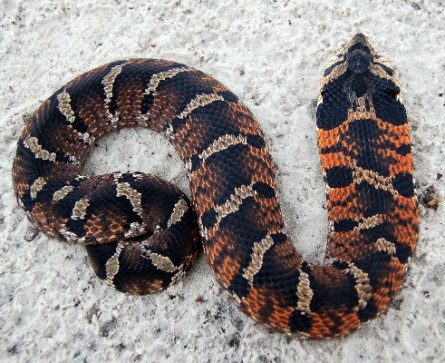
Eastern hognose snakes are stocky, upturned-snout colubrids native to the eastern United States, specializing on toads in the wild. They are dramatic in defensive display but reluctant feeders in captivity, making them an advanced-care choice.
ℹ️
Educational only. KinStation content is reviewed by licensed veterinarians but cannot replace an in-person exam. Always consult a licensed veterinarian or board-certified specialist for diagnosis, treatment, or any decision affecting your pet's health.
🩺 Need expert help with your eastern hognose snake?
Connect with a specialist near you or ask a licensed vet — never substitute online guidance for hands-on care in an emergency.
From the minimum an animal needs to be kept humanely, up to the ideal setup. Bigger is almost always better — minimums are floors, not targets.
Photo coming soon
Minimum
Adult floor terrarium
36 × 18 in floor (≈ 40-gal breeder)
An adult should have at least a 36 × 18 inch footprint with several inches of loose, diggable substrate (topsoil/sand mix or aspen) because this is a fossorial species that burrows to feel secure. Provide a basking gradient of about 29–32 °C warm side dropping to 22–24 °C cool, low humidity around 40–50% with a humid hide for shedding, and house only one snake per enclosure.
Photo coming soon
Recommended
Adult vivarium
4 × 2 ft floor (≈ 48 × 24 in)
A 4 × 2 ft floor enclosure gives this active digger room to burrow and roam, with 4–6 inches of loose substrate, cork bark, leaf litter, and multiple hides across the gradient. Maintain a basking zone of 29–32 °C, a cool end near 22 °C, low ambient humidity with a moist hide, and low-level UVB to support natural behaviour and bone health.
Photo coming soon
Ideal
Naturalistic bioactive build
4 × 2 × 2 ft bioactive (or larger)
A 4 × 2 ft (or larger) bioactive enclosure with a deep digging layer, drainage, clean-up crew, live plants, and varied leaf litter lets the snake express its full burrowing and foraging repertoire. Pair a proper thermal gradient (basking ~32 °C, cool ~22 °C) with full-spectrum UVB, a humid retreat, and seasonal cycling for the best welfare and most natural behaviour.
Life & growth stages
How this animal changes through its life — each stage often has its own care, diet and space needs.
Photo coming soon
Egg / Neonate
Most reptiles lay leathery- or hard-shelled eggs incubated by ambient warmth, though some snakes and lizards give live birth. Incubation temperature can influence sex and development in many species.
Photo coming soon
Hatchling
Hatchlings emerge as fully formed miniatures of the adult, often using an egg tooth to slit the shell. They are independent from birth but small and vulnerable, and may show brighter or different juvenile patterning.
Photo coming soon
Juvenile
Juveniles grow steadily, shedding their skin periodically as they enlarge. Coloration and proportions shift toward the adult form, and growth rate depends heavily on temperature, diet, and basking/UVB access.
Adult
Adults reach the species' full length and mass and become sexually mature. Many reptiles show sex differences in size, coloration, or features (such as larger heads, hemipenal bulges, or femoral pores), and continue to shed throughout life.
Color & pattern variants
Natural variants occur in the wild; selectively bred (man-made) variants were developed in captivity.
Eastern hognose snakes are stocky, upturned-snout colubrids of eastern North American woodlands and sandy soils, and they are strongly fossorial. A front-opening enclosure around 36×18 inches of floor space suits a single adult, with deep, loose substrate they can burrow into and multiple hides on the warm and cool ends. Floor area and diggable bedding matter more than height.
A thermal gradient with a warm basking zone and a cooler side lets the snake thermoregulate and digest, and low-level UVB on a daytime cycle is widely recommended in modern care. A slight nighttime temperature drop mimics the natural cycle. A water dish for drinking completes the basics.
This is a species where reducing stress is part of the habitat design: many eastern hognoses are high-strung in captivity, so ample cover, a securely diggable substrate, and minimal disturbance help them settle. Substrate is kept clean and on the drier side to avoid scale problems, consistent with the sandy, well-drained habitats they favor in the wild.
Substrate
Provide a deep (4+ in) layer of dry, loose, burrow-friendly substrate such as aspen shavings, a coco-fiber/topsoil mix, or play sand blended with soil, since this is a dedicated burrowing/digging species that spends much time underground.
Equipment & setup
A 36x18 in (40-gallon) or larger terrarium with a secure lid suits an adult. Establish a thermal gradient with an overhead basking spot of 88-90°F dropping to a cool side of 75-78°F, ideally via a halogen/heat bulb on a thermostat, plus low UVB; keep humidity moderate (~40-50%) and provide a humid hide for shedding.
Diet
Eastern hognose snakes are toad specialists. In the wild they feed on amphibians — toads especially — almost to the exclusion of other prey, and their enlarged rear teeth and mild, prey-specific saliva help them handle toxic, inflating toads. For humans a bite is rarely medically significant but can cause local swelling, so feeding is done carefully.
That dietary specialization is the central challenge of keeping the species: many captive eastern hognoses are reluctant to switch from toads to rodents. Some captive-bred individuals will take scented frozen-thawed mice from the start, while others remain persistent, frustrating fasters, which is a major reason this species is considered advanced rather than beginner-friendly. Feeding strategies (such as scenting prey) are common, and chronic refusal is a frequent reason to involve a veterinarian.
Fresh water is always available. Because food refusal is so common in this species, distinguishing a normal seasonal fast in a stable-weight animal from genuine, weight-losing anorexia is an important keeper skill — and erring toward a vet check when in doubt is wise.
Behavior & temperament
Eastern hognose snakes are diurnal, solitary, and fossorial, and they are housed singly. They share the western hognose's spectacular defensive theater: a threatened animal flattens its neck into a hood (earning the nicknames "spreading adder" and "puff adder," despite being harmless), hisses, and bluff-strikes; if that fails, it performs thanatosis, flipping belly-up, going limp with mouth agape, and often musking and defecating to sell the act.
Like its western cousin, a death-feigning eastern hognose will sometimes betray itself by righting the act if you turn it over. These displays are antipredator instincts triggered by stress, not signs of aggression. Many individuals are more easily stressed in captivity than western hognoses, so experienced keepers minimize handling beyond what husbandry requires.
Day to day they are active burrowers that plow through substrate with the shovel-shaped snout. Their combination of dramatic bluffing and overall harmlessness makes them fascinating, but their finicky feeding and stress sensitivity mean they reward an experienced, patient keeper.
Health
Common eastern hognose health concerns include refusal to feed (the species' signature difficulty, which can lead to weight loss), respiratory infection, and external parasites (mites). These are general patterns to raise with a veterinarian rather than self-treat.
Prevention emphasizes low-stress housing (ample cover, diggable substrate, minimal disturbance), a correct thermal gradient, and careful tracking of weight and feeding response so a genuine problem is distinguished from a normal fast. Sourcing a well-started, feeding captive-bred animal sidesteps much of the feeding struggle.
Signs that warrant a reptile-experienced veterinarian include persistent food refusal with weight loss, open-mouth or wheezy breathing, mucus around the mouth or nose, and visible mites. Because the species is mildly rear-fanged and prone to feeding trouble, a clinic experienced with finicky colubrids is valuable.
Tips, DIY & hacks
These rear-fanged, mildly venomous toad-specialists are famous bluffers — they hood, hiss, and play dead rather than bite, so handle calmly. Wild-caught animals often refuse anything but toads; choose captive-bred individuals already feeding on scented rodents, and offer a snug hide on both warm and cool ends to reduce stress.
Origin & history
Heterodon platirhinos is native to the eastern United States, ranging across woodlands, fields, and sandy areas where toads are plentiful. Its dramatic hooding and bluffing earned regional folk names like "spreading adder" and "puff adder," and, unfortunately, a reputation for being dangerous that it does not deserve.
Unlike the heavily morph-driven western hognose, the eastern hognose remains relatively uncommon in captivity, partly because of its specialized toad diet and stress sensitivity. It is also a species of conservation attention in parts of its range: it is protected as a non-game species and listed as threatened, endangered, or of special concern in various states, so wild collection is restricted and responsible keeping relies on captive-bred stock with appropriate provenance.
Anecdotes & owner lore
Community experience and cultural notes — not veterinary advice. Every animal is an individual; treat these as colour, not care instructions.
The eastern hognose is the original drama queen of North American snakes. Naturalists have written for generations about stumbling onto one in the woods and watching it transform from a fat, harmless toad-eater into a hissing, hooded "cobra" — only to abandon the bluff seconds later and flop over dead, tongue lolling, in a performance one writer after another has described as pure theater. The species' folk names, "spreading adder" and "puff adder," come straight from that hooding display, and many a country kid has been convinced they met something deadly.
The punchline keepers love is the same as with the western hognose: the "corpse" insists on being upside-down. Right it, and it indignantly flips belly-up again, blowing its own cover. The other running theme is the toad obsession — the species is so devoted to toads that getting one to eat a mouse can feel like negotiating with a tiny, stubborn gourmet, and stories of elaborate prey-scenting tricks are a rite of passage among the people dedicated enough to keep them.
Common ailments
Respiratory infection — common
Snake mites (external parasites) — common
Chronic feeding refusal (anorexia) — very common — The defining husbandry challenge of this toad-specialist species; many individuals resist switching from amphibian to rodent prey.
Legality (US)
Educational only. Confirm current rules with your state wildlife agency or local authority before acquiring an animal.
US · NJ — Restricted — New Jersey lists the eastern hognose snake as a Species of Special Concern; wild collection and unpermitted possession are restricted under N.J.A.C. 7:25-4.
Reviewed and signed off by: KinStation Editorial - pre-launch draft (pending DVM review)