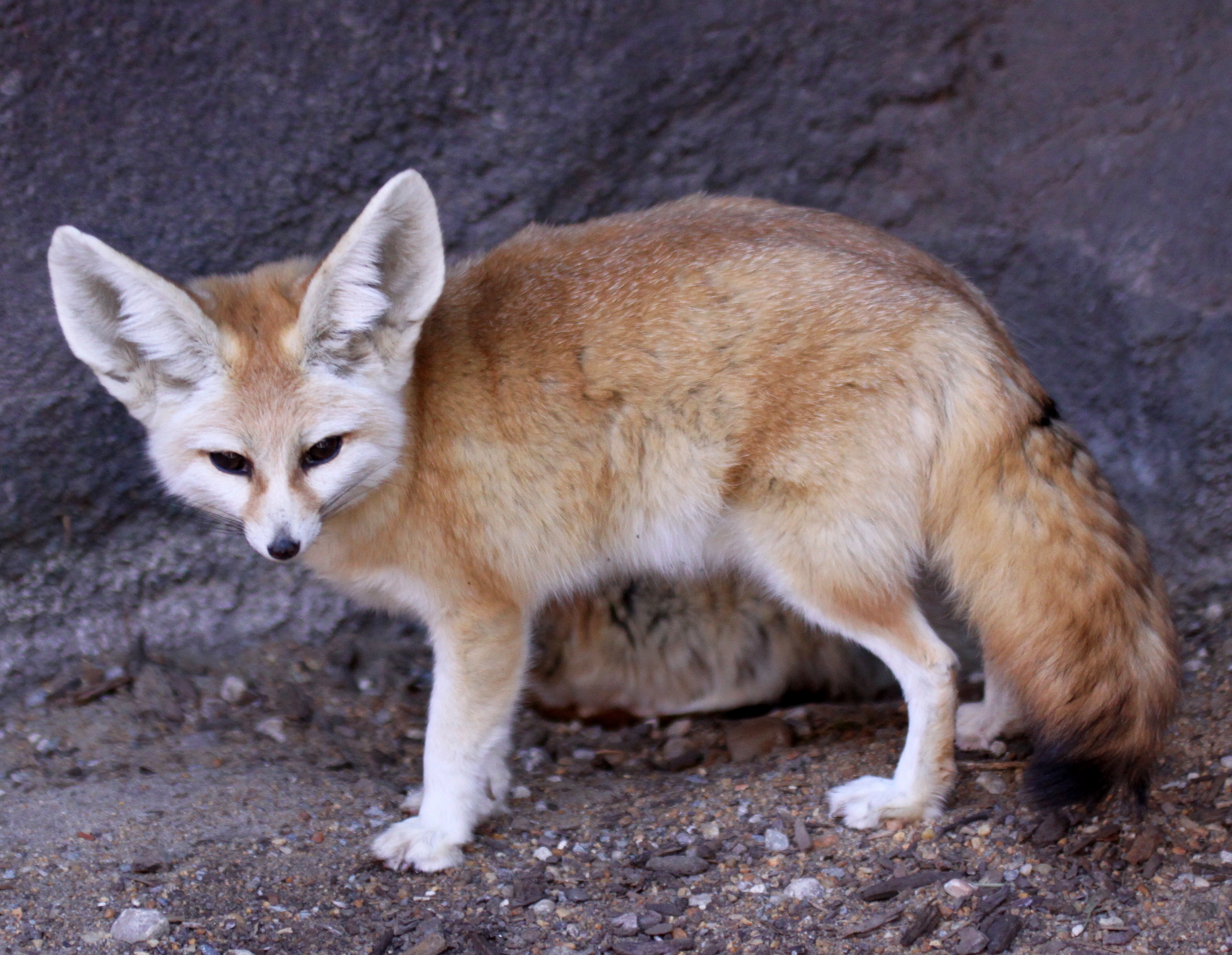
The fennec fox is the smallest fox, a desert specialist famous for its enormous heat-shedding ears. Although not globally threatened, it is heavily traded as an exotic pet, and its specialized needs plus tight legal restrictions make it unsuitable for most owners.
ℹ️
Educational only. KinStation content is reviewed by licensed veterinarians but cannot replace an in-person exam. Always consult a licensed veterinarian or board-certified specialist for diagnosis, treatment, or any decision affecting your pet's health.
🩺 Need expert help with your fennec fox?
Connect with a specialist near you or ask a licensed vet — never substitute online guidance for hands-on care in an emergency.
The smallest fox, ~24-41 cm body, with enormous ears.
Lifespan
10–14 years
Social needs
pair
Native region
Sahara Desert and the Sinai and Arabian regions
Origin
Old World
Climate
🏜️ Arid
Family
Canidae
Genus
Vulpes
Part of the Foxes
Small wild canids kept as exotic pets, including fennec and domesticated red foxes.
More foxes coming soon.
Habitat & space requirements
From the minimum an animal needs to be kept humanely, up to the ideal setup. Bigger is almost always better — minimums are floors, not targets.
Photo coming soon
Minimum
Bonded-pair room/large enclosure
≈ 6 × 6 × 6 ft with deep dig substrate
Fennecs are highly social, nocturnal desert foxes that should be kept in a bonded pair or small group, never singly, in at least a 6-ft cubed escape-proof enclosure or fox-proofed room kept at 20–30 °C. Provide a deep digging substrate (sand or a dig box), multiple den hides, and climbing/tunnel enrichment, since they dig and are escape artists. This is an advanced, space- and enrichment-intensive species, not a starter pet.
Recommended
Indoor room + secure outdoor run
Dedicated room + ≈ 100+ sq ft outdoor run
Aim for a dedicated fox-proofed indoor room plus a secure outdoor run of 100 sq ft or more with deep, buried dig-proof fencing, sand substrate, basking spots, and shaded dens, kept warm and draught-free. Rotate foraging puzzles, tunnels, and climbing structures to satisfy their intense activity and digging drive, and keep at least two bonded animals for companionship. Their nocturnal energy and noise demand a committed keeper.
Rufus46 / CC BY-SA 3.0 (Wikimedia Commons)
Photo coming soon
Ideal
Large naturalistic desert enclosure
Large planted enclosure, multiple dens
Ideal welfare is a large, heated, naturalistic enclosure with deep sand for tunnelling, multiple connected den systems, climbing terrain, and varied temperature/basking zones, housing a stable bonded group. This lets them express full digging, denning, foraging, and social behaviour as they would in the Sahara. It demands significant space, climate control, and expertise.
Life & growth stages
How this animal changes through its life — each stage often has its own care, diet and space needs.
Photo coming soon
Newborn
Newborn mammals are nursed on their mother's milk. Many are born helpless — blind, deaf, and sparsely furred (altricial, as in dogs, cats, and rodents) — while others stand and follow within hours (precocial, as in hoofed livestock).
Photo coming soon
Juvenile
After weaning, juveniles grow quickly and become increasingly active, playful, and independent. Adult coat, proportions, and (in many species) the permanent teeth come in as they approach full size.
Photo coming soon
Adult
Adults reach full body size and sexual maturity, with the species' mature coat and build. Sexual dimorphism — differences in size, mane, horns, or markings — is pronounced in some mammals and subtle in others.
Senior
Senior animals show aging signs such as graying fur, reduced activity, and a greater need for veterinary monitoring of joints, teeth, and organ function. Lifespan and the onset of old age vary widely by species and size.
Habitat & enclosure
Native to sandy deserts and arid scrub of North Africa and the Middle East, where it digs extensive burrows to escape daytime heat. While the species is not endangered in the wild, demand for the exotic-pet trade fuels capture and trade. Many US states and countries restrict or ban private ownership and require permits; legality is genuinely high-complexity, so checking local law is essential. This profile frames it honestly as a wild desert animal, not a recommended pet.
Substrate
For indoor enclosures use a deep digging substrate such as sand or sand/soil mix in a dig box, since fennecs are obsessive burrowers; outdoor pens need a buried wire skirt or concrete footer to stop them tunneling out. Line resting and litter areas with absorbent, low-dust bedding and offer a litter box with paper-based or wood-pellet litter. Avoid clay clumping litter, which is unsafe if ingested during digging.
Equipment & setup
They require a very secure, escape-proof enclosure (tall walls plus a roof, as they climb and jump impressively) with a warm, draft-free den; being a desert species they are cold-sensitive and benefit from a heat source if kept below roughly 20 C. Provide enrichment like tunnels, climbing structures, and sturdy toys, plus a harness for supervised exercise. A balanced diet (commercial fox/wild-canid food, taurine-supplemented, with insects, eggs, and some fruit/veg) and an exotics-experienced vet are essential.
Diet
An omnivore eating insects, small rodents, birds, eggs, and plant matter, obtaining much of its water from food in its arid home. Replicating this specialized desert diet and environment in captivity is difficult.
Behavior & temperament
Nocturnal, social, and highly active, fennecs are vocal, fast, and prodigious diggers — behaviors that translate poorly to typical homes. Their huge ears dump heat and detect prey underground. Even where legal, they require expert, dedicated care and exotic-savvy veterinary support.
Health
Fennec foxes can be long-lived for a small exotic (often well over a decade with good care), so ownership is a long commitment. A critical, frequently cited challenge is veterinary access: most small-animal vets have no experience with exotic canids and some will refuse to see them, so confirming a qualified exotic veterinarian before acquiring one is essential.
Being kept too cold is a genuine health risk for this desert species, as are stress-related problems and the consequences of an unbalanced diet (such as inadequate taurine). Dental and parasite care, and routine wellness oversight, should follow an exotic vet's guidance.
Preventive themes are warm, appropriate housing, low-stress handling, a veterinarian-designed diet, ample space for activity and digging, and an established relationship with an exotic-animal vet. This entry is general guidance only; diagnosis and treatment belong with a qualified veterinarian.
Tips, DIY & hacks
Fennecs are crepuscular/nocturnal and extremely active, so daily play and a large, varied dig pit prevent destructive boredom; freeze treats or hide food to create foraging puzzles. They are loud (yips, barks) and not truly domesticated, so check local laws, as ownership is restricted or banned in many areas. Spay/neuter reduces scent-marking and aggression, and never declaw, as their digging is a core natural behavior.
Origin & history
The fennec fox (Vulpes zerda) is the smallest of the foxes, native to the deserts of North Africa and the Sinai, where its enormous ears help shed heat and detect prey. It is a wild species, not domesticated, despite being bred for the pet trade in some places.
In the United States, legality varies widely: a few states allow ownership without a state permit, several require permits or licenses, and many prohibit fennec foxes outright, with additional county and city restrictions possible. Anyone considering one must check their state's and locality's exotic-pet laws first — see the cited WWF assessment and legal overview, with jurisdiction-specific status tracked separately on this entry.
Anecdotes & owner lore
Community experience and cultural notes — not veterinary advice. Every animal is an individual; treat these as colour, not care instructions.
Those ears are the whole personality. The fennec's outsized, satellite-dish ears — the largest relative to body size of any canid — make it one of the most photographed small mammals in the world and a perennial 'cutest animal' contender. Fans note the fennec's ears can pivot to track the faintest sounds, including insects moving under the sand.
Fennecs are also surprisingly loud for such small animals; owners describe a soundtrack of birdlike chirps, purrs, and startlingly piercing screams, usually after dark. Their relentless digging is legendary — in the wild they excavate extensive dens, and pet fennecs will enthusiastically 'dig' at carpet, bedding, and furniture. The species' charisma made it a pop-culture darling, but rescues are quick to remind admirers that an adorable face sits atop a wild, nocturnal, high-octane animal.
Common ailments
Nutritional imbalance — common — Fennec diets are not a solved off-the-shelf matter; design and monitor nutrition with an exotic vet.
Cold stress — common
Stress-related illness — common
Legality (US)
Educational only. Confirm current rules with your state wildlife agency or local authority before acquiring an animal.
US · CA — Banned — California bans all *Vulpes* species (including the fennec fox) under Cal. Code Regs. tit. 14 § 671 — restricted species list.
US · NV — Banned — Nevada Administrative Code prohibits private ownership of fennec foxes under its wildlife regulations.
US · NY — Banned — New York Environmental Conservation Law § 11-0512 prohibits possession of wild felids and canids as pets, including fennec foxes.
US · OR — Banned — Oregon ORS 609.305 bans private ownership of exotic canids except where grandfathered.
Reviewed and signed off by: KinStation Editorial — conservation profile (pending DVM/biologist review)