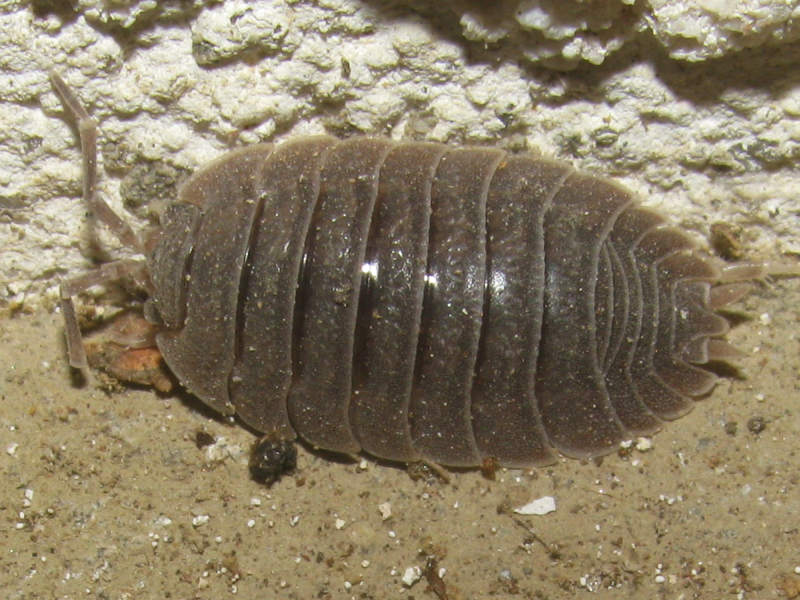
Photo: This image is created by user Arp at Waarneming.nl , a source of nature observations in the Netherlands. · CC0
A large, fast-growing grey sowbug famous as a powerhouse clean-up crew and feeder for larger reptiles and amphibians. Extremely hardy, prolific, and beginner-friendly, though plain in coloration.
ℹ️
Educational only. KinStation content is reviewed by licensed veterinarians but cannot replace an in-person exam. Always consult a licensed veterinarian or board-certified specialist for diagnosis, treatment, or any decision affecting your pet's health.
🩺 Need expert help with your giant canyon isopod?
Connect with a specialist near you or ask a licensed vet — never substitute online guidance for hands-on care in an emergency.
Large; roughly 18-22 mm (0.7-0.9 in), one of the larger commonly kept isopods.
Lifespan
2–3 years
Social needs
group
Native region
Native to Europe; widely naturalized including North America
Origin
Worldwide
Climate
🍂 Temperate
Family
Porcellionidae
Genus
Porcellio
Part of the Isopods
Terrestrial isopods (woodlice, pillbugs, sowbugs) are land crustaceans kept as bioactive clean-up crews and colorful display colonies. They are low-cost, low-maintenance detritivores ideal for beginners.
From the minimum an animal needs to be kept humanely, up to the ideal setup. Bigger is almost always better — minimums are floors, not targets.
Photo coming soon
Minimum
Drier bioactive tub
6 × 9 × 6 in bin, drier mix
Porcellio dilatatus 'giant canyon' is a large, drier-loving isopod. Coco-fibre + sand mix with a humid corner, leaf litter, cork bark, and good ventilation. Calcium (cuttlebone) and a varied diet matter for large size.
Photo coming soon
Recommended
Larger bioactive tub
12 × 12 × 6 in bin, mixed substrate
A larger bin with coco/sand substrate, deep leaf litter, multiple cork hides, ventilation gradient, and calcium sources. Striking grey-spotted adults reach ~2 cm.
Photo coming soon
Ideal
Bioactive display vivarium
10–20 gal bioactive vivarium
A drier bioactive display vivarium with leaf litter, rock/cork structure, and Mediterranean-style planting. Showcases their bold patterning.
Life & growth stages
How this animal changes through its life — each stage often has its own care, diet and space needs.
Photo coming soon
Egg
These invertebrates lay eggs — often in a guarded clutch, a silk sac (spiders), or a brood (carried by female isopods). The eggs are small and soft and develop without a true larval or pupal transformation.
Photo coming soon
Juvenile
Juveniles hatch as miniature versions of the adult and grow by molting their exoskeleton (or, in snails, by enlarging the shell). They gain size, segments, or leg pairs and gradually take on adult coloration with each molt.
Adult
Adults reach full size and reproductive maturity with the species' mature form and coloration. Many arachnids and myriapods continue to molt as adults, and sexes can differ in size or in specialized appendages.
Color & pattern variants
Natural variants occur in the wild; selectively bred (man-made) variants were developed in captivity.
Natural
representative
Giant Canyon (grey)
The standard large grey form.
Selectively bred (man-made)
representative
White / pale line
A selectively maintained lighter, near-white color line.
Habitat & enclosure
A 6 qt (5.7 L) to 32 qt (30 L) ventilated tub with cross-ventilation and a moisture gradient (one moist, one drier). Target 68-80 F (20-27 C) and 50-70% humidity. This species is robust and tolerates a fairly wide range, breeding vigorously at room temperature; good airflow prevents stuffiness.
Substrate
1-3 in (2.5-7.5 cm) of coco coir or ABG-style mix amended with leaf litter, decaying hardwood, and crushed limestone for calcium. Top with deep leaf litter and provide cork bark and bark slabs for cover. Maintain the moist-to-dry gradient.
Equipment & setup
No heat or UVB required at room temperature. Needs a ventilated container holding light humidity, spray bottle, abundant leaf litter, cork hides, and a calcium source. Springtails optional for mold management.
Diet
Detritivore. Base diet of leaf litter and decaying hardwood plus a constant calcium source (cuttlebone, eggshell, limestone) to support its large molts. Offer protein regularly (fish flakes, freeze-dried shrimp, dried insects) and vegetables such as carrot, zucchini, sweet potato, and squash. This species eats heavily; remove uneaten wet food to limit mold.
Behavior & temperament
Peaceful, non-defensive sowbug that cannot conglobate (it runs/flattens). Surface-active and visible, fast-moving when disturbed. Tolerates brief gentle handling. Harmless to keepers, pets, and plants; primarily kept as cleanup crew and as a nutritious feeder for larger herps.
Health
Very hardy with few problems. Main risks are full dry-out (colony crash) and grain-mite/fungus-gnat blooms from overfeeding wet protein. Provide constant calcium for clean molts in this large species. Use pesticide-free leaf litter and substrate; springtails help control mold.
Tips, DIY & hacks
One of the best high-output cleanup and feeder species due to its size and breeding speed. Keep a clear moisture gradient and constant calcium for fast growth. Harvest excess regularly to feed reptiles/amphibians or seed bioactive enclosures. A grey 'White' line exists for those wanting lighter coloring.