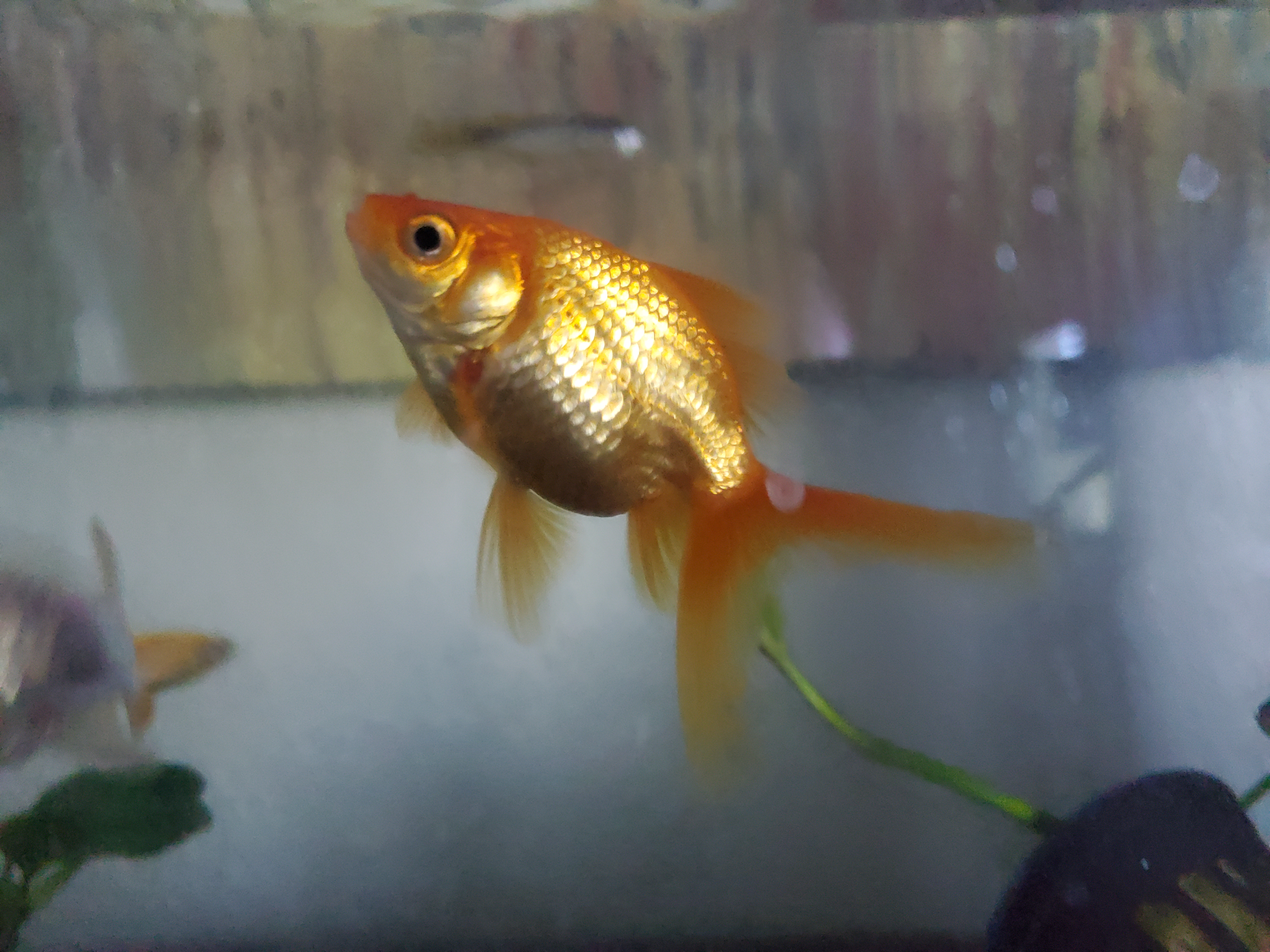
Goldfish are cold-water freshwater fish that grow much larger and live much longer than commonly assumed when given proper aquarium conditions. Bowls are not appropriate housing.
ℹ️
Educational only. KinStation content is reviewed by licensed veterinarians but cannot replace an in-person exam. Always consult a licensed veterinarian or board-certified specialist for diagnosis, treatment, or any decision affecting your pet's health.
🩺 Need expert help with your goldfish?
Connect with a specialist near you or ask a licensed vet — never substitute online guidance for hands-on care in an emergency.
Fancy varieties 6–8 inches; common/comet types 12+ inches at maturity.
Lifespan
10–20 years
Social needs
pair
Native region
domesticated (worldwide); wild progenitor East Asia
Climate
🍂 Temperate
Water type
💧 Freshwater
Family
Cyprinidae
Genus
Carassius
Part of the Goldfish
Domesticated coldwater carp bred over centuries into countless body shapes and colors, from hardy pond comets to delicate fancy varieties.
More goldfish coming soon.
Sounds & video
🎬 Video
Pez de colores (Carassius auratus)
EEIM · Wikimedia Commons · CC BY-SA 4.0
Habitat & space requirements
From the minimum an animal needs to be kept humanely, up to the ideal setup. Bigger is almost always better — minimums are floors, not targets.
Photo coming soon
Minimum
Single fancy goldfish
20–30 gal, heavily filtered
Goldfish are large, long-lived, heavy-waste fish — never bowls. One fancy goldfish needs 20–30 gallons with strong filtration; add ~10–20 gallons per additional fish.
Recommended
Pair / group aquarium
40–55 gal for two fancies
A long aquarium with oversized filtration, smooth décor, and live or robust plants. Single-tailed (comet/common) goldfish grow far larger and are pond fish, not aquarium fish.
Ry362 / CC BY-SA 3.0 (Wikimedia Commons)
Photo coming soon
Ideal
Pond (single-tail) / large tank
Outdoor pond or 75 gal+ tank
Single-tailed goldfish belong in a pond (hundreds of gallons). Fancy goldfish thrive in a large tank with pristine water, gentle flow, and room to grow to their full adult size.
Life & growth stages
How this animal changes through its life — each stage often has its own care, diet and space needs.
Photo coming soon
Egg
Fish eggs are small, translucent spheres, often laid in clutches on plants, substrate, or in a nest — or carried/brooded by a parent in livebearing and mouth-brooding species. A dark eye spot and the curled embryo become visible inside as development progresses.
Photo coming soon
Fry
Newly hatched fry are tiny and semi-transparent, frequently still carrying a yolk sac that fuels them before they feed freely. They lack full fin structure and adult coloration, staying near cover until they can swim and forage on their own.
Photo coming soon
Juvenile
Juveniles look like miniature adults but with developing fins and muted or different markings; many species shift pattern and color as they mature. Growth is rapid at this stage given clean water and steady feeding.
Adult
Adults show the species' full size, finnage, and mature coloration, and are sexually mature. Many fish develop sex-specific differences in size, color, or fin shape, which can intensify during breeding.
Color & pattern variants
Natural variants occur in the wild; selectively bred (man-made) variants were developed in captivity.
The image of a goldfish in a small bowl is one of the most enduring myths in pet keeping. Goldfish are large, messy, long-lived fish that produce a lot of waste and need substantial, well-filtered aquariums. Experienced keepers typically recommend a sizeable tank for even one fancy goldfish and much larger volumes — or a pond — for the streamlined common, comet, and shubunkin types, which can reach a foot or more.
Goldfish are cold-water fish and in most indoor settings do not need a heater, but they do need stable temperatures and, above all, pristine water. Strong mechanical and biological filtration, good aeration, a properly 'cycled' tank, and regular partial water changes are the core of goldfish keeping; their heavy waste output makes water management the central task.
For décor, choose live or soft silk plants and smooth, rounded ornaments. Sharp plastic plants and rough decorations can tear the delicate fins and protruding eyes of fancy varieties such as telescopes and bubble-eyes. A secure but gas-permeable cover, gentle flow, and an environment matched to the fish's swimming ability keep them safe and comfortable.
Substrate
Either bare-bottom (easiest to keep clean) or a layer of smooth, large river stones or fine sand. Avoid pea-sized gravel, which goldfish pick up and can choke on; keep any substrate shallow so it does not trap waste.
Equipment & setup
Goldfish are large, cold-water, heavy-waste fish: give them 20-30 gallons for the first fish plus 10-15 per additional, with strong over-filtration (oversized canister or multiple HOBs) and no heater needed (65-75 F). They need lots of surface agitation for oxygen and only sturdy plants like anubias, since they uproot and eat softer ones.
Diet
Goldfish are omnivores that do well on a high-quality staple food formulated for goldfish, supplemented with blanched vegetables such as peas (a classic remedy that owners and vets both reach for to support digestion), leafy greens, and occasional protein treats. A varied diet supports better health than a single dry food alone.
Food format matters for the rounder fancy varieties. Floating flakes and pellets encourage gulping of air at the surface, which can contribute to swim-bladder problems, so many keepers prefer sinking, well-soaked foods for fancies. Feed small amounts that are fully eaten within a minute or two, once or twice a day.
Overfeeding is the single most common and damaging mistake: uneaten food and the extra waste from overfed fish quickly degrade water quality, which is behind a large share of goldfish illness. Feeding modestly and keeping the water clean does more for goldfish health than almost anything else.
Behavior & temperament
Goldfish are surprisingly intelligent and engaging for fish. They are social shoaling animals that generally do better with companions, and they readily learn routines — many recognize the person who feeds them and gather expectantly at feeding time, and some can be trained to take food from a hand or respond to simple cues.
Compatibility within a goldfish tank is worth planning. Fast-swimming comets and commons easily outcompete slow, awkward-swimming fancy varieties for food, so mixing body types can leave the fancies underfed; grouping fish of similar variety and swimming ability works best. Goldfish are peaceful and not predatory toward similarly sized tankmates, but their size, waste output, and cold-water needs make them poor matches for most tropical community fish.
Day to day, healthy goldfish are active and curious, foraging along the substrate and exploring the tank. Behavioral changes — listlessness, hiding, gasping at the surface, clamped fins, or scraping against objects ('flashing') — are important early signals that something, very often water quality, needs attention.
Health
The golden rule of goldfish health is that most problems trace back to water quality, so a test kit for ammonia, nitrite, nitrate, and pH is essential equipment, not an optional extra. A properly cycled, well-filtered tank with regular water changes prevents the majority of disease. Quarantining new fish and plants reduces the risk of introducing pathogens.
Common ailments include 'ich' (white spot disease, caused by a protozoan parasite), bacterial and fungal fin rot, swim-bladder disorders that leave a fish floating or sinking abnormally, and dropsy, a serious sign of fluid buildup often reflecting internal disease. Many of these are linked to stress from poor or unstable water conditions.
Watch for warning signs: white spots, frayed or reddened fins, rapid or labored gill movement, gasping at the surface, sustained abnormal buoyancy, loss of color, refusal to eat, or repeated flashing. The first response to almost any of these is to test and correct the water. Aquatic veterinary care exists and is worth seeking when available, especially for valued fish, and a vet can guide treatment far better than guesswork.
Tips, DIY & hacks
Skip bowls entirely, they stunt and slowly kill goldfish; a large tank or outdoor pond is the welfare-correct home. Combat their notorious bioload with weekly water changes and pre-soaking pellets to reduce swim-bladder/buoyancy issues, and choose tankmates carefully (other goldfish only, not tropical fish).
Origin & history
The goldfish is a domesticated form of a wild Asian carp, selectively bred from naturally occurring color mutations in China beginning over a thousand years ago. Initially kept in ornamental ponds by the wealthy and associated with good fortune, goldfish were later refined into countless fancy forms in China and Japan and eventually carried to Europe and the Americas, where they became one of the most widely kept pet animals in the world.
Centuries of breeding produced a startling diversity of varieties from the same species: the hardy common and comet goldfish; the twin-tailed fantail and ryukin; the round, dorsal-finless ranchu and lionhead; and the dramatically modified telescope-eye, bubble-eye, and celestial. With good care goldfish are remarkably long-lived, and the documented record holders have survived for several decades.
Anecdotes & owner lore
Community experience and cultural notes — not veterinary advice. Every animal is an individual; treat these as colour, not care instructions.
The 'three-second memory' is goldfish keeping's most cheerfully wrong cliché. Goldfish in fact remember for months, can be trained to swim through hoops, push tiny levers, and tell colors apart, and famously learn to recognize and crowd toward the person who feeds them — a daily reminder that the fish in the bowl-shaped myth deserve far better than the myth implies. The story of Tish, a British goldfish reportedly won at a funfair who lived more than four decades, has become a quiet rebuke to the idea of goldfish as disposable prizes.
Goldfish swim through art and culture from classical Chinese painting to Matisse, and they remain a symbol of prosperity and luck across East Asia. Owners trade fond stories of goldfish 'begging' at the glass the instant someone enters the room, of a favorite fish that nibbles fingers at feeding time, and of the slow, companionable presence of a fish that has been part of the household for many years — proof that, given a proper tank, a goldfish is a genuine long-term pet rather than a weekend novelty.
Common ailments
Ich (white spot disease) — common
Swim bladder disorder — common — More common in fancy (round-bodied) goldfish.
Fin rot — common
Dropsy — rare
Reviewed and signed off by: KinStation Editorial - pre-launch draft (pending DVM review)