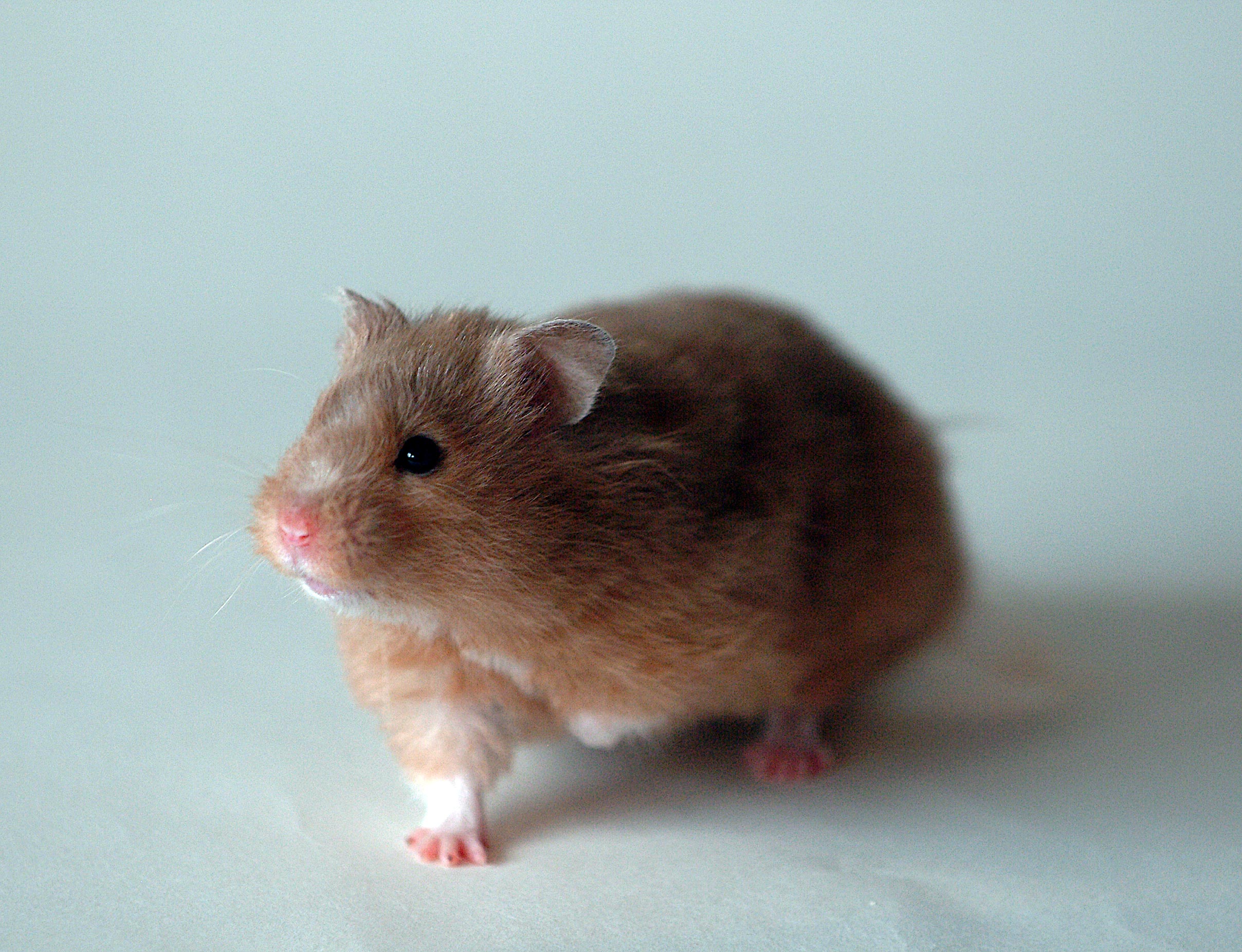
Syrian hamsters, also called golden or teddy bear hamsters, are solitary nocturnal rodents that make popular first pets. They must be housed individually — adult Syrians fight to the death if kept together.
ℹ️
Educational only. KinStation content is reviewed by licensed veterinarians but cannot replace an in-person exam. Always consult a licensed veterinarian or board-certified specialist for diagnosis, treatment, or any decision affecting your pet's health.
🩺 Need expert help with your hamster (syrian)?
Connect with a specialist near you or ask a licensed vet — never substitute online guidance for hands-on care in an emergency.
Adults typically 5–7 inches long, 4–7 oz (120–200 g).
Lifespan
2–3 years
Social needs
solo
Native region
Middle East (Syria and southern Turkey)
Origin
Old World
Climate
🏜️ Arid
Family
Cricetidae
Genus
Mesocricetus
Part of the Hamsters
Small burrowing rodents of the family Cricetidae kept as popular starter pets, ranging from the larger solitary Syrian to the tiny, fast Phodopus dwarfs. They share a love of digging, wheel-running, cheek-pouch hoarding, and crepuscular activity.
From the minimum an animal needs to be kept humanely, up to the ideal setup. Bigger is almost always better — minimums are floors, not targets.
Minimum
Unbroken floor space
≈ 450 sq in (≈ 100 × 50 cm) continuous
Syrian hamsters are solitary and need one large continuous floor area, not connected tubes/compartments. Deep bedding (15–25 cm) for burrowing matters as much as floor area.
Su--May / CC BY 2.0 (Wikimedia Commons)
Photo coming soon
Recommended
Larger tank or bin
≈ 600 sq in + 25 cm bedding depth
A 120 × 50 cm glass tank or bin cage with deep bedding, a large solid wheel (≥ 28 cm), sand bath, hides, and chews lets a Syrian express natural burrowing and foraging.
Ideal
Bioactive-style setup
100 × 80 cm+ with deep substrate zones
Oversized enclosure with multi-chamber burrowing depth, varied substrate, foraging clutter, and a big wheel. Closest to wild ranging behaviour.
Lo / CC0 (Wikimedia Commons)
Life & growth stages
How this animal changes through its life — each stage often has its own care, diet and space needs.
Photo coming soon
Newborn
Newborn mammals are nursed on their mother's milk. Many are born helpless — blind, deaf, and sparsely furred (altricial, as in dogs, cats, and rodents) — while others stand and follow within hours (precocial, as in hoofed livestock).
Photo coming soon
Juvenile
After weaning, juveniles grow quickly and become increasingly active, playful, and independent. Adult coat, proportions, and (in many species) the permanent teeth come in as they approach full size.
Photo coming soon
Adult
Adults reach full body size and sexual maturity, with the species' mature coat and build. Sexual dimorphism — differences in size, mane, horns, or markings — is pronounced in some mammals and subtle in others.
Senior
Senior animals show aging signs such as graying fur, reduced activity, and a greater need for veterinary monitoring of joints, teeth, and organ function. Lifespan and the onset of old age vary widely by species and size.
Color & pattern variants
Natural variants occur in the wild; selectively bred (man-made) variants were developed in captivity.
Syrian hamsters must be housed alone. They are solitary in the wild and adult Syrians will fight, often fatally, if kept together, so one hamster per enclosure is a firm rule. The enclosure itself should be far larger than most pet-store cages: modern welfare guidance calls for a generous expanse of continuous, unbroken floor space, because hamsters roam widely each night.
Deep bedding is essential. Syrians are dedicated burrowers, and a thick layer of safe, dust-extracted substrate over a large part of the cage lets them dig the tunnels that are central to their natural behavior and mental wellbeing. Add a solid-surface exercise wheel large enough that the hamster's back stays flat rather than arched, several hides, plenty of chew options for their ever-growing teeth, and a sand bath for grooming.
Avoid the cramped tube-and-module setups marketed for hamsters, which often have poor ventilation and too little usable space, and skip wire-floored levels that can injure feet. Keep the cage in a quiet room out of direct sun and away from drafts; because hamsters are nocturnal, a bedroom is a poor location once the nightly wheel-running begins.
Substrate
Provide a deep (25 cm or more) layer of unscented paper bedding mixed with aspen so a Syrian can dig and tunnel, which is a major welfare need. Add a sand bath of chinchilla sand (not dust) for grooming and a small pocket of nesting material like plain toilet paper. Avoid cedar/pine shavings and fluffy synthetic 'cotton wool' nesting, which causes impaction and limb injuries.
Equipment & setup
House Syrians in a large enclosure with at least 100 x 50 cm of unbroken floor space and a deep base for burrowing, kept at normal room temperature (around 20-24 C) with no heat lamp. A large solid-surface wheel of at least 28 cm diameter is essential to protect the spine, along with hides, climbing/gnaw items, and a water bottle or bowl. Good ventilation plus deep bedding gives the best of tank and bin-cage setups.
Diet
A good staple is a complete commercial hamster mix combining seeds, grains, and pellets formulated for the species, which provides balanced nutrition and lets the hamster forage. Scattering some food in the bedding rather than always using a bowl encourages natural foraging behavior. Fresh, clean water should always be available, typically from a sipper bottle.
Supplement the staple with small amounts of fresh vegetables and the occasional protein source such as a mealworm or a little plain cooked egg. Treats should stay small and infrequent. Sugary fruit, citrus, and anything sticky should be limited or avoided, and chocolate, onion, and garlic are off-limits entirely.
A quirk worth knowing: hamsters stuff food into their cheek pouches to carry and cache it, so be cautious with anything sharp or sticky that could injure or stick in a pouch, and don't be alarmed to find tidy food hoards hidden around the cage. Because uneaten fresh food spoils, remove perishable leftovers daily.
Behavior & temperament
Syrian hamsters are strictly solitary and nocturnal. Expect them to sleep through the day and become active in the evening and overnight, which is simply their nature rather than a problem to fix; trying to wake a sleeping hamster repeatedly causes stress and defensive nips.
Taming takes patience. Worked with gently and consistently — letting the hamster come to your hand, offering treats, keeping sessions calm and low to the ground — most Syrians become tolerant and even enjoy interaction over days to weeks. Sudden grabs, especially of a startled or sleeping hamster, are the usual cause of bites.
Behavioral signals are worth reading. Teeth chattering, defensive lunging, or freezing flat indicate fear or annoyance. Persistent bar-chewing, repetitive route-pacing, or monotonous climbing can be signs of stress or an enclosure that is too small or under-enriched, and are a cue to improve the habitat rather than to punish. Generous space, deep bedding, and a proper wheel resolve many of these issues.
Health
Hamsters are small and short-lived, which compresses age-related disease into a brief window, so regular gentle observation is the owner's most useful tool. An exotic-experienced veterinarian is worth identifying early, since not all clinics see hamsters.
The best-known illness is 'wet tail' (proliferative ileitis), a serious, often fatal diarrheal disease especially of young, recently stressed hamsters; a wet, soiled rear end with lethargy is an emergency. Other common problems include overgrown teeth and nails, skin and fur issues, and tumors, which become increasingly likely in older hamsters.
Seek veterinary care for signs such as a wet or dirty tail area with diarrhea, sudden lethargy or a hunched posture, loss of appetite, labored breathing, visible lumps, or wounds. Given how quickly small animals decline, prompt attention to any 'off' behavior gives the best chance of a good outcome.
Tips, DIY & hacks
Syrian hamsters are strictly solitary and must be housed alone to avoid lethal fighting. Build cheap enrichment with cardboard tubes, multi-chamber hides, and a sprinkle of foraging seed mix across the substrate to encourage natural cheek-pouching and digging. A wheel that is too small forces a hunched posture, so size up; bar-biting and repetitive route-tracing are classic signs the enclosure is too small.
Origin & history
Almost every pet Syrian hamster traces back to a single remarkable event. In 1930, a litter was collected near Aleppo, Syria, and a handful of those animals founded the entire domestic population — meaning the millions of golden hamsters kept worldwide today are essentially all descendants of that small founding group. The species was little known as a pet before this, and wild Syrian hamsters remain scarce in their native range.
From that base, selective breeding produced a range of coat colors, patterns, and types, including the long-haired 'teddy bear' hamsters, satin and rex coats, and many color varieties, all still the same species. Their hardiness, manageable size, and tractable nature quickly made them a staple of the pet trade and a fixture of childhood first pets.
Anecdotes & owner lore
Community experience and cultural notes — not veterinary advice. Every animal is an individual; treat these as colour, not care instructions.
Hamster owners delight in the cheek-pouch magic trick: a hamster can pack away a startling volume of food, transforming into a lopsided, wide-faced little hoarder before trundling off to stash it, then 'emptying' the pouches with a comical face-rubbing routine. New owners are often briefly alarmed before realizing the bulging cheeks are entirely normal. The nightly wheel marathon is another rite of passage — many a household has learned to move the cage out of the bedroom after the first squeaky 2 a.m. session.
Hamsters have a cozy place in popular culture, from countless children's stories to the viral internet fame of hamsters filmed running tiny obstacle courses and 'mazes.' Owners trade stories of escape artists who vanish for days behind the furniture (hamsters are notorious Houdinis), of elaborate burrow systems excavated overnight in deep bedding, and of the universal hamster habit of rearranging the entire cage to its own exacting specifications the moment the human has finished cleaning it.
Common ailments
Dental disease — common
Wet tail (proliferative ileitis) — common — Most dangerous in recently weaned, recently stressed hamsters.
Tumors (neoplasia) — common
Reviewed and signed off by: KinStation Editorial - pre-launch draft (pending DVM review)