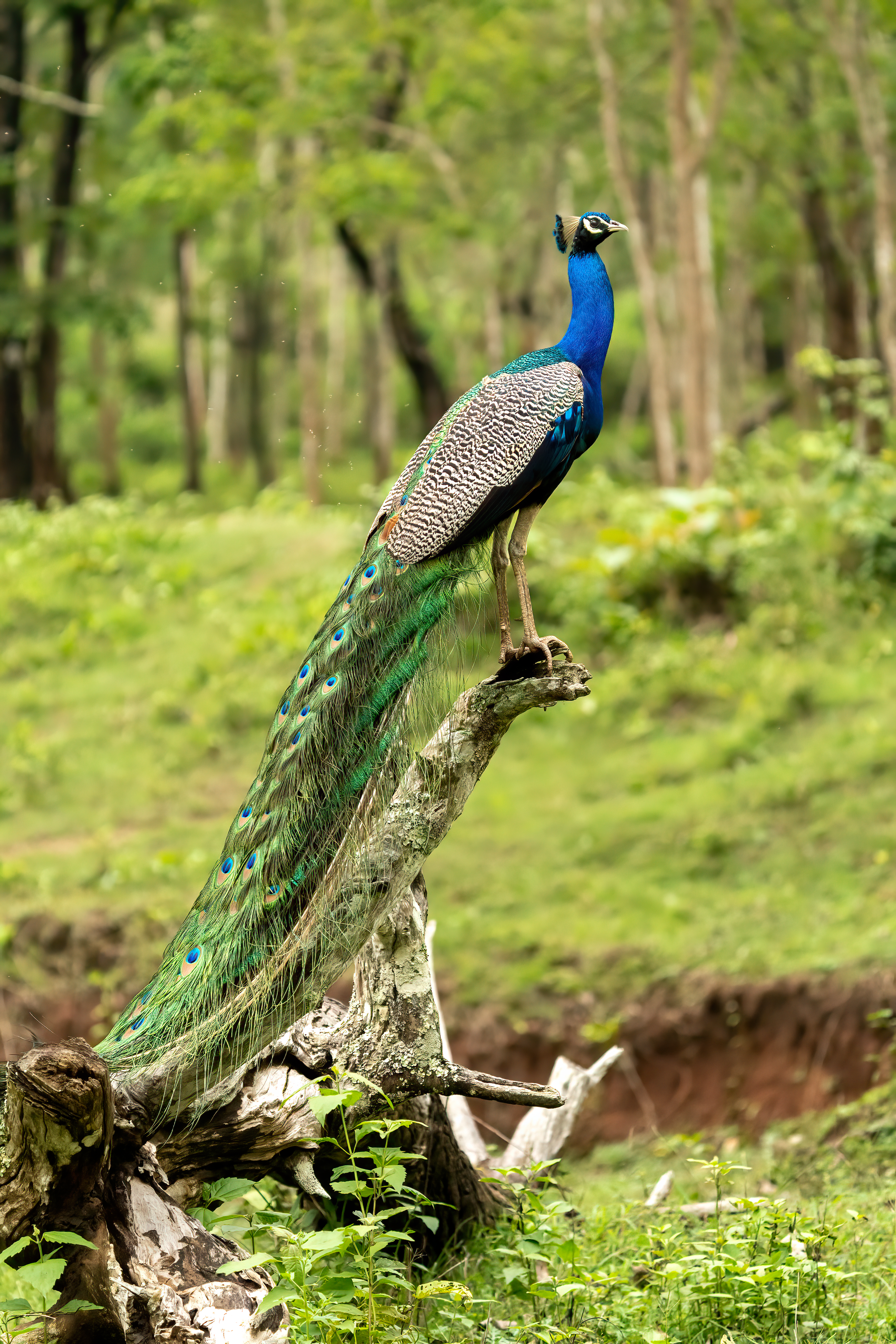
Spectacular ornamental gamebirds famed for the peacock's iridescent train, kept on acreage as living ornaments. Hardy and long-lived, but loud, far-ranging, strong-flying, and not suited to small or noise-sensitive properties.
ℹ️
Educational only. KinStation content is reviewed by licensed veterinarians but cannot replace an in-person exam. Always consult a licensed veterinarian or board-certified specialist for diagnosis, treatment, or any decision affecting your pet's health.
🩺 Need expert help with your indian peafowl?
Connect with a specialist near you or ask a licensed vet — never substitute online guidance for hands-on care in an emergency.
Body ~1 m; peacock's train extends total length to ~2-2.3 m. Weight 4-6 kg. Females smaller and trainless.
Lifespan
15–25 years
Social needs
group
Native region
Indian subcontinent (India and Sri Lanka)
Origin
Old World
Climate
⛅ Subtropical
Family
Phasianidae
Genus
Pavo
Part of the Peafowl
Large, spectacular ornamental gamebirds famed for the peacock's iridescent train. Hardy, long-lived, and kept on acreage as living ornaments — but loud, far-ranging, and strong-flying.
More peafowl coming soon.
Habitat & space requirements
From the minimum an animal needs to be kept humanely, up to the ideal setup. Bigger is almost always better — minimums are floors, not targets.
Photo coming soon
Minimum
Tall aviary + shelter
≈ 100 sq ft aviary / bird, 8 ft tall
Indian Peafowl are large gallinaceans whose cocks carry a 5 ft train. A welfare minimum is 100 sq ft of aviary per bird, ≥ 8 ft tall (the cock fans his train vertically), with a 3-sided draught-free shelter, high roost bars (≥ 6 ft, very strong), grit, calcium, clean water, and ½ in hardware cloth.
Photo coming soon
Recommended
Large aviary + cover plants
≈ 200 sq ft aviary / bird, 10 ft tall
A 200 sq ft per bird aviary, ≥ 10 ft tall, with strong elevated roosts, planted cover, dust-bath, and a 3-sided shelter lets peafowl strut, display, and roost naturally. Provide grit, calcium, varied insect forage, and a winter draught-free roost — peafowl tolerate cold but hate damp.
Photo coming soon
Ideal
Free-range estate flock
Free-range homestead + tree roost + shelter
Free-range estate or homestead with overnight access to a draught-free 3-sided shelter and high tree roosts is the welfare ideal for this iconic Indian gallinaceous bird. Provide overhead cover for peachicks (hawk-vulnerable), varied forage, and a quiet display lawn — cocks call loudly during breeding season, so flock placement matters for neighbours.
Life & growth stages
How this animal changes through its life — each stage often has its own care, diet and space needs.
Photo coming soon
Egg
Birds develop inside a hard-shelled egg incubated by the parent(s). Egg size, shell color, and clutch size vary by species; the embryo develops over days to weeks before hatching.
Photo coming soon
Hatchling / Chick
Hatchlings are either altricial — naked, blind, and dependent on parents (typical of parrots and songbirds) — or precocial — downy, mobile, and self-feeding soon after hatching (typical of poultry and waterfowl). Down gives way to the first feathers.
Photo coming soon
Juvenile / Fledgling
Fledglings grow in their juvenile plumage and begin to fly and feed themselves, though they may still beg from parents at first. Juvenile feathering is often duller than the adult and is replaced as the bird matures.
Adult
Adults attain full body size and mature plumage, and are capable of breeding. Many species show distinct adult coloration, and in sexually dimorphic birds males and females differ in plumage, size, or markings.
(c) kdagen45, some rights reserved (CC BY-NC) via iNaturalist — https://www.inaturalist.org/observations/121028793
Color & pattern variants
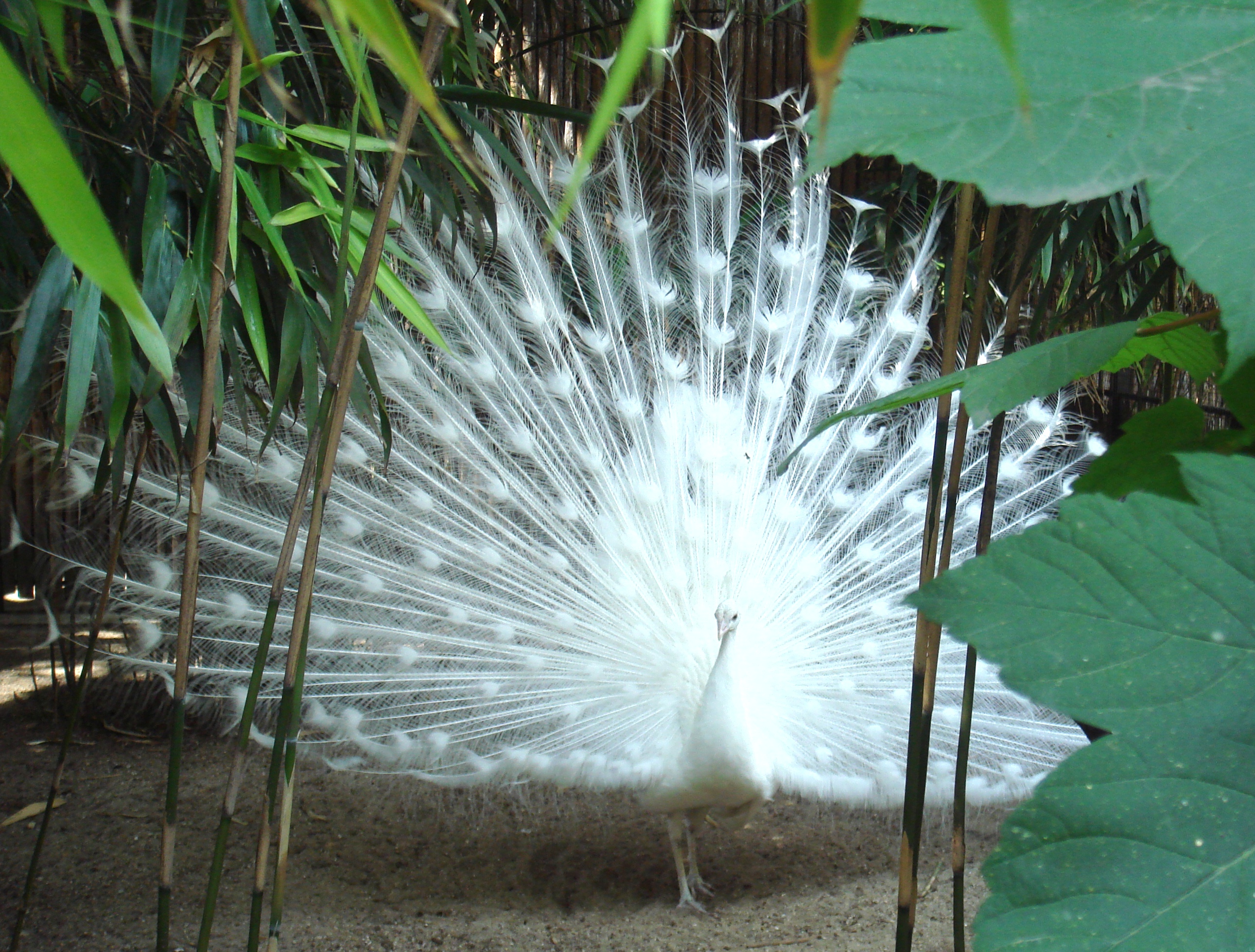
Natural variants occur in the wild; selectively bred (man-made) variants were developed in captivity.
Peafowl need **space and tall, secure housing**. A large **covered aviary/pen** is strongly recommended (~**a roomy walk-in pen, often 3+ m tall and many square meters per bird**) because they **fly powerfully and roost high** and will leave un-penned to roam neighborhoods and roads. They need **high roosts** (they instinctively roost on the highest available perch — a barn rafter, tree, or tall pen beam), shelter from wind and rain, and shade. New birds must be **penned for 4-6 weeks minimum** to imprint on home before any free-ranging. They are surprisingly cold-hardy if dry and draft-free, but provide shelter and protect against frostbite in severe cold.
Substrate
Use **sand, pea gravel, or pine shavings/straw** in the pen — well-drained, dry footing matters for foot health on these heavy birds. Provide **high, sturdy roosts**. On range, well-drained ground reduces parasite and blackhead pressure. A dry **dust-bathing area** supports natural parasite control. Avoid damp, fouled litter.
Equipment & setup
The key item is a **tall, covered, predator-proof aviary** with **high roosts**, shelter, and shade. Standard poultry fencing won't contain flying peafowl, so a roofed pen is the norm. Provide **large feeders/waterers**. Peachicks need a **brooder with heat plate/lamp**, high-protein starter, and shallow, drown-proof water. In cold climates, a dry draft-free shelter and unfrozen water suffice; supplemental heat is rarely needed for adults.
Diet
Feed a **gamebird maintenance/breeder ration**; many keepers use a **gamebird or all-flock pellet** plus grains, supplemented with greens, fruit, and protein treats (mealworms). **Peachicks need high-protein gamebird starter (~28-30%)**. Provide **grit** and free-choice **oyster shell** for breeding hens. They forage on insects, seeds, and vegetation when ranged. Clean water at all times. Avoid feeding only scratch grains, which is nutritionally inadequate for these large birds.
Behavior & temperament
Peafowl are **social and best kept in small groups**; a lone bird is stressed. Peacocks **display their trains and call loudly** (a far-carrying 'may-AWE' scream) especially in the spring breeding season — the noise is a frequent neighbor complaint. They roost high, are wary, and can become tame with patient handling but are not cuddly. Cocks grow their spectacular train at ~2-3 years and shed it annually after breeding. They can be hard on gardens and reflective surfaces (males attack their reflections). Generally peaceful with other poultry but large.
Health
Peafowl are long-lived and hardy but susceptible to **blackhead disease (histomoniasis)** — like turkeys, **don't co-house with chickens** and control cecal worms; this is a leading cause of loss. They are also prone to **internal parasites** (deworm on a vet-guided schedule), **coccidiosis** in young birds, and **respiratory disease**. Peachicks are delicate early on (chilling, drowning). Frostbite of feet/wattles can occur in severe cold. They can carry **avian influenza**; practice biosecurity. Find an avian/exotic vet familiar with gamebirds.
Tips, DIY & hacks
Only keep peafowl with **acreage and tolerant neighbors** — the spring screaming carries for over a kilometer. **Pen new birds for at least a month** before free-ranging so they roost at home, and even then expect them to wander and roost high. **Never house with chickens** (blackhead risk). Provide tall roosts and a roofed pen. Collect peahen eggs (they're poor sitters in captivity; many keepers incubate or foster under broody hens). Be patient — trains and full color take 2-3 years to develop. **Check local ordinances**; peafowl are legal to keep in most of the US but noise and free-roaming birds cause disputes.