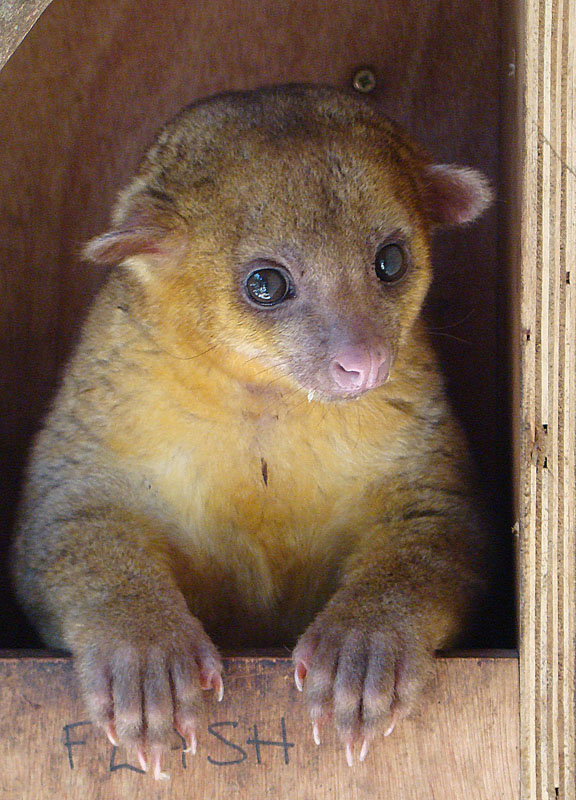
Kinkajous are arboreal Central and South American mammals related to raccoons. They are charismatic but nocturnal, long-lived, and difficult to keep — they bite when overstimulated and carry zoonotic risks. **Banned or permit-required in many U.S. states.**
ℹ️
Educational only. KinStation content is reviewed by licensed veterinarians but cannot replace an in-person exam. Always consult a licensed veterinarian or board-certified specialist for diagnosis, treatment, or any decision affecting your pet's health.
🩺 Need expert help with your kinkajou?
Connect with a specialist near you or ask a licensed vet — never substitute online guidance for hands-on care in an emergency.
Adults 3–10 lb (1.4–4.6 kg); body length 17–22 inches plus prehensile tail.
Lifespan
20–25 years
Social needs
solo
Native region
Central and South America
Origin
New World
Climate
🌴 Tropical
Family
Procyonidae
Genus
Potos
Part of the Kinkajous
Arboreal, nocturnal rainforest mammals related to raccoons, known as exotic 'honey bear' pets.
More kinkajous coming soon.
Habitat & space requirements
From the minimum an animal needs to be kept humanely, up to the ideal setup. Bigger is almost always better — minimums are floors, not targets.
Photo coming soon
Minimum
Tall climbing enclosure
≈ 6 × 6 × 6 ft (height-priority)
Kinkajous are arboreal, nocturnal rainforest mammals, so even a minimum enclosure must prioritise height (around 6 ft) with dense branches, ropes, hammocks, and an elevated nest box, kept at 24–28 °C with moderate humidity (about 50–70%). They are largely solitary in care but need extensive vertical climbing space and nightly out-of-cage activity to avoid stress and obesity. They are an advanced, long-lived exotic with a powerful bite and strict nocturnal needs.
Photo coming soon
Recommended
Floor-to-ceiling arboreal room
Room-height enclosure, ≈ 8 ft+ tall
A responsible keeper provides a tall, room-sized enclosure (8 ft or more in height) packed with horizontal and diagonal climbing branches, ropes, multiple nest boxes, and foraging stations for fruit and nectar feeding, at 24–28 °C and moderately humid. Generous nightly free-roam time in a kinkajou-proofed room supports their need to travel and forage in the canopy. Enrichment and routine must respect their reversed, nocturnal clock.
Photo coming soon
Ideal
Heated indoor canopy habitat
Large planted vertical room/atrium
The ideal is a large, warm, humid indoor atrium or planted room built around vertical canopy structure — tall branch networks, live or sturdy artificial foliage, multiple denning sites, and complex foraging — mimicking the rainforest canopy they inhabit. This allows natural climbing, leaping, foraging, and nest use across a wide three-dimensional space. It is genuinely habitat-scale and beyond most private setups.
Life & growth stages
How this animal changes through its life — each stage often has its own care, diet and space needs.
Photo coming soon
Newborn
Newborn mammals are nursed on their mother's milk. Many are born helpless — blind, deaf, and sparsely furred (altricial, as in dogs, cats, and rodents) — while others stand and follow within hours (precocial, as in hoofed livestock).
Photo coming soon
Juvenile
After weaning, juveniles grow quickly and become increasingly active, playful, and independent. Adult coat, proportions, and (in many species) the permanent teeth come in as they approach full size.
Photo coming soon
Adult
Adults reach full body size and sexual maturity, with the species' mature coat and build. Sexual dimorphism — differences in size, mane, horns, or markings — is pronounced in some mammals and subtle in others.
Senior
Senior animals show aging signs such as graying fur, reduced activity, and a greater need for veterinary monitoring of joints, teeth, and organ function. Lifespan and the onset of old age vary widely by species and size.
Habitat & enclosure
Kinkajous are arboreal rainforest mammals that need a tall enclosure with extensive climbing structure — branches, ropes, shelves, and platforms — because they spend their lives in the trees and use a prehensile tail for balance. A horizontal cage suited to a ground animal is inappropriate; vertical space and the ability to climb and leap are essential.
They are tropical animals that require warm temperatures and benefit from secure nest boxes or hides for sleeping during the day. They are strong, dexterous, and curious, so enclosures must be escape-proof and 'kinkajou-proofed,' and out-of-cage time requires a carefully secured room.
Kinkajous are strictly nocturnal, most active from late evening through the night with climbing, banging, and vocalizing, and exotic-vet sources note this schedule generally cannot be retrained. Prospective keepers must be prepared for a nocturnal animal whose natural activity will disrupt typical household sleep.
Substrate
As an arboreal rainforest mammal, floor substrate matters less than vertical space; line the cage base with newspaper, recycled-paper pellets, or kiln-dried aspen for easy spot-cleaning, and provide a deep, soft nest box lined with fleece or shredded paper for daytime sleeping. Avoid cedar/pine shavings and cat litter.
Equipment & setup
Kinkajous need a very tall, escape-proof enclosure (think large macaw aviary, 6ft+) packed with sturdy branches, ropes, hammocks, and an enclosed sleeping box; maintain warm tropical temps (24-30C) with ceramic heat emitters or panel heaters and 50-70% humidity. They are strictly nocturnal, so dim red/blue night lighting lets you observe without disrupting them, and a heavy water crock plus locking latches (they are escape artists) are mandatory.
Diet
Kinkajous are primarily frugivores, eating a variety of fruits in the wild and also taking nectar; captive diets center on appropriate fruits and a suitable formulated base, with some sources mimicking nectar using diluted honey-water or commercial nectar substitutes, all best structured with exotic-vet guidance. They have a long tongue adapted for reaching nectar and pulp.
Fresh water should always be available. Foods that are toxic to kinkajous include chocolate, onions, garlic, caffeine, and alcohol, and processed human foods are inappropriate.
Because fruit-heavy diets can be unbalanced if not managed, and because individual needs vary, design and monitor the diet with a veterinarian experienced in exotic mammals rather than improvising. No supplement dosing is given here.
Behavior & temperament
Kinkajous are not domesticated, and exotic-vet sources are candid that bites are a matter of when, not if. They can be playful and engaging with a bonded keeper, but they are unpredictable, can bite hard, and may become aggressive — especially as they mature, when hormonal, or if startled or handled against their preference. Their saliva can carry bacteria (such as Kingella potus) that may infect bite wounds.
They are intensely active and acrobatic at night, climbing, leaping, and vocalizing with chirps, hisses, and loud screams. Daytime is for sleeping; forcing a kinkajou onto a human schedule causes stress. They are intelligent and curious, with dexterous hands that get into everything.
Realistic expectations are essential: a kinkajou is a wild, nocturnal animal with a real bite risk, best suited only to experienced exotic keepers who can meet its needs and accept its temperament. They are generally unsuitable around children.
Health
Kinkajous are long-lived (often around 20 years, sometimes more, in captivity), making them a multi-decade commitment. A repeatedly emphasized challenge is veterinary access: a qualified exotic veterinarian who sees kinkajous can be very hard to find, so securing one before acquiring the animal is essential.
Diet-related problems (from unbalanced fruit-heavy feeding), dental disease, obesity, and stress-related issues are concerns, as are bite-wound infections relevant to owners as well as the animal. Their nocturnal nature means health changes may go unnoticed if owners are not attentive during the animal's active hours.
Preventive themes are a veterinarian-designed diet, a tall enriched climbing enclosure, respect for their nocturnal schedule, low-stress handling, and an established exotic-vet relationship. This entry is general guidance only; diagnosis and treatment belong with a qualified veterinarian. Note also the zoonotic bite-infection risk when handling.
Tips, DIY & hacks
Kinkajous are wild exotics with sharp teeth and claws, a long lifespan (20+ years), and legal restrictions in many areas, so confirm local laws and line up an exotic vet before acquiring one. Enrich nightly with smeared honey or fruit in puzzle feeders and frozen-fruit foraging toys, never feed citrus, chocolate, or dairy, and handle from a young age as adults can bite severely if stressed.
Origin & history
The kinkajou (Potos flavus) is a nocturnal, arboreal mammal of the rainforests of Central and South America. Despite the nickname 'honey bear,' it is a member of the raccoon family (Procyonidae), not a bear or a primate. It is a wild species, not domesticated, kept by some as an exotic pet.
In the United States, legality varies by state — some allow ownership, some require permits, and many prohibit it — with additional local restrictions possible. Anyone considering a kinkajou must check their state's and locality's exotic-pet laws first — see the cited exotic-vet care resource and legal overview, with jurisdiction-specific status tracked separately on this entry.
Anecdotes & owner lore
Community experience and cultural notes — not veterinary advice. Every animal is an individual; treat these as colour, not care instructions.
The kinkajou's golden fur, huge dark eyes, and habit of lapping nectar earned it the affectionate nickname 'honey bear,' and its eerie nighttime calls gave it another: in parts of Latin America it's linked to the 'la llorona' legend because of its wailing screams in the dark canopy. Its prehensile tail works like a fifth hand, letting it hang and swing through branches with remarkable agility.
Kinkajous had a pop-culture moment when a celebrity's pet kinkajou bit her, briefly putting the species in headlines and illustrating exactly the bite risk exotic vets warn about. Keepers describe charming, mischievous animals that can be devoted to a trusted person yet turn nippy without warning — a reminder, repeated by sanctuaries, that the kinkajou's cuddly looks hide a wild, nocturnal, sharp-toothed rainforest creature.
Common ailments
Obesity — common
Nutritional imbalance — common
Bite-wound infection (zoonotic risk) — common — Exotic-vet sources describe bites as a matter of 'when, not if'; this concern is primarily a human health/zoonosis consideration.
Legality (US)
Educational only. Confirm current rules with your state wildlife agency or local authority before acquiring an animal.
US · CA — Banned — California prohibits *Potos flavus* under Cal. Code Regs. tit. 14 § 671 — restricted species list.
US · GA — Banned — Georgia DNR Wild Animal Regulations prohibit possession of kinkajous and most procyonids without a wild animal license, which is generally not issued for pet purposes.
US · HI — Banned — Hawaii Department of Agriculture restricted animals list prohibits importation and possession of kinkajous.
Reviewed and signed off by: KinStation Editorial - pre-launch draft (pending DVM review)