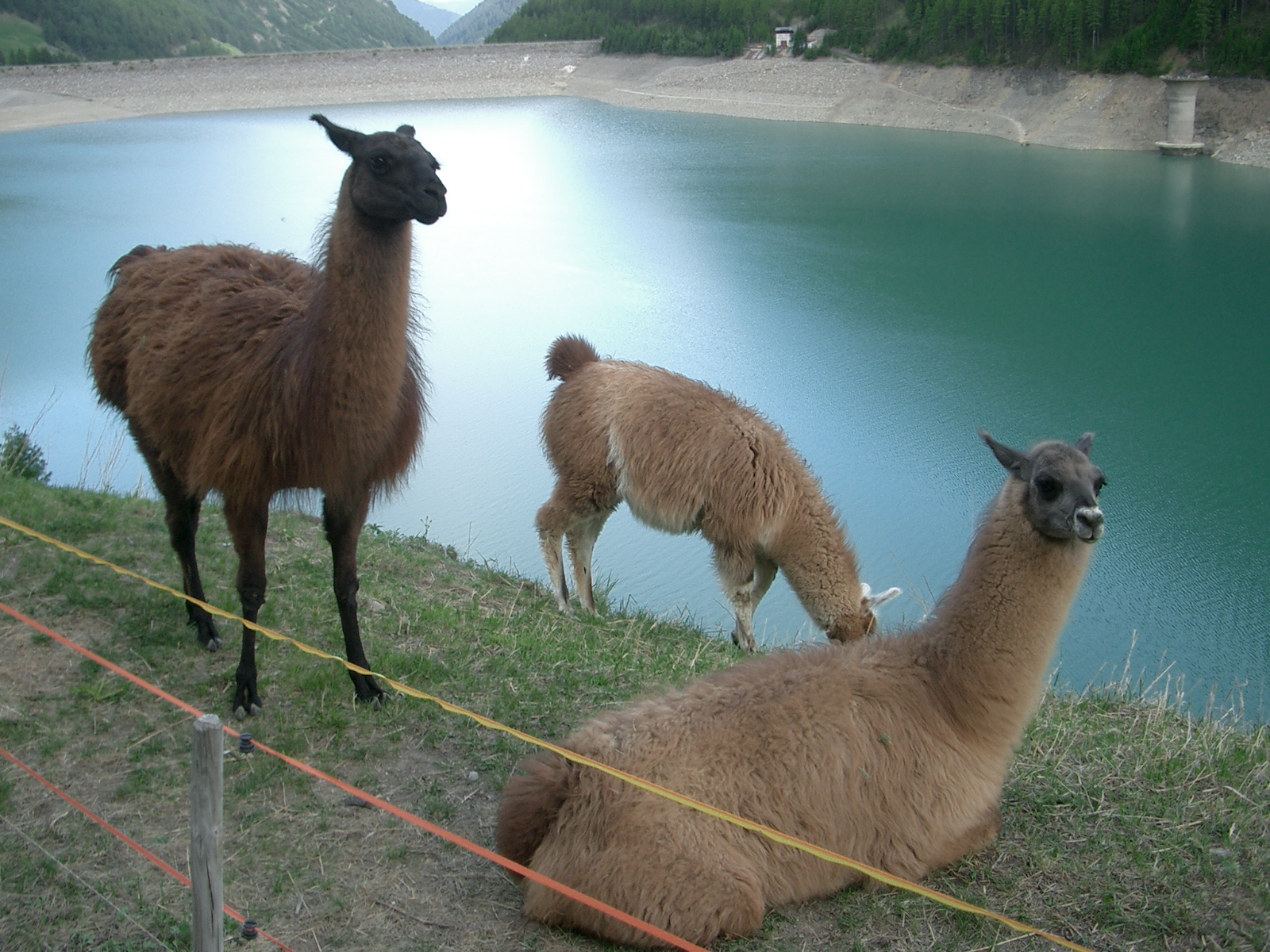
The llama is a large, calm, intelligent South American camelid kept as a pack animal, fiber producer, livestock guardian, and companion. Llamas are hardy, easy on pasture, and gentle when well-handled, but they are herd animals that must be kept with other camelids and need shelter, shearing, and routine foot and parasite care.
ℹ️
Educational only. KinStation content is reviewed by licensed veterinarians but cannot replace an in-person exam. Always consult a licensed veterinarian or board-certified specialist for diagnosis, treatment, or any decision affecting your pet's health.
🩺 Need expert help with your llama?
Connect with a specialist near you or ask a licensed vet — never substitute online guidance for hands-on care in an emergency.
Large camelid: ~5.5-6 ft tall at the head, ~4 ft at the shoulder, and 250-450 lb — bigger and longer-faced than the alpaca.
Lifespan
15–25 years
Social needs
group
Native region
Andean South America (domesticated from the wild guanaco)
Origin
New World
Climate
⛰️ Montane
Family
Camelidae
Genus
Lama
Part of the Camelids
Domestic South American camelids — llamas and alpacas — kept for fiber, packing, guardian work, and companionship. Calm, intelligent, hardy herd animals that need a camelid companion, shelter, annual shearing, and routine foot and parasite care.
From the minimum an animal needs to be kept humanely, up to the ideal setup. Bigger is almost always better — minimums are floors, not targets.
Photo coming soon
Minimum
Half-acre + shelter + companion
0.5 ac per animal, 3-sided shelter, pair minimum
Half an acre per animal with a 3-sided shelter and at least one companion of the same species — a solitary camelid is a welfare violation. Fencing should be 4–5 ft, predator-aware.
Photo coming soon
Recommended
Rotated pasture + shed
1 ac per animal, rotated, 4–5 ft fencing
One acre per animal with rotational grazing, a roomy shed, and 4–5 ft fencing. Add a shearing/handling area and shade — alpacas and llamas overheat quickly in summer.
Photo coming soon
Ideal
Pasture + barn + herd of 3+
Multi-acre pasture, barn, herd ≥ 3
Generous pasture with a proper barn for shearing and weather, a herd of 3+, and a vet experienced with camelids. Closest to natural Andean herd behaviour and best long-term welfare.
Life & growth stages
How this animal changes through its life — each stage often has its own care, diet and space needs.
Photo coming soon
Newborn
Newborn mammals are nursed on their mother's milk. Many are born helpless — blind, deaf, and sparsely furred (altricial, as in dogs, cats, and rodents) — while others stand and follow within hours (precocial, as in hoofed livestock).
Photo coming soon
Juvenile
After weaning, juveniles grow quickly and become increasingly active, playful, and independent. Adult coat, proportions, and (in many species) the permanent teeth come in as they approach full size.
Photo coming soon
Adult
Adults reach full body size and sexual maturity, with the species' mature coat and build. Sexual dimorphism — differences in size, mane, horns, or markings — is pronounced in some mammals and subtle in others.
Senior
Senior animals show aging signs such as graying fur, reduced activity, and a greater need for veterinary monitoring of joints, teeth, and organ function. Lifespan and the onset of old age vary widely by species and size.
Color & pattern variants
Natural variants occur in the wild; selectively bred (man-made) variants were developed in captivity.
Llamas are hardy and adapt to a wide range of climates with modest infrastructure: a **dry, draft-free three-sided shelter or barn** for wind, rain, and shade, plus a pasture or dry lot. They are efficient grazers, so land needs are low — several llamas do well on an acre or two of decent pasture supplemented with hay. Fencing is straightforward: standard livestock fencing (woven wire or smooth electric) primarily to keep predators out and llamas in; llamas generally respect fences and aren't escape artists like goats. They tolerate cold well thanks to their fleece but need **shade and cooling in summer heat** (shorn fiber, shade, fans, and access to water/wading), since heat stress is a real risk in hot, humid climates. A communal **dung-pile area** keeps pastures and parasite loads tidy — llamas use shared latrine spots.
Substrate
On pasture, well-drained ground keeps feet healthy; llamas conveniently concentrate manure in **communal dung piles**, making clean-up and parasite management easier than with many livestock. Bed shelters with clean, dry **straw** in cold weather; sand or fine gravel footing works in run-in areas and helps wear toenails. Many keepers provide a **sand or dirt 'rolling' area** — llamas dust-bathe by rolling, which conditions the fleece and is a natural behavior. Keep sleeping and loafing areas dry to protect feet from rot and fleece from matting.
Equipment & setup
Essentials: a dry shelter, predator-resistant fencing, water troughs, a hay feeder, and a **free-choice camelid mineral** feeder. Husbandry gear: a well-fitted **camelid halter** (fitted carefully — it must sit on bone, not the soft cartilage of the nose, to avoid breathing problems), a lead, toenail trimmers, and shearing equipment or access to a shearer. Pack llamas use a fitted **pack saddle and panniers**. For summer, provide shade, fans, and a wading/cooling option. A handling chute or small catch pen makes shearing, nail trims, and vet work easier. Round out with selenium/vitamin-D supplements per your region and a relationship with a camelid-savvy veterinarian.
Diet
Llamas are efficient **modified ruminants (camelids)** that thrive on relatively poor forage — good-quality **grass pasture and grass hay** form the entire diet for most animals, and they need far less feed than their size suggests. Provide **free-choice camelid-specific minerals** (camelids have particular needs and many regions are selenium-deficient, requiring supplementation) and clean water. Grain or concentrate is rarely needed and easily causes obesity; reserve small amounts only for pregnant/lactating females, growing crias, or thin animals. Llamas are prone to overfeeding, so body-condition-score by feeling along the spine through the fleece. Avoid rich alfalfa as the sole feed for males (urinary/mineral balance) and keep them off toxic ornamentals.
Behavior & temperament
Llamas are calm, intelligent, curious, and dignified; well-socialized animals are gentle, easily halter-trained, and make excellent **pack animals, hiking companions, cart-pullers, and even therapy/guardian animals**. They are highly social herd animals and must have at least one other camelid companion — a solitary llama is stressed. They communicate with a soft humming sound and a range of body language (ear position, posturing); the famous **spitting** is mostly aimed at herd-mates over food and dominance and only at humans when provoked or badly handled. Avoid 'berserk male syndrome,' a dangerous over-bonding that arises from bottle-raising/over-handling intact males as cute crias — properly raised llamas keep a respectful distance. Many keepers use llamas as **livestock guardians** for sheep and goats, as they instinctively confront canine predators.
Health
Routine care: **annual or twice-yearly shearing** (at minimum the fiber breeds; even light-wool llamas need fleece managed for heat), regular **toenail trimming**, and a vet-guided vaccination plan (commonly CDT/clostridial). **Selenium and vitamin D** supplementation is important in deficient regions (vitamin D for crias to prevent rickets, especially in dark animals and low-sun winters). Manage parasites with fecal monitoring; in whitetail-deer regions, the **meningeal worm (P. tenuis)** is a serious, often fatal neurologic threat requiring preventive deworming strategies. Watch for heat stress in summer (shear, shade, cool water), and body-condition-monitor under the fleece to catch hidden weight loss or obesity. Camelids hide illness well, so any change in appetite, posture, or fecal pellets warrants attention from a camelid-experienced vet.
Tips, DIY & hacks
Keep **at least two** camelids — llamas are herd animals and a lone llama is unhappy. **Don't bottle-raise or over-cuddle intact male crias**: 'berserk male syndrome' creates a dangerous adult, so let llamas be llamas and keep respectful boundaries; geld males not used for breeding. Fit halters correctly (high on the bony bridge of the nose) — a misplaced halter can suffocate a llama. Shear and provide shade/cooling before summer heat to prevent heat stress, and learn the 'belly-fleece pinch' and other cooling checks. In deer country, talk to your vet about **meningeal worm** prevention. Llamas make excellent low-cost **guardians** for small sheep/goat flocks and superb, sure-footed **pack/hiking companions** — train them young with consistent, calm handling and they'll work willingly for decades.