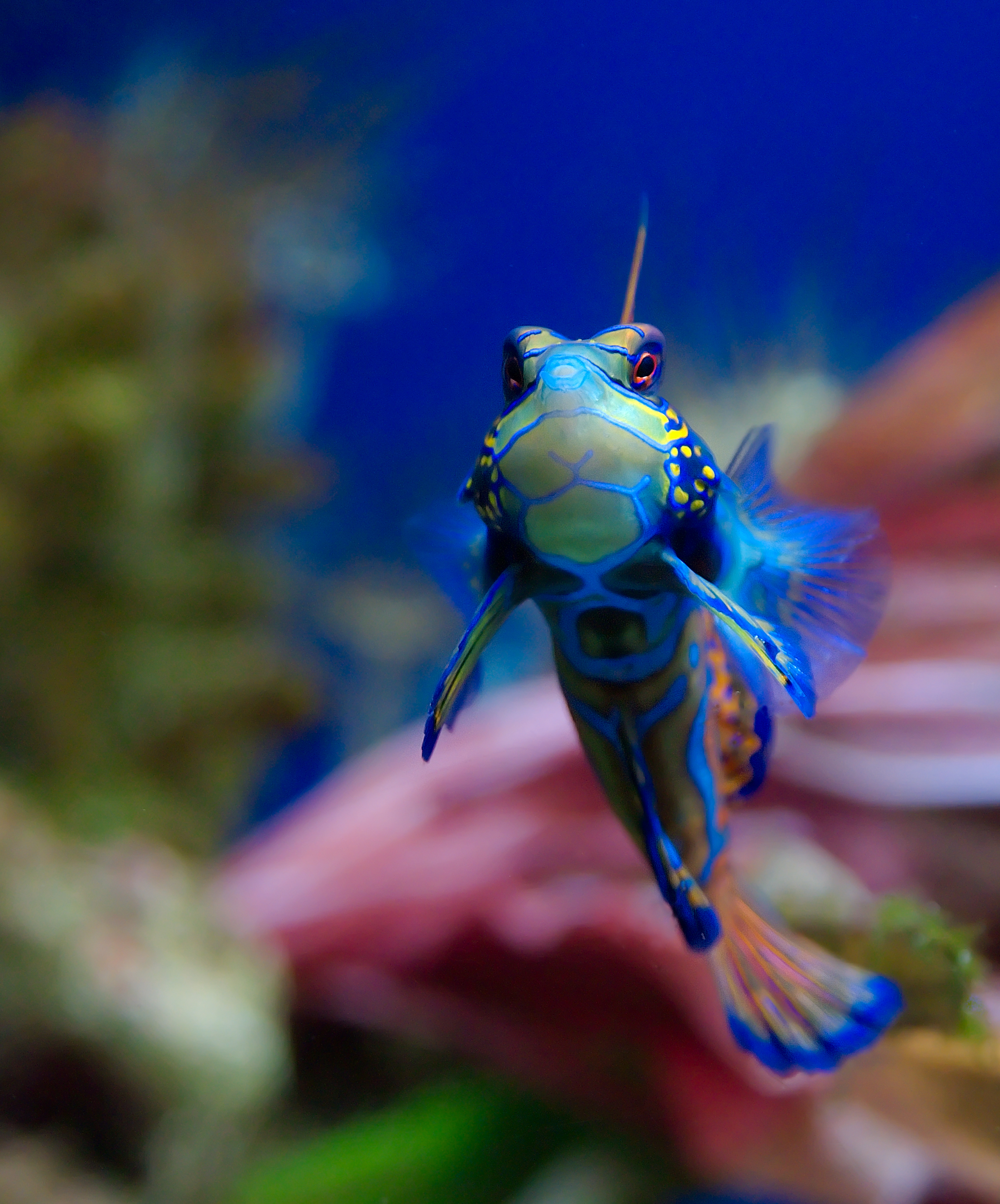
One of the most beautiful reef fish, with psychedelic swirls of orange, green, and blue over the body. It is challenging to keep because of a specialized live-food diet, and is best left to experienced reefers with a mature, copepod-rich system.
ℹ️
Educational only. KinStation content is reviewed by licensed veterinarians but cannot replace an in-person exam. Always consult a licensed veterinarian or board-certified specialist for diagnosis, treatment, or any decision affecting your pet's health.
🩺 Need expert help with your mandarin dragonet?
Connect with a specialist near you or ask a licensed vet — never substitute online guidance for hands-on care in an emergency.
Dragonets (family Callionymidae) are small, ornate, bottom-dwelling reef fish that 'scoot' across rock and sand hunting tiny copepods. Peaceful and reef-safe but highly dependent on live microfauna, they are best suited to mature aquariums with thriving pod populations and refugia.
From the minimum an animal needs to be kept humanely, up to the ideal setup. Bigger is almost always better — minimums are floors, not targets.
Photo coming soon
Minimum
Established refugium reef
30 gal / 110 L mature reef with refugium
Synchiropus splendidus eats live copepods/amphipods exclusively unless trained. Tank must be 6+ months mature with a thriving pod population fed by a refugium; otherwise the fish slowly starves.
Photo coming soon
Recommended
Mature reef + pod refugium
55–75 gal / 200–280 L
Larger sandy footprint with caulerpa/chaeto refugium sustains pod production. Slow flow zones, lots of rockwork seams, and peaceful tankmates (no fast feeders) let the mandarin browse all day.
Ideal
Mature reef with trained pair
75 gal+ / 280 L+ with refugium
Established reef hosting a trained pair (eating frozen mysis as backup), oversized refugium, and minimal competition. Most reliable path to long-term mandarin survival and spawning displays.
Luc Viatour / CC BY-SA 3.0 (Wikimedia Commons)
Life & growth stages
How this animal changes through its life — each stage often has its own care, diet and space needs.
Photo coming soon
Egg
Fish eggs are small, translucent spheres, often laid in clutches on plants, substrate, or in a nest — or carried/brooded by a parent in livebearing and mouth-brooding species. A dark eye spot and the curled embryo become visible inside as development progresses.
Photo coming soon
Fry
Newly hatched fry are tiny and semi-transparent, frequently still carrying a yolk sac that fuels them before they feed freely. They lack full fin structure and adult coloration, staying near cover until they can swim and forage on their own.
Photo coming soon
Juvenile
Juveniles look like miniature adults but with developing fins and muted or different markings; many species shift pattern and color as they mature. Growth is rapid at this stage given clean water and steady feeding.
Adult
Adults show the species' full size, finnage, and mature coloration, and are sexually mature. Many fish develop sex-specific differences in size, color, or fin shape, which can intensify during breeding.
Habitat & enclosure
A mandarin dragonet needs a mature, well-established reef aquarium of at least 30 gallons (larger is better) with extensive live rock and live sand that sustains a self-replenishing population of copepods and amphipods. The tank should be at least 6 months old, with 9-12 months strongly preferred, so that a stable pod population can keep pace with the fish's near-constant grazing. A refugium with macroalgae helps culture and replenish pods.
Maintain stable tropical reef parameters: temperature 75-82 F (24-28 C), pH 8.1-8.4, salinity 1.023-1.026 specific gravity, and gentle to moderate flow. Mandarins are slow, deliberate bottom-grazers that perch and hop across rock and sand all day, so abundant grazing surface area matters far more than open swimming space.
Substrate
Fine sand or a mix with live rock rubble suits this marine reef fish, which spends its day picking over surfaces. The substrate and rockwork are most important as habitat for the copepods it eats rather than for the fish itself.
Equipment & setup
Requires a mature reef tank with abundant live rock, a protein skimmer, and stable reef parameters (salinity ~1.024-1.026, 72-78F); reef lighting supports the live rock and copepod population. A refugium with chaetomorpha greatly boosts the copepod supply they graze on.
Diet
Diet is the central challenge of this species. Mandarins are continuous micro-predators that hunt live copepods (especially harpacticoids like Tisbe), amphipods, and other tiny benthic invertebrates, picking at the rockwork all day. A single fish can consume hundreds of pods daily, so the system must produce pods faster than the fish eats them; supplementing with cultured live copepods is often necessary.
Wild-caught mandarins frequently refuse prepared foods and slowly starve in unprepared tanks, which is the main reason they are an advanced species. Captive-bred mandarins are far easier, as many are weaned onto frozen foods such as enriched mysis, frozen copepods, and specialized pellets; choosing captive-bred stock dramatically improves survival. Even trained fish still benefit from a living pod population.
Behavior & temperament
Mandarin dragonets are peaceful, slow-moving, and reef-safe, posing no threat to corals or invertebrates. They spend the day methodically hopping and gliding over the rock and sand, picking off prey, and are fascinating to watch. They lack typical scales and instead have a thick, toxic mucus coat that deters predators and helps resist some parasites.
Keep only one mandarin (or a confirmed male-female pair in a large, pod-rich tank), as males are aggressive toward one another. They are best housed with calm tankmates that will not outcompete them for food. Their slow feeding makes them poor candidates for busy, fast-feeding communities.
Health
Because of their protective mucus coat, mandarins are relatively resistant to ich and similar parasites, so the overwhelming health risk is starvation and gradual weight loss in tanks that cannot supply enough live food. A sunken belly, pinched body, and lethargy are warning signs of inadequate feeding.
Prevention centers on a mature, pod-rich system, choosing captive-bred fish that accept prepared foods, and supplementing live copepods as needed. Quarantine is still wise, but avoid copper and harsh treatments where possible given their sensitive scaleless skin. Stable water quality and a sustainable food supply are the keys to a long life.
Tips, DIY & hacks
Only add a mandarin to an established tank (ideally 6+ months, 30+ gallons) with a thriving pod population, or it will slowly starve. Seed and culture copepods, and patiently train specimens onto frozen or live brine/mysis and pellets to keep them well fed long term.