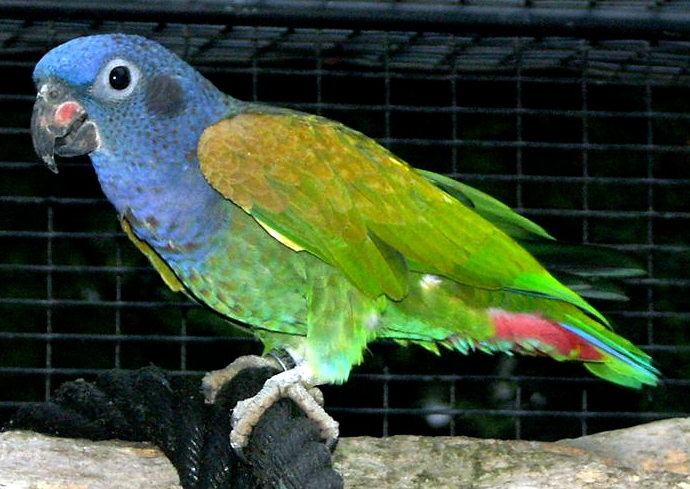
Photo: The original uploader was Yve5 at French Wikipedia . · CC BY-SA 2.5
Blue-headed Pionus parrots are medium-sized South American parrots known for being quieter and more even-tempered than many of their relatives. They are often recommended as a middle-ground parrot for owners ready for more commitment than a budgie but not a macaw.
ℹ️
Educational only. KinStation content is reviewed by licensed veterinarians but cannot replace an in-person exam. Always consult a licensed veterinarian or board-certified specialist for diagnosis, treatment, or any decision affecting your pet's health.
🩺 Need expert help with your blue-headed pionus parrot?
Connect with a specialist near you or ask a licensed vet — never substitute online guidance for hands-on care in an emergency.
Medium-sized, mellow New World parrots with characteristic red undertail coverts, prized as quieter, even-tempered companions.
More pionus parrots coming soon.
Sounds & video
🔊 What does a blue-headed pionus parrot sound like?
Pionus menstruus - Blue-headed Parrot XC251378
Niels Krabbe · Wikimedia Commons · CC BY-SA 4.0
Habitat & space requirements
From the minimum an animal needs to be kept humanely, up to the ideal setup. Bigger is almost always better — minimums are floors, not targets.
Photo coming soon
Minimum
Flight cage
32 × 24 × 36 in, ≤ 3/4 in bar spacing
A Blue-headed Pionus needs a roomy cage at least 32 in wide with bar spacing around 3/4 in, kept indoors at stable room temperature with good ventilation since Pionus are prone to respiratory issues, plus natural perches, foraging toys, and frequent bathing. They are gentle, somewhat shy birds that need calm daily interaction and out-of-cage exercise. This is the welfare floor only with daily flight and handling time outside the cage.
Photo coming soon
Recommended
Large flight cage
4 × 2 × 4 ft (or larger)
A large flight cage lets a Pionus fly and climb, furnished with varied branch perches, rotating chew and foraging enrichment, and regular misting or bathing in a well-ventilated, smoke- and aerosol-free room. These calm parrots do well kept singly with attentive owners or as a bonded pair, and need consistent gentle company. The added space and clean air support both their activity needs and sensitive respiratory health.
Photo coming soon
Ideal
Aviary / bird room
Walk-in aviary or dedicated bird room
A walk-in aviary or dedicated bird room with real flight distance, natural perching and foliage, foraging substrate, and bathing, kept clean and well-ventilated. A bonded pair or compatible companion suits these social, even-tempered parrots best. This is the most natural arrangement and the best long-term outcome for their welfare and respiratory wellbeing.
Life & growth stages
How this animal changes through its life — each stage often has its own care, diet and space needs.
Photo coming soon
Egg
Birds develop inside a hard-shelled egg incubated by the parent(s). Egg size, shell color, and clutch size vary by species; the embryo develops over days to weeks before hatching.
Photo coming soon
Hatchling / Chick
Hatchlings are either altricial — naked, blind, and dependent on parents (typical of parrots and songbirds) — or precocial — downy, mobile, and self-feeding soon after hatching (typical of poultry and waterfowl). Down gives way to the first feathers.
Photo coming soon
Juvenile / Fledgling
Fledglings grow in their juvenile plumage and begin to fly and feed themselves, though they may still beg from parents at first. Juvenile feathering is often duller than the adult and is replaced as the bird matures.
Adult
Adults attain full body size and mature plumage, and are capable of breeding. Many species show distinct adult coloration, and in sexually dimorphic birds males and females differ in plumage, size, or markings.
(c) emily18_, some rights reserved (CC BY-NC) via iNaturalist — https://www.inaturalist.org/observations/284364320
Habitat & enclosure
Blue-headed pionus are medium-sized parrots that do well in a spacious cage with room to climb and move, furnished with varied perches and a steady supply of foraging and chewing toys. While calmer than many parrots, they are still active birds that need an enriched environment rather than a bare cage.
Daily out-of-cage time in a bird-safe room supports exercise and the bond with their people. Because pionus are relatively quiet and laid-back, they are often suggested for apartment living, but they still require meaningful interaction and stimulation to stay healthy and content.
As with all parrots, protect them from PTFE/Teflon fumes, smoke, scented products, and aerosols, and provide bathing opportunities and consistent light cycles. Good ventilation matters, as the species is noted for sensitivity to respiratory issues.
Substrate
Plain newspaper or paper substrate on a grated cage floor works best for this medium parrot, keeping droppings visible and dust low; avoid dusty corncob or walnut litter, since Pionus are prone to respiratory and fungal (aspergillosis) issues.
Equipment & setup
Give a roomy cage with 5/8-3/4-inch bar spacing and a mix of natural perches plus chewable wood toys. Pionus are sensitive to poor air quality, so prioritize good ventilation, low household fumes, and full-spectrum UVB lighting on a 10-12 hour cycle; regular bathing or misting is important because they enjoy water and need humidity for healthy skin and feathers.
Diet
Anchor the diet with a complete formulated pellet, supplemented with vegetables — especially vitamin-A-rich options — leafy greens, and limited fruit, with seeds and nuts as occasional treats. Pionus are frequently cited as prone to vitamin-A deficiency, so a varied vegetable-forward diet and an avian-vet-guided nutrition plan are particularly important; avoid relying on an all-seed diet.
Fresh water daily and foraging-based feeding keep this gentle parrot engaged. Avoid avocado, chocolate, caffeine, alcohol, and salty or sugary human foods.
Pionus can be prone to weight gain and fatty liver issues if overfed fatty foods, so portion awareness and regular body-condition checks with an avian veterinarian help maintain long-term health.
Behavior & temperament
Blue-headed pionus are known for being relatively calm, even-tempered, and quiet compared with many companion parrots, which makes them appealing to owners who want a parrot's intelligence and affection without macaw- or cockatoo-level volume. They tend to be independent and may be less overtly cuddly, but they bond closely and affectionately with respectful, consistent handling.
A distinctive quirk is their stress response: a frightened or over-excited pionus may make a raspy wheezing or 'asthmatic' sound that alarms new owners but is behavioral, not medical, and stops once the bird calms. Knowing this prevents needless panic, though genuine, persistent respiratory signs should still be checked by a vet.
They are intelligent and can learn words, though they are not standout talkers. As with any parrot, a beak can bite, so positive-reinforcement training and reading body language matter. Their generally mellow nature still depends on adequate enrichment and interaction.
Health
Blue-headed pionus are long-lived parrots, commonly reaching their twenties and beyond with good care, so ownership is a multi-decade commitment. Establish care with an avian veterinarian and keep up routine wellness exams with weight tracking; birds hide illness, so subtle changes in droppings, appetite, weight, posture, or breathing deserve prompt attention.
The species is particularly associated with vitamin-A deficiency (tied to poor diet) and with respiratory and fungal conditions such as aspergillosis, so a vegetable-forward diet and clean, well-ventilated air are important preventives. Distinguish the harmless behavioral 'wheeze' from true respiratory distress — when in doubt, consult an avian vet.
Feather-destructive behavior and obesity/fatty liver disease can occur, as in other parrots. Preventive themes are balanced nutrition, enrichment and exercise, clean air, and regular professional exams; self-treatment is inappropriate.
Tips, DIY & hacks
These calm, somewhat shy parrots stress easily, so place the cage in a stable spot and introduce new toys gradually. They are prone to obesity and vitamin-A deficiency, so feed a pellet base with plenty of orange/green veg (sweet potato, carrot, leafy greens) and use foraging toys to slow eating and add mental stimulation.
Origin & history
The blue-headed parrot (Pionus menstruus) is native to a wide range across Central and South America, from Costa Rica through the Amazon basin. It is a wild species, not domesticated, and is kept in aviculture as one of several pionus species valued for their gentle, comparatively quiet temperaments.
Pionus parrots have a long history in the pet trade but have generally been overshadowed by flashier, more famous parrots. Aviculturists and quieter-household owners increasingly champion them as an underrated companion parrot, with captive breeding making them more available than in the past.
Anecdotes & owner lore
Community experience and cultural notes — not veterinary advice. Every animal is an individual; treat these as colour, not care instructions.
Pionus owners are something of a quiet cult within the parrot world — fans love to recommend the species to anyone burned out on screaming birds, describing them as the 'introverts' of the parrot hobby who are content to hang out near their people without demanding constant drama. The signature wheeze trips up nearly every new owner: countless forum posts describe a first-time pionus keeper rushing toward an emergency vet visit before learning the raspy 'panting' is just an excited or startled bird, not a respiratory crisis.
The blue-headed pionus is admired for the deep cobalt hood that gives it its name and for a faint musky scent some owners find oddly pleasant and describe as part of the bird's charm. Keepers often note their pionus would rather supervise the household from a perch than perform tricks — dignified little parrots that win people over slowly rather than all at once.
Common ailments
Obesity — common
Vitamin A deficiency (hypovitaminosis A) — common — Pionus are frequently cited as prone to vitamin-A deficiency; a vegetable-forward diet is an important preventive.
Aspergillosis (fungal respiratory disease) — common — Pionus are noted for sensitivity to fungal respiratory disease; clean, well-ventilated air is a key preventive.
Reviewed and signed off by: KinStation Editorial - pre-launch draft (pending DVM review)