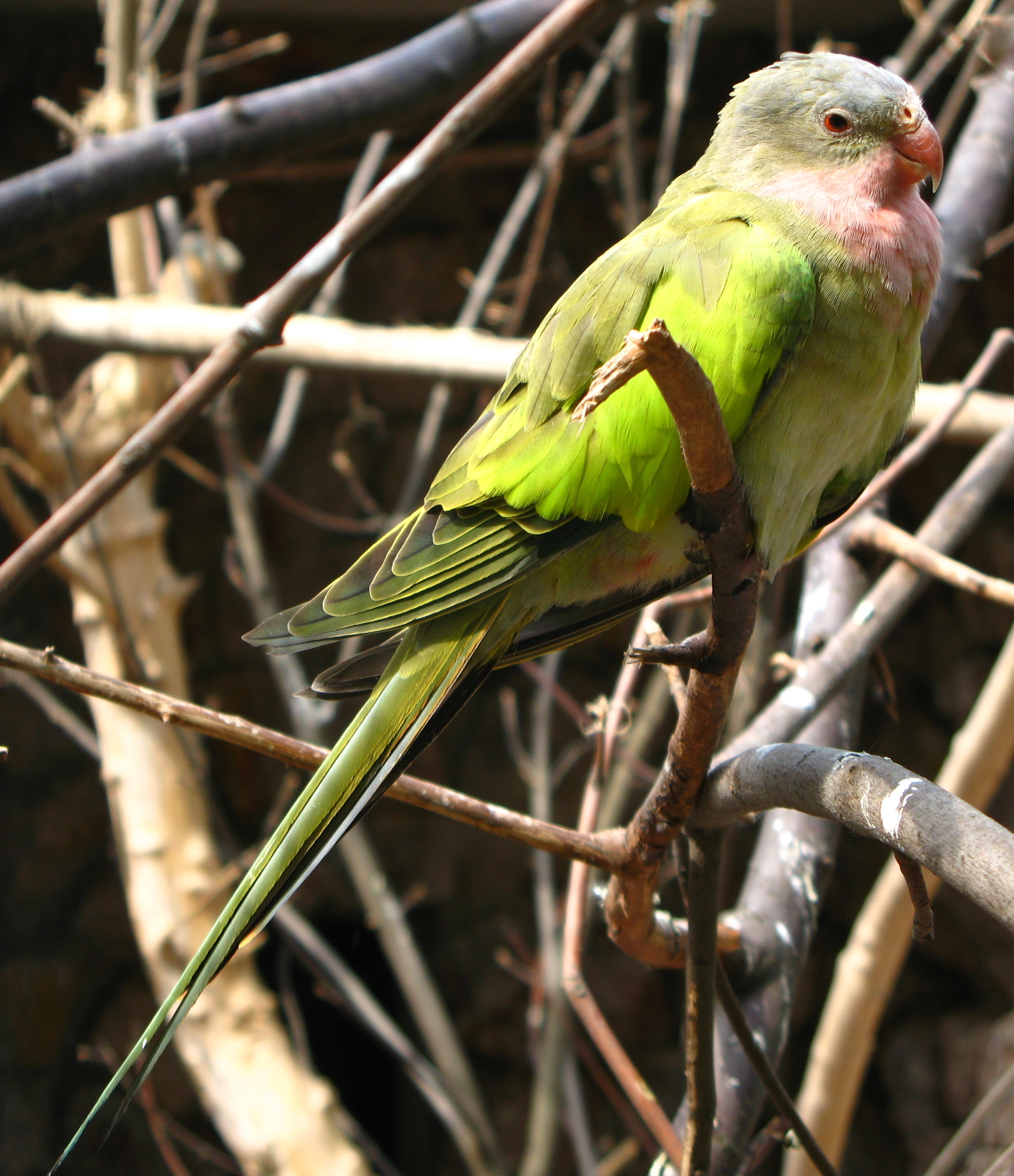
A graceful pastel-hued Australian parrot of the arid interior, with soft greens, a rose-pink throat, and a long tapering tail. Named for Princess Alexandra, it is a gentle, elegant aviary bird.
ℹ️
Educational only. KinStation content is reviewed by licensed veterinarians but cannot replace an in-person exam. Always consult a licensed veterinarian or board-certified specialist for diagnosis, treatment, or any decision affecting your pet's health.
🩺 Need expert help with your princess parrot?
Connect with a specialist near you or ask a licensed vet — never substitute online guidance for hands-on care in an emergency.
Medium-large slender parrot, about 34-46 cm long (with long tail), 90-120 g.
Lifespan
15–30 years
Social needs
pair
Native region
Arid interior of Australia
Origin
Old World
Climate
🏜️ Arid
Family
Psittaculidae
Genus
Polytelis
Part of the Grass Parakeets
Grass parakeets (the Australian 'grass parrots,' including Neopsephotus, Neophema and relatives) are small, gentle, ground-foraging parakeets prized for their soft colors, quiet voices, and peaceable aviary temperament.
From the minimum an animal needs to be kept humanely, up to the ideal setup. Bigger is almost always better — minimums are floors, not targets.
Photo coming soon
Minimum
Long flight cage
60 × 24 × 36 in, bar spacing 1/2–5/8 in
A slim Australian long-tailed parrot — needs horizontal flight more than climbing. Provide natural perches at multiple diameters, foraging, and a dry, well-ventilated room. Princess parrots are softly spoken and sensitive to chills.
Photo coming soon
Recommended
Indoor flight room or large flight cage
8 × 3 × 6 ft indoor flight or 72 × 36 × 48 in cage
Real flying length with rope perches, foraging stations, bathing, and several hours of supervised out-of-cage flight daily. Compatible in mixed Australian-parakeet aviaries.
Photo coming soon
Ideal
Outdoor aviary
12 × 4 × 7 ft outdoor aviary with shelter
A long planted outdoor aviary with a draft-free shelter section, varied perches, and foraging substrate. Princess parrots fly long and fast in the wild — aviary length is what makes them thrive.
Life & growth stages
How this animal changes through its life — each stage often has its own care, diet and space needs.
Photo coming soon
Egg
Birds develop inside a hard-shelled egg incubated by the parent(s). Egg size, shell color, and clutch size vary by species; the embryo develops over days to weeks before hatching.
Photo coming soon
Hatchling / Chick
Hatchlings are either altricial — naked, blind, and dependent on parents (typical of parrots and songbirds) — or precocial — downy, mobile, and self-feeding soon after hatching (typical of poultry and waterfowl). Down gives way to the first feathers.
Photo coming soon
Juvenile / Fledgling
Fledglings grow in their juvenile plumage and begin to fly and feed themselves, though they may still beg from parents at first. Juvenile feathering is often duller than the adult and is replaced as the bird matures.
Adult
Adults attain full body size and mature plumage, and are capable of breeding. Many species show distinct adult coloration, and in sexually dimorphic birds males and females differ in plumage, size, or markings.
Color & pattern variants
Natural variants occur in the wild; selectively bred (man-made) variants were developed in captivity.
Princess parrots are powerful, long-distance flyers with long tails, so they require a spacious aviary flight, ideally at least around 4-5 m in length, to fly properly and protect their tail feathers. Provide natural perches, foraging opportunities, seeding grasses, chew material, and a shallow bath. They are relatively peaceful and can sometimes be kept in a colony or with other calm species in a large planted aviary.
As birds of the arid Australian interior, they tolerate heat and dry conditions well but dislike prolonged damp and cold; outdoor aviaries in cool climates need a dry, draft-free, frost-protected shelter. No UVB is required indoors with good nutrition, but natural light benefits their plumage and wellbeing.
Substrate
Sand, fine gravel, or plain paper over a well-drained aviary floor suits this Australian species; a dry, free-draining base is important because Princess Parrots come from arid country and are susceptible to damp-related fungal and parasitic problems.
Equipment & setup
Provide a long flight aviary (these are strong, fast fliers needing horizontal length) with sheltered, draft-free roosting and frost protection in winter. Equip with natural perches, chewable eucalyptus or fruit-wood branches, and full-spectrum lighting; good drainage and worm-control through clean flooring matter because aviary birds pick up parasites from the ground.
Diet
Feed a base of a large-parakeet/small-parrot seed mix or formulated pellets, supplemented with seeding grasses, leafy greens, sprouted seed, vegetables, and some fruit. They are natural ground and shrub foragers, so scatter-feeding and foraging enrichment suit them.
Provide cuttlebone or a mineral block for calcium and clean fresh water. Keep high-fat seeds moderate to avoid obesity, and avoid avocado, chocolate, caffeine, alcohol, and salty foods.
Behavior & temperament
Princess parrots are gentle, calm, and relatively quiet, with soft chattering and pleasant calls rather than loud screeching. They are graceful and somewhat reserved; hand-raised birds can become tame and friendly, but the species is often kept and admired primarily as a serene, beautiful aviary bird. They are generally tolerant of other birds.
They are active flyers that benefit greatly from space and enrichment such as foraging, fresh browse, and natural branches to chew. Their peaceful temperament, striking pastel colors, and quiet voice make them a prized choice for aviculturists with room for a proper flight.
Health
Princess parrots are susceptible to respiratory infections (including aspergillosis in damp conditions), intestinal parasites from ground foraging, psittacine beak and feather disease, and nutritional problems on seed-only diets. Young or stressed birds can be vulnerable to bacterial and fungal illness.
Prevention includes dry, clean, well-ventilated housing, parasite monitoring, a varied diet with adequate calcium, and quarantine of new birds. Routine avian-vet care and prompt attention to lethargy, labored breathing, or abnormal droppings help maintain these long-lived birds.
Tips, DIY & hacks
Princess Parrots are peaceful and can be colony-housed in spacious aviaries. Offer sprouted and soaked seed, native browse/branches to chew, and ground-foraging opportunities scattered in clean substrate; regular worming and a dry environment are the keys to keeping these arid-adapted birds healthy in captivity.