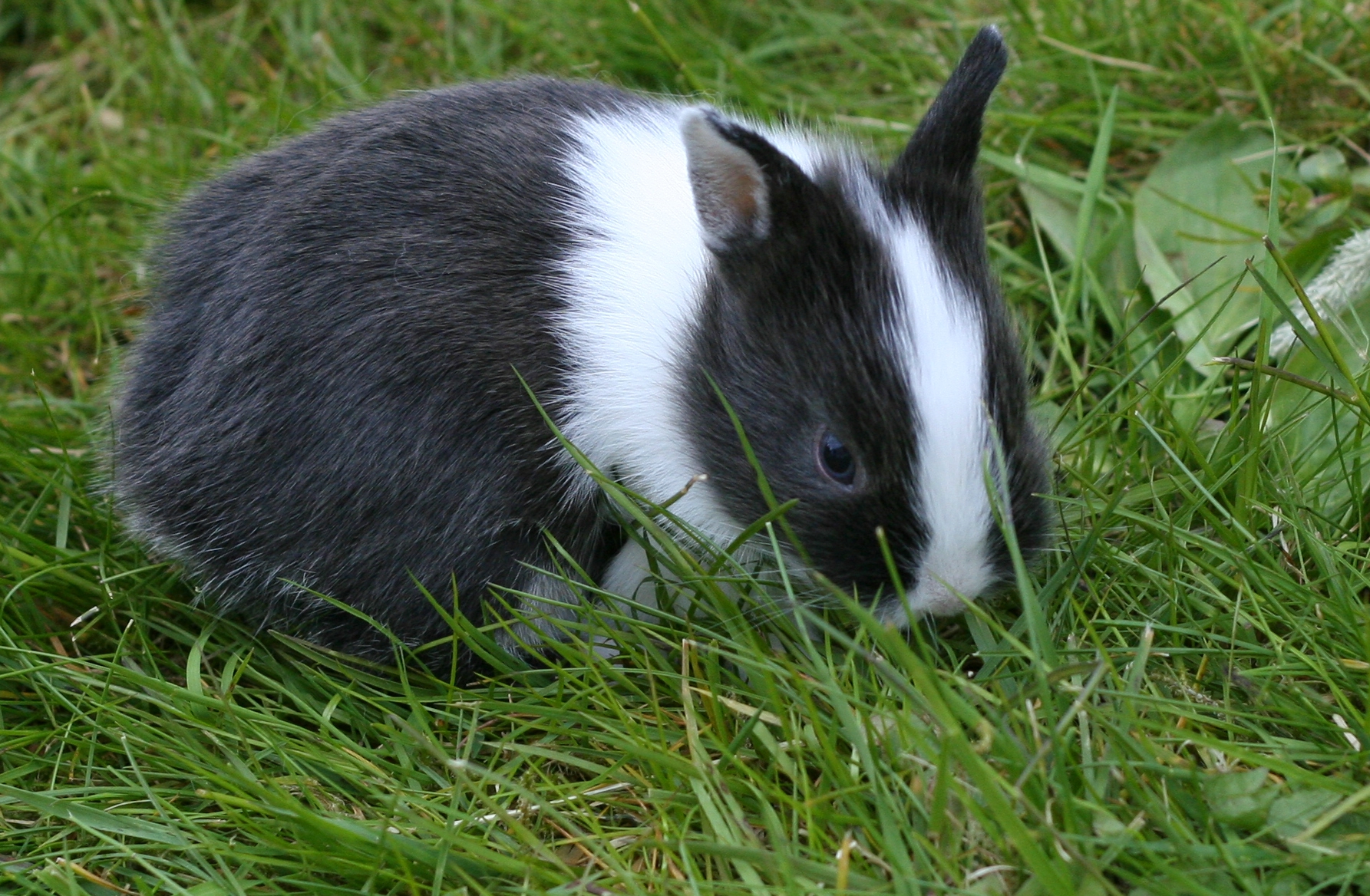
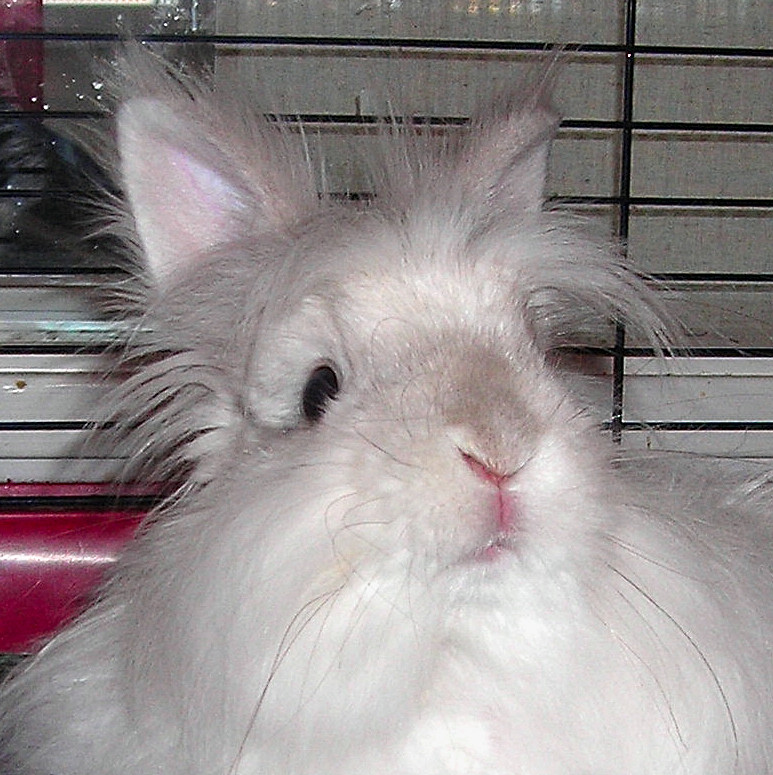
Domestic rabbits are intelligent, social herbivores often kept as house pets. They require more space and specialized care than commonly assumed.
ℹ️
Educational only. KinStation content is reviewed by licensed veterinarians but cannot replace an in-person exam. Always consult a licensed veterinarian or board-certified specialist for diagnosis, treatment, or any decision affecting your pet's health.
🩺 Need expert help with your rabbit?
Connect with a specialist near you or ask a licensed vet — never substitute online guidance for hands-on care in an emergency.
From the minimum an animal needs to be kept humanely, up to the ideal setup. Bigger is almost always better — minimums are floors, not targets.
Minimum
Enclosure + daily run
Hutch 12 sq ft + 32 sq ft exercise run
A rabbit must be able to take 3–4 consecutive hops, stand fully upright on its hind legs, and stretch out flat. A hutch alone is never enough — pair it with several hours of daily run time.
Acabashi / CC BY-SA 4.0 (Wikimedia Commons)
Photo coming soon
Recommended
Pen with attached run
X-pen ~16 sq ft, free-roam most of the day
An exercise pen or rabbit-proofed room the animal can access for most of the day, with hides, a hay station, and a litter tray. Bonded pairs need proportionally more space.
Photo coming soon
Ideal
Free-roam home rabbit
Full room / free-roam, 24/7 access
Free-roam (like a house cat) with rabbit-proofed cabling, multiple hides, digging boxes, levels, and constant access to hay, water, and a litter area. Best welfare outcome and most natural behaviour.
Life & growth stages
How this animal changes through its life — each stage often has its own care, diet and space needs.
Photo coming soon
Newborn
Newborn mammals are nursed on their mother's milk. Many are born helpless — blind, deaf, and sparsely furred (altricial, as in dogs, cats, and rodents) — while others stand and follow within hours (precocial, as in hoofed livestock).
Photo coming soon
Juvenile
After weaning, juveniles grow quickly and become increasingly active, playful, and independent. Adult coat, proportions, and (in many species) the permanent teeth come in as they approach full size.
Photo coming soon
Adult
Adults reach full body size and sexual maturity, with the species' mature coat and build. Sexual dimorphism — differences in size, mane, horns, or markings — is pronounced in some mammals and subtle in others.
Senior
Senior animals show aging signs such as graying fur, reduced activity, and a greater need for veterinary monitoring of joints, teeth, and organ function. Lifespan and the onset of old age vary widely by species and size.
Color & pattern variants
Natural variants occur in the wild; selectively bred (man-made) variants were developed in captivity.
Domestic rabbits need far more space than the traditional small hutch suggests. Modern welfare guidance favors a large enclosure — several times the rabbit's stretched-out body length — combined with daily free-roam time in a rabbit-proofed area, or full free-roam 'house rabbit' living. Wire-bottom cages are no longer recommended because they cause painful sore hocks; solid flooring with traction is far kinder.
Within the living space, provide a litter box (rabbits litter-train readily), at least one enclosed hide where the rabbit can feel safe, and plenty of safe things to chew. Rabbit-proofing matters: rabbits gnaw electrical cords and baseboards and dig at carpet, so cords should be protected and tempting targets blocked or replaced with acceptable alternatives.
Temperature is a real welfare issue. Rabbits tolerate cold far better than heat and can suffer fatal heatstroke in hot weather, so keep them in cool, well-ventilated, shaded conditions and never in a stifling room or hot car. Enrichment — tunnels, cardboard castles, dig boxes, foraging toys, and the company of a bonded companion — keeps a highly intelligent prey animal mentally and physically healthy.
Substrate
Rabbits do best on solid flooring (sealed wood, tile or lino) topped with washable mats, fleece or grass mats to protect their hocks; never use wire-bottom flooring, which causes sore hocks. Use a separate litter box filled with paper-based or kiln-dried wood pellets, topped with plenty of grass hay since rabbits eat and toilet at once. Avoid clumping clay litter, cedar/pine shavings and softwood-derived products.
Equipment & setup
Provide a large pen or free-roam space (a hutch alone is inadequate) with constant access to a hay rack, water in a heavy bowl, hides and a litter box, kept at cool room temperature as rabbits overheat easily above ~26 C. No heat lamp or UVB is needed indoors, though access to natural light helps. Rabbits are social and should be kept in neutered, bonded pairs with annual RHDV/myxomatosis vaccination where available.
Diet
The foundation of a healthy rabbit diet is unlimited grass hay (timothy, orchard, or meadow), which should make up the great majority of what a rabbit eats. Continuous hay consumption wears down their ever-growing teeth and keeps the gut moving, both of which are central to rabbit health. Fresh water should always be available, ideally in a bowl, which encourages better intake than a sipper bottle alone.
Add a generous daily portion of washed leafy greens and herbs for variety and micronutrients, and a small measured ration of plain, high-fiber pellets — not a muesli-style mix, which encourages selective feeding and dental and digestive problems. Sugary fruits and starchy vegetables (and carrots, despite the cartoons) are occasional treats only.
The most important dietary principle is that a rabbit must keep eating. A rabbit that suddenly refuses food or stops producing droppings may be developing gastrointestinal stasis, which can become life-threatening within hours, so it is treated as an emergency. Avoid abrupt diet changes, introduce new greens gradually, and keep hay front and center.
Behavior & temperament
Rabbits are crepuscular, most lively at dawn and dusk, and spend the middle of the day resting — a rhythm that fits surprisingly well with many owners' schedules. They are intelligent and intensely social: in the wild they live in groups, and most pet rabbits are happiest kept with a bonded companion, typically a neutered pair, since loneliness causes real distress.
Their body language is expressive once you learn it. A 'binky' — a joyful twisting leap — signals delight; a loud thump warns of perceived danger; soft tooth-clicking ('tooth purring') means contentment, while loud tooth-grinding can indicate pain. A rabbit flopping over on its side is a sign of deep relaxation and trust.
As prey animals, rabbits often dislike being lifted off the ground, where they can feel vulnerable, and improper handling can cause them to struggle and injure their delicate spines. Patient, floor-level interaction usually builds a far better bond than picking a rabbit up. They can be trained with positive reinforcement to come when called, use a litter box, and even run simple agility courses.
Health
Rabbits benefit from annual wellness exams with a veterinarian experienced in rabbits, as care differs substantially from cats and dogs. Spaying and neutering is strongly advised: it prevents the very high rate of uterine cancer in unspayed females, reduces hormone-driven behaviors, and makes bonding easier. Vaccination against certain diseases is recommended in some regions.
The most frequent serious problems are dental disease (from malocclusion and inadequate hay), gastrointestinal stasis, and respiratory infections. Because rabbits are prey animals, they instinctively hide illness, so owners should watch closely for early warning signs and act quickly.
Seek prompt veterinary care if a rabbit stops eating or passing droppings, sits hunched and reluctant to move, drools or paws at the mouth, has discharge from the eyes or nose, or shows sudden lethargy. A crucial safety note: many medications and foods safe for dogs and cats are dangerous to rabbits, and certain antibiotics can be fatal, so always use a rabbit-savvy vet and never self-medicate.
Tips, DIY & hacks
Make unlimited grass hay the centerpiece of the diet (around 80%) for dental and gut health, supplemented with greens and a small measured pellet portion. Provide DIY enrichment such as cardboard castles, willow tunnels, digging boxes filled with shredded paper, and treat-stuffed toilet rolls to satisfy chewing and foraging. Bunny-proof cables and skirting boards, as rabbits chew compulsively and can be seriously harmed by gnawing wires.
Origin & history
All domestic rabbits descend from the European rabbit (Oryctolagus cuniculus), native to the Iberian Peninsula and southwestern Europe. Domestication is often traced to medieval European monasteries, where rabbits were raised for meat, and selective breeding later expanded them into the wide range of sizes and coats seen today. Rabbits did not become widespread household companions until comparatively recently.
Dozens of breeds are now recognized, from the tiny Netherland Dwarf to the giant Flemish Giant, alongside distinctive types such as the lop-eared breeds, the wool-producing Angoras, and the Rex with its plush velvet coat. Despite this variety, all remain the same species, and the modern 'house rabbit' movement has reframed them from backyard hutch animals into indoor family pets.
Anecdotes & owner lore
Community experience and cultural notes — not veterinary advice. Every animal is an individual; treat these as colour, not care instructions.
Long-time rabbit people speak fondly of the 'bunny 500' — a sudden burst of laps around the room — and of the imperious 'nose bonk' a rabbit delivers when it wants attention or, just as often, when it is pointedly ignoring you. A rabbit that flops dramatically onto its side, looking briefly as though it has fainted, has simply decided the world is safe enough to relax in completely. Many owners learn that a rabbit turning its back and flicking its feet at you is delivering a small, deliberate insult.
Rabbits loom large in folklore and pop culture: the trickster hares of countless traditions, the Easter Bunny, the moon-rabbit pounding rice cakes in East Asian legend, and a roster of beloved fictional rabbits from Peter Rabbit to Bugs Bunny and the Velveteen Rabbit. Real rabbits have their own fame too — record-holding lops with astonishingly long ears, and giant breeds that grow to the size of a small dog. Owners often note the irony that the carrot-munching cartoon rabbit set diet expectations that are actually the opposite of good rabbit nutrition.
Common ailments
Dental disease — very common
Gastrointestinal stasis / bloat — very common — Often called 'the silent killer'; act fast on appetite loss.
Uterine adenocarcinoma — common — Largely preventable by spaying; affects intact does.
Respiratory infection — common
Reviewed and signed off by: KinStation Editorial - pre-launch draft (pending DVM review)