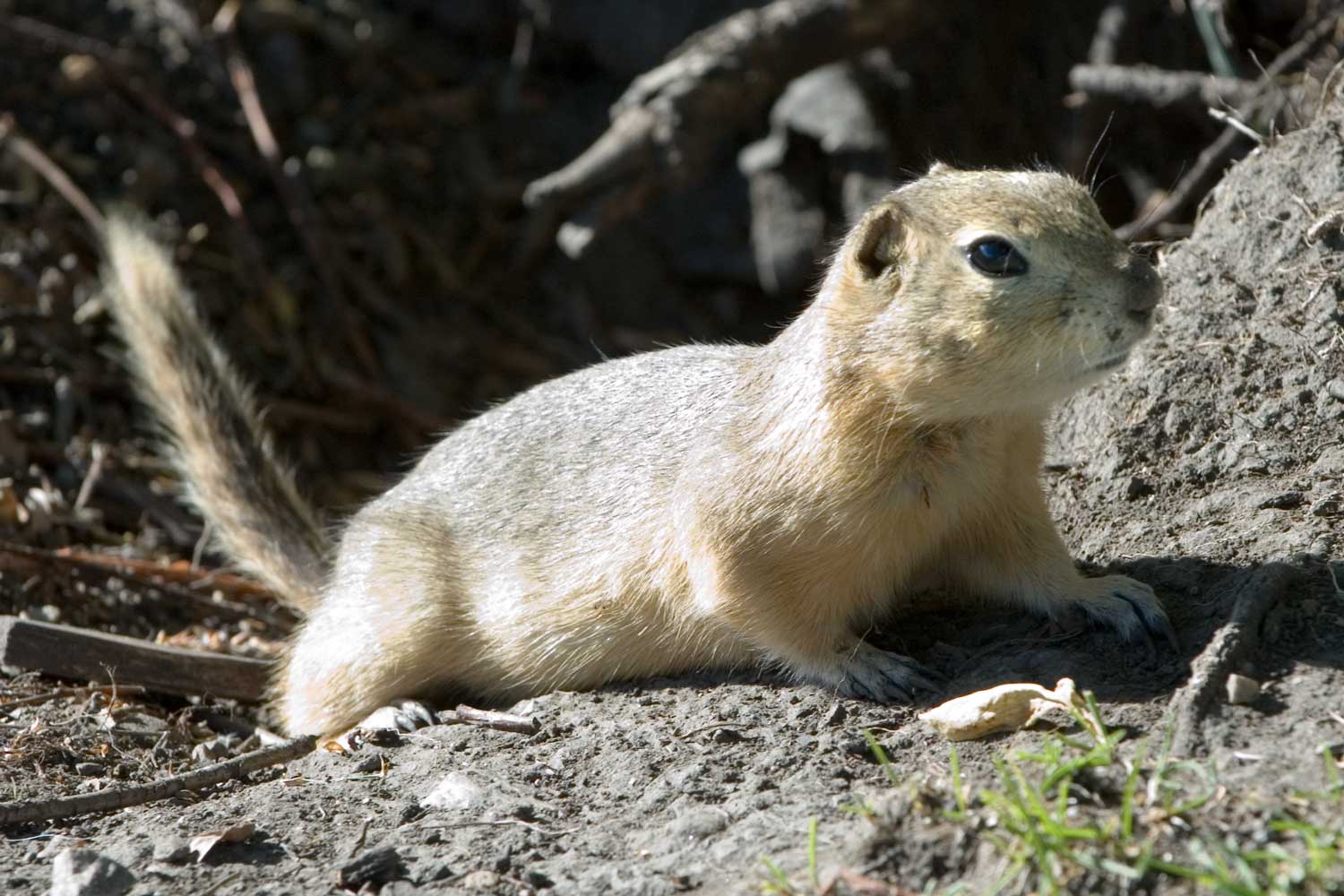
Photo: No machine-readable author provided. Cszmurlo assumed (based on copyright claims). · CC BY 2.5
Richardson's ground squirrel is a burrowing, colony-living prairie rodent from the North American plains, kept by some exotic enthusiasts for its sociable, digging nature. It hibernates seasonally, needs deep substrate and companions, and is restricted in many areas.
ℹ️
Educational only. KinStation content is reviewed by licensed veterinarians but cannot replace an in-person exam. Always consult a licensed veterinarian or board-certified specialist for diagnosis, treatment, or any decision affecting your pet's health.
🩺 Need expert help with your richardson's ground squirrel?
Connect with a specialist near you or ask a licensed vet — never substitute online guidance for hands-on care in an emergency.
Small-to-medium ground squirrel: body 23-30 cm; 200-750 g (heaviest pre-hibernation)
Lifespan
2–6 years
Social needs
group
Native region
North American Great Plains (Canada and northern US)
Origin
New World
Climate
🍂 Temperate
Family
Sciuridae
Genus
Urocitellus
Part of the Ground squirrels
Burrowing, cheek-pouched sciurids — diurnal, food-hoarding ground squirrels and chipmunks that are fast, active watch-pets needing large enclosures and often subject to keeping restrictions.
From the minimum an animal needs to be kept humanely, up to the ideal setup. Bigger is almost always better — minimums are floors, not targets.
Photo coming soon
Minimum
Deep-substrate enclosure
180 × 90 × 90 cm with 40 cm soil
Richardson's ground squirrels are burrowing colony rodents — need a large enclosure with deep soil/sand substrate for tunnelling, multiple hides, and same-species company.
Photo coming soon
Recommended
Large colony enclosure
2 × 1 × 1 m with 50 cm substrate
Large enclosure for a small colony with deep dig substrate, rock piles, branches, and a sand bath. They hibernate — keepers need a temperature-controlled cool period plan.
Photo coming soon
Ideal
Outdoor predator-proof pen
Outdoor burrow pen or 3 m+ vivarium
Predator-proof outdoor pen with deep buried mesh and natural soil for real burrow construction, or an oversized indoor vivarium replicating prairie terrain. Closest to wild colony behaviour.
Life & growth stages
How this animal changes through its life — each stage often has its own care, diet and space needs.
Photo coming soon
Newborn
Newborn mammals are nursed on their mother's milk. Many are born helpless — blind, deaf, and sparsely furred (altricial, as in dogs, cats, and rodents) — while others stand and follow within hours (precocial, as in hoofed livestock).
Photo coming soon
Juvenile
After weaning, juveniles grow quickly and become increasingly active, playful, and independent. Adult coat, proportions, and (in many species) the permanent teeth come in as they approach full size.
Photo coming soon
Adult
Adults reach full body size and sexual maturity, with the species' mature coat and build. Sexual dimorphism — differences in size, mane, horns, or markings — is pronounced in some mammals and subtle in others.
Senior
Senior animals show aging signs such as graying fur, reduced activity, and a greater need for veterinary monitoring of joints, teeth, and organ function. Lifespan and the onset of old age vary widely by species and size.
Habitat & enclosure
These are colonial burrowers, so provide a large enclosure with a very deep diggable substrate layer (a deep tank/tub system or a custom dig-box several tens of centimeters deep) plus surface space, hides, and nest chambers. They thrive in small groups rather than alone. Outdoor predator-proof and dig-proof enclosures work in suitable climates; indoors, a large escape-proof setup with deep bedding is needed.
Substrate
Very deep mix of soil, sand, and paper/aspen bedding to allow real burrowing, with hay or shredded paper in nest chambers. Provide a sand bath for grooming. Avoid cedar and pine shavings.
Equipment & setup
Deep dig-capable enclosure (tank/tub or custom box), secure dig- and escape-proof construction, multiple hides and nest boxes, sand bath, calcium block, water dish/bottle, and a cool, quiet space to allow seasonal hibernation if appropriate. Foraging enrichment for natural behavior.
Diet
Herbivorous/granivorous, they eat grasses, seeds, leaves, and some insects. Feed a base of grass hay and a quality rodent/herbivore mix with seeds and grains, plus fresh greens and vegetables, and occasional insects for protein. They fatten heavily before hibernation, which is natural. Provide a calcium source and fresh water. Avoid excessive fatty or sugary foods outside the pre-hibernation period.
Behavior & temperament
Diurnal, highly social, and vocal (the 'flickertail' tail-flick and alarm whistles), they live in colonies and dig extensive burrows. Hand-raised individuals can become tame and interactive, but they remain active diggers and alarmists. A defining trait is true hibernation: in cooler conditions they may enter long dormancy for months, drastically reducing activity and feeding — keepers must understand and accommodate this cycle.
Health
Obesity outside the hibernation cycle, dental issues, and stress from solitary or cramped housing are key concerns; respect their hibernation needs to avoid metabolic stress. As wild-type sciurids they may carry parasites or, historically, plague in wild populations, so source captive-bred animals. Use an exotics vet. Lifespan is modest (2-6 years). Check legality, as keeping native ground squirrels is regulated in many places.
Tips, DIY & hacks
Provide deep substrate — burrowing is essential to their welfare. Keep them in small social groups, not alone. Plan for and respect seasonal hibernation rather than forcing year-round activity. Source captive-bred stock and confirm local legality before keeping native ground squirrels.