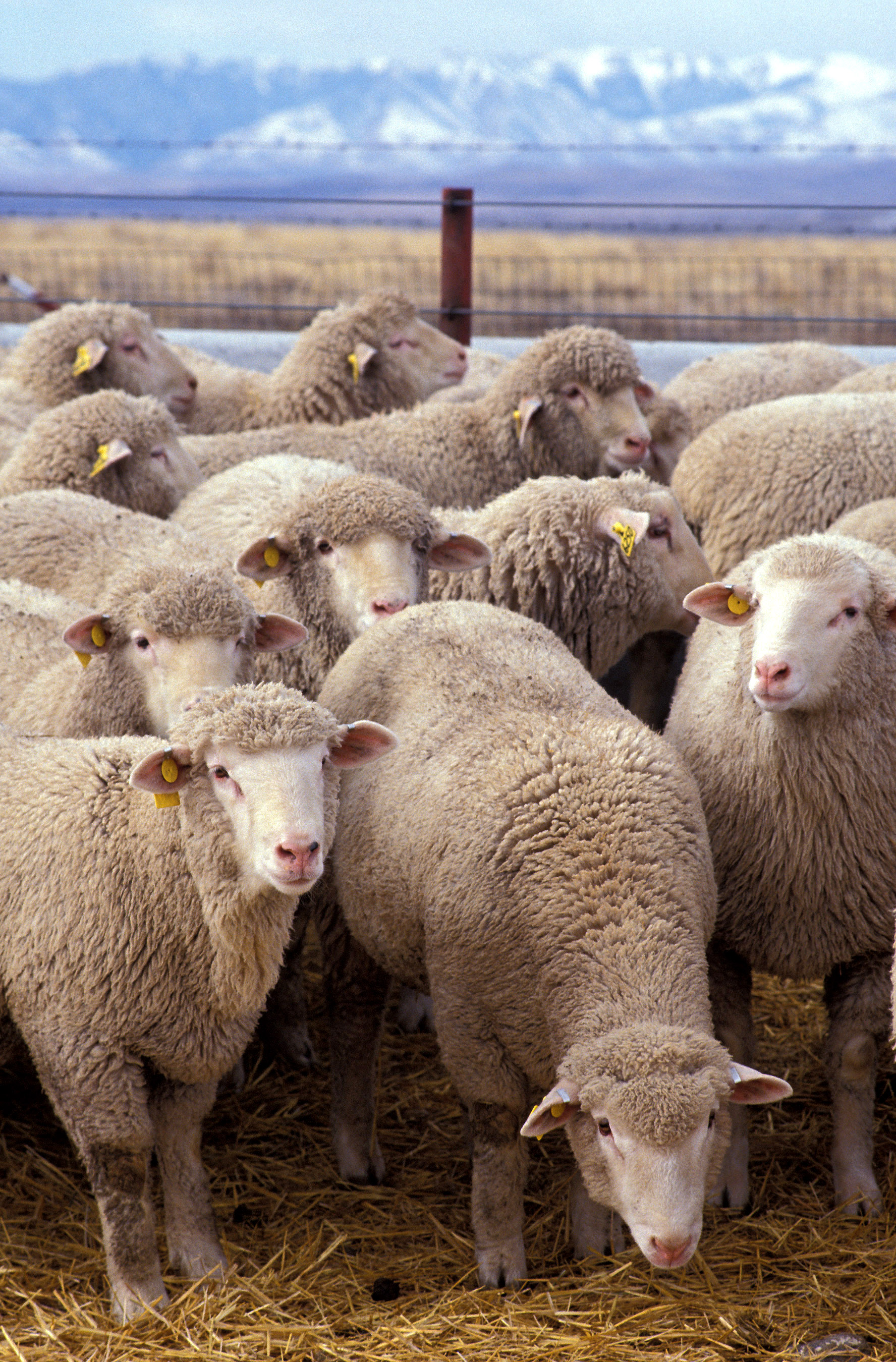
Domestic sheep are gentle, strongly flock-bound grazing ruminants kept for wool, meat, milk, and increasingly as calm companion and lawn-grazing animals. They must be kept in groups, need good pasture or hay, predator-proof shelter and fencing, and most wool breeds require annual shearing.
ℹ️
Educational only. KinStation content is reviewed by licensed veterinarians but cannot replace an in-person exam. Always consult a licensed veterinarian or board-certified specialist for diagnosis, treatment, or any decision affecting your pet's health.
🩺 Need expert help with your domestic sheep?
Connect with a specialist near you or ask a licensed vet — never substitute online guidance for hands-on care in an emergency.
Breed-dependent: miniature breeds (Babydoll Southdown) ~24 in and 60-120 lb; standard wool/meat breeds 120-250+ lb, with large rams of some breeds exceeding 300
Lifespan
10–15 years
Social needs
group
Native region
Southwest Asia / Fertile Crescent (domesticated from the wild mouflon)
Origin
Old World
Climate
🌍 Varied
Family
Bovidae
Genus
Ovis
Part of the Sheep
Domestic sheep kept for wool, meat, milk, and as gentle lawn-grazing companions — from miniature Babydolls to standard wool and hair breeds. Calm flock animals that need company, predator protection, and strictly sheep-formulated minerals (no copper).
More sheep coming soon.
Habitat & space requirements
From the minimum an animal needs to be kept humanely, up to the ideal setup. Bigger is almost always better — minimums are floors, not targets.
Photo coming soon
Minimum
Small flock dry-lot + shed
0.5 ac dry-lot for 4–5 head + 3-sided shed
Sheep are obligate herd animals — keep at least 2–3, never solo. A half-acre dry-lot with daily hay, fresh water, mineral access, and an open-front 3-sided shed for shade and weather. Perimeter must be predator-proof (sturdy woven wire or electric net).
Photo coming soon
Recommended
Rotational pasture
≈ 1 ac per 2–3 sheep, rotated paddocks
Rotate the flock across 2–4 paddocks to break parasite cycles and keep forage healthy. Provide a windbreak/shelter, free-choice minerals, clean water, and a guardian (LGD) or strong perimeter fencing against coyotes and dogs.
Photo coming soon
Ideal
Managed pasture + LGD
Managed rotation, LGD, full hoof/shear program
Large managed pasture rotation with a livestock guardian dog, scheduled hoof trimming, shearing once or twice a year, and parasite monitoring (FAMACHA). Lambing barn or jug space available in season. Domestic sheep cover a huge range of breeds — wool, hair, dairy, and dual-purpose lines all share the same flock, forage, and predator-protection welfare floor.
Life & growth stages
How this animal changes through its life — each stage often has its own care, diet and space needs.
Photo coming soon
Newborn
Newborn mammals are nursed on their mother's milk. Many are born helpless — blind, deaf, and sparsely furred (altricial, as in dogs, cats, and rodents) — while others stand and follow within hours (precocial, as in hoofed livestock).
Photo coming soon
Juvenile
After weaning, juveniles grow quickly and become increasingly active, playful, and independent. Adult coat, proportions, and (in many species) the permanent teeth come in as they approach full size.
Photo coming soon
Adult
Adults reach full body size and sexual maturity, with the species' mature coat and build. Sexual dimorphism — differences in size, mane, horns, or markings — is pronounced in some mammals and subtle in others.
Senior
Senior animals show aging signs such as graying fur, reduced activity, and a greater need for veterinary monitoring of joints, teeth, and organ function. Lifespan and the onset of old age vary widely by species and size.
Color & pattern variants
Natural variants occur in the wild; selectively bred (man-made) variants were developed in captivity.
Sheep are pasture grazers and do best on well-managed grass with a dry, draft-free shelter for weather and lambing — a simple run-in shed or barn bay is enough; sheep tolerate cold far better than heat and damp. Plan roughly **15-20 sq ft of shelter per ewe** and stock pasture conservatively (a common rule of thumb is a few ewes per acre on good grass, far fewer on poor ground). Fencing should be sheep-tight (woven 'sheep and goat' wire, or multi-strand electric netting) primarily to keep **predators out** — dogs and coyotes are the leading cause of sheep death in small flocks; a livestock guardian dog, donkey, or llama is commonly added for protection. Provide shade in summer, especially for heavily wooled breeds, which overheat easily.
Substrate
Bed the shelter and lambing area with clean, dry **straw** (the traditional choice — warm and good for newborn lambs) or pine shavings; keep it dry, as damp bedding drives footrot, respiratory disease, and flystrike. A **deep-litter pack** works well over winter for warmth and easy composting; muck wet/soiled spots and do periodic full clean-outs. Outdoor loafing and feeding areas should drain well and not turn into mud, since standing in wet, manure-rich ground is the classic trigger for foot scald and footrot.
Equipment & setup
Essentials: predator-resistant fencing (woven wire or electric netting), a dry shelter, an **off-the-ground hay feeder/manger** to reduce waste and parasite pickup, a heavy or heated water source, and a free-choice **sheep-specific** loose-mineral feeder. Husbandry gear: hoof trimmers, a FAMACHA card, and a tipping/handling setup or fitting stand to safely restrain sheep for trims and shots (sheep are easily 'set up' onto their rump for hoof work). Wool breeds need access to a shearer or shears once a year. A guardian animal (LGD, guard donkey, or llama) is strongly recommended for small flocks. Round out with a basic ruminant first-aid kit and a relationship with a sheep-savvy vet.
Diet
Sheep are **grazers** that thrive on good-quality pasture and grass hay, eating closer to the ground than goats. Forage should be the foundation; legume hay (alfalfa) and grain are reserved for late-pregnant ewes, lactating ewes, and growing lambs, and overfeeding grain causes acidosis and urinary calculi in males. The critical sheep-specific rule: **sheep are extremely sensitive to copper toxicity**, so you must feed a *sheep-specific* loose mineral and never goat or cattle mineral/feed, which can poison them over time. Provide free-choice loose sheep mineral, clean water, and watch selenium status (region-dependent, often supplemented). Avoid lush, fast-growing legume pasture without management to prevent frothy bloat, and keep toxic ornamentals (rhododendron, azalea, yew, wilted stone-fruit leaves) out of reach.
Behavior & temperament
Sheep are prey animals with a powerful **flocking instinct** — they feel safe in a group, become panicked and vulnerable when isolated, and follow a leader, which makes herding easy and a lone sheep cruel. Keep at least two or three. They are gentle and generally timid but recognize faces and their keeper, can be quite tame and friendly (especially bottle-raised lambs and pet wethers), and are easily moved by working their flight zone. Rams can become aggressive and dangerous in breeding season — they head-butt hard — so most pet keepers choose ewes or wethers. Sheep are good, low-maintenance lawn 'mowers' and bond to a routine and their handler over time.
Health
Core preventive care mirrors goats: an annual **CDT vaccine** (clostridial enterotoxemia C & D + tetanus), routine **hoof trimming** and footbath/clean-dry-footing management to prevent footrot and foot scald, and parasite control via **FAMACHA scoring and fecal egg counts** rather than calendar deworming (barber-pole worm resistance is severe). Watch for enterotoxemia, pneumonia, flystrike (maggots in soiled wool — keep the rear 'crutch' shorn/clean in warm weather), urinary calculi in males, and pregnancy toxemia/milk fever in late-gestation ewes. **Never expose sheep to copper-supplemented feed or mineral.** Most wool breeds need shearing at least once a year to prevent overheating, flystrike, and 'wool blindness'; hair breeds shed and don't require shearing.
Tips, DIY & hacks
Keep **at least two or three** sheep — a single sheep is chronically stressed. The number-one beginner mistake is **copper**: buy only mineral and feed labeled for sheep, and keep goats' feed strictly separate. Plan your predator defense before you bring sheep home; add a guardian animal for any flock left out at night. Choose your breed for your goals and tolerance for shearing: hair breeds (Katahdin, Dorper) shed naturally and skip shearing, while wool/pet breeds (Babydoll Southdown) are charming but need annual shearing and crutching to avoid flystrike. Use FAMACHA + fecal counts to deworm only the animals that need it. Bottle-lambs become extremely tame pets but require frequent feeding and a flock to integrate into afterward.