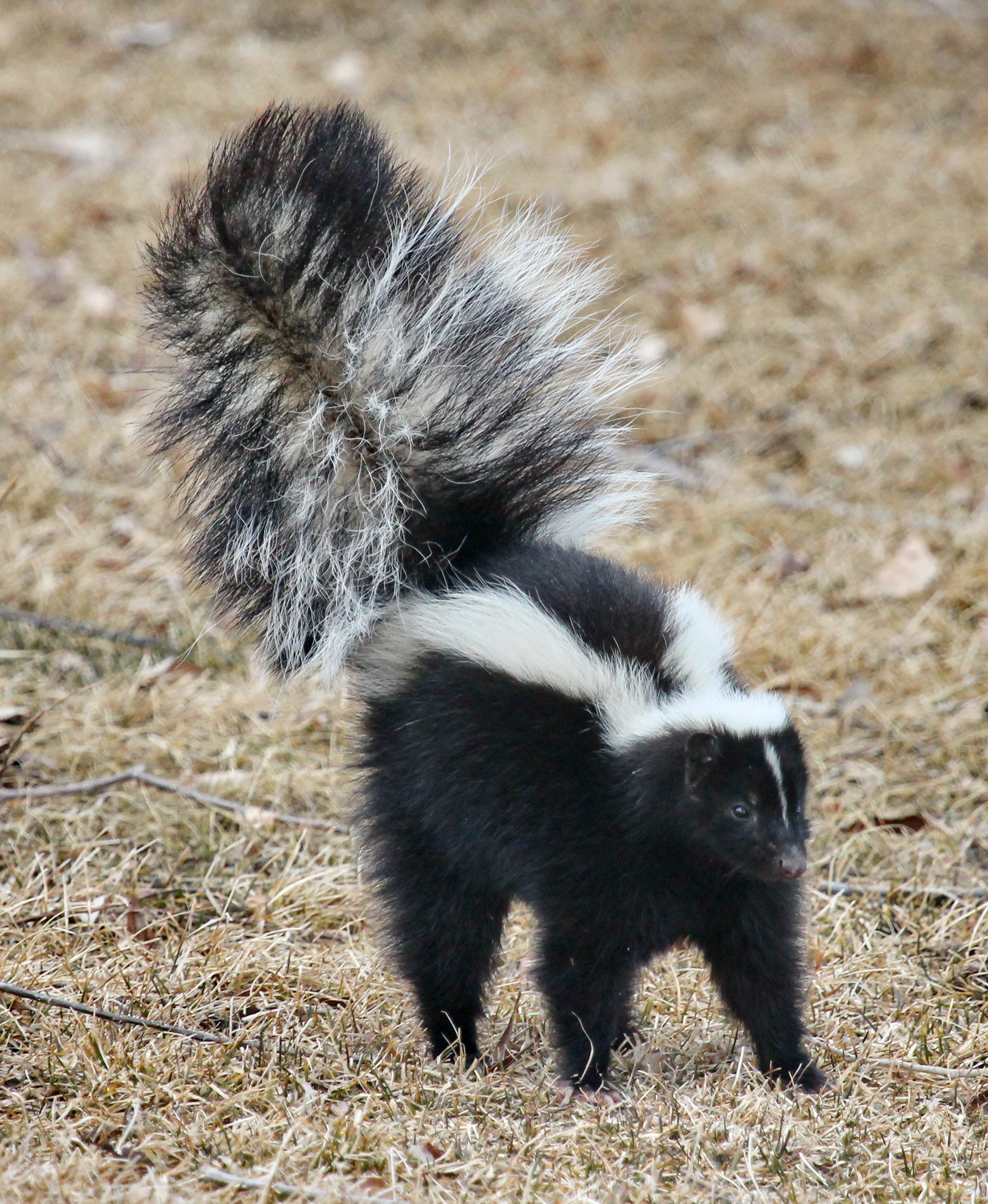
Domesticated descented skunks are kept as exotic pets in a small number of U.S. states. They are intelligent and affectionate but are not domesticated in the canid/feline sense, and their legality varies widely. **Banned in many states including California, Oregon, and Washington.**
ℹ️
Educational only. KinStation content is reviewed by licensed veterinarians but cannot replace an in-person exam. Always consult a licensed veterinarian or board-certified specialist for diagnosis, treatment, or any decision affecting your pet's health.
🩺 Need expert help with your skunk (descented)?
Connect with a specialist near you or ask a licensed vet — never substitute online guidance for hands-on care in an emergency.
Adults 6–14 lb (2.7–6.3 kg); body length 13–18 inches.
Lifespan
6–10 years
Social needs
solo
Native region
North America
Origin
New World
Climate
🍂 Temperate
Family
Mephitidae
Genus
Mephitis
Part of the Skunks
Descented North American mammals kept as exotic pets, bred in a range of coat colors.
More skunks coming soon.
Sounds & video
🎬 Video
Mephitis mephitis
Cephas · Wikimedia Commons · CC BY-SA 3.0
Habitat & space requirements
From the minimum an animal needs to be kept humanely, up to the ideal setup. Bigger is almost always better — minimums are floors, not targets.
Photo coming soon
Minimum
Skunk-proofed room/large pen
≈ 6 × 4 ft floor pen + free-roam time
A descented skunk needs at least a large floor pen of around 24 sq ft as a home base plus several hours of daily supervised free-roam in a skunk-proofed room, kept at normal room temperature (around 18–24 °C). Provide a deep dig/forage box, multiple hides, a litter area, and rooting/foraging enrichment, since they are curious, ground-dwelling foragers prone to obesity without activity. They are typically kept singly, are long-lived, and are an advanced exotic requiring careful diet management.
Photo coming soon
Recommended
Free-roam room + secure outdoor run
Dedicated room + ≈ 60+ sq ft outdoor run
Aim for largely free-roam access to a skunk-proofed room plus a secure, dig-proof outdoor run of 60 sq ft or more with grass, soil, and shaded hides for natural foraging and basking. Offer rotating foraging puzzles, dig boxes, tunnels, and varied hides to channel their strong rooting and exploring instincts and to control weight. A consistent routine and a measured, balanced diet are central to their welfare.
Photo coming soon
Ideal
Free-roam home + naturalistic run
House free-roam + large planted outdoor run
The best welfare outcome is full free-roam of a skunk-proofed home (much like a house cat) with constant access to a large, secure, planted outdoor run featuring deep diggable soil, foraging areas, and abundant hides. This lets the skunk express natural digging, foraging, and exploring across a rich, varied environment. Combined with attentive diet and enrichment, it suits this intelligent, long-lived forager best.
Life & growth stages
How this animal changes through its life — each stage often has its own care, diet and space needs.
Photo coming soon
Newborn
Newborn mammals are nursed on their mother's milk. Many are born helpless — blind, deaf, and sparsely furred (altricial, as in dogs, cats, and rodents) — while others stand and follow within hours (precocial, as in hoofed livestock).
Photo coming soon
Juvenile
After weaning, juveniles grow quickly and become increasingly active, playful, and independent. Adult coat, proportions, and (in many species) the permanent teeth come in as they approach full size.
Photo coming soon
Adult
Adults reach full body size and sexual maturity, with the species' mature coat and build. Sexual dimorphism — differences in size, mane, horns, or markings — is pronounced in some mammals and subtle in others.
Senior
Senior animals show aging signs such as graying fur, reduced activity, and a greater need for veterinary monitoring of joints, teeth, and organ function. Lifespan and the onset of old age vary widely by species and size.
Color & pattern variants
Natural variants occur in the wild; selectively bred (man-made) variants were developed in captivity.
Pet skunks (descented, captive-bred striped skunks) are active, curious, intelligent animals that need a roomy, enriched indoor environment plus secure space to explore. They are strong, determined diggers and foragers who get into cabinets and containers, so 'skunk-proofing' the home — securing food, trash, chemicals, and small openings — is essential, much as one would for a clever toddler.
Provide a comfortable den or sleeping area, litter facilities (many skunks can be litter-trained), and ample enrichment such as foraging opportunities and toys. They are largely crepuscular/nocturnal but can adapt somewhat to household routines. Temperature should be moderate and comfortable; they are indoor pets, not outdoor-enclosure animals in most setups.
Legality is a major consideration: skunk ownership ranges from permitted (sometimes only for in-state captive-bred animals, sometimes with permits and vaccination) to outright banned, and some states classify skunks as rabies-vector species and prohibit them entirely. Check your state's and locality's exotic-pet laws before acquiring one — see the cited overview, with jurisdiction-specific status tracked separately on this entry.
Substrate
As an indoor companion, a descented skunk lives best on solid, easy-clean flooring (sealed wood, tile or low-pile carpet) rather than caged bedding, with washable blankets and fleece in sleeping areas. They can be litter-trained using a low-dust, paper-based or pelleted litter in a corner box. Avoid clumping clay litter, which can be ingested during their compulsive digging and rooting.
Equipment & setup
Skunks need a free-roam or skunk-proofed room rather than a cage, kept at normal household temperatures (they are prone to obesity and have no heat/UVB requirement). Provide a den or covered crate for sleeping, sturdy food and water bowls, and a dig box; secure all cupboards as they are determined, dexterous foragers. A balanced calcium-rich diet and routine exotic-vet care are critical, as captive skunks commonly develop obesity and metabolic bone disease.
Diet
Pet skunks are omnivores, and captive diets are commonly built around a high-quality base such as a quality commercial food, supplemented with a variety of vegetables, some fruit, cooked lean protein, and insects, structured to provide balanced nutrition. Because there is no single standardized commercial 'skunk diet,' planning and monitoring with an exotic veterinarian is important.
Fresh water should always be available. Skunks are prone to obesity, so portion control and limiting sugary and fatty foods are key; avoid processed human junk food and excessive carbohydrates.
The common mistake is an unbalanced or overly rich diet leading to weight gain and nutritional problems. Work with an exotic-mammal veterinarian to set an appropriate diet and body-condition plan; no specific quantities are given here.
Behavior & temperament
Captive-bred, descented pet skunks can be curious, playful, and affectionate with their people, and many are intelligent enough to learn their names, simple tricks, and litter habits. They are inquisitive and determined, with a strong drive to dig, root, and investigate, and they can be stubborn — owners describe them as endearing but mischievous.
Descenting (removal of the scent glands), typically done young, eliminates the spray that wild skunks are known for, but it does not make the animal domesticated; skunks retain wild instincts and can bite or scratch if frightened or mishandled. They benefit from gentle socialization, routine, and respectful handling.
They are most active around dawn, dusk, and night, though they often adjust to family schedules to some degree. As with other exotic mammals, realistic expectations matter: a pet skunk is a special-needs animal requiring enrichment, skunk-proofing, and patience, not a low-maintenance companion.
Health
Pet skunks can live well into their senior years (often roughly 6 to 10 years, sometimes longer) with good care, and require a veterinarian experienced with exotic mammals — not all clinics will see skunks. Establishing that relationship before acquiring one is essential.
Obesity is a frequently cited problem, along with dental disease, heart disease, and kidney issues; weight control and routine wellness care are central preventives. A critical complication is rabies: there is currently no rabies vaccine specifically approved for skunks in the U.S., and a skunk that bites a person may be treated as unvaccinated by public-health authorities regardless of any off-label vaccine, with serious legal and animal-welfare consequences. This makes bite prevention and legal compliance especially important.
Preventive themes are a balanced, weight-controlled diet, enrichment and exercise, routine exotic-veterinary care, and strict attention to local law and rabies-related rules. This entry is general guidance only; diagnosis, treatment, and vaccination decisions belong with a qualified veterinarian and, where relevant, public-health authorities.
Tips, DIY & hacks
Build a dig box from a shallow tote filled with soil, shredded paper or river stones with treats buried inside to satisfy their intense rooting instinct and spare your carpet. Use scatter-feeding and food-puzzle toys to slow eating and prevent obesity, and child-proof latches on low cabinets since skunks open doors. Check your local and state laws first, as private skunk ownership is illegal or permit-only in many areas.
Origin & history
Pet skunks are typically descented, captive-bred striped skunks (Mephitis mephitis), a North American species. Skunks have been kept as novelty pets for many years, with captive breeding producing animals in a range of color variations. They are not domesticated in the way dogs or pigs are; captive skunks remain wild animals bred in captivity.
Legal status in the U.S. is a patchwork: some states permit ownership (occasionally only for animals bred within the state, or with permits and vaccination requirements), while others ban skunks outright, and several treat them as rabies-vector species. Because of the rabies-vaccine situation and these varied laws, prospective owners must research their state's and locality's rules carefully before acquiring a skunk.
Anecdotes & owner lore
Community experience and cultural notes — not veterinary advice. Every animal is an individual; treat these as colour, not care instructions.
Descented pet skunks have a devoted niche following who insist the striped skunk is one of the most charming and underrated exotic companions — playful, clownish, and prone to flopping over for belly rubs or 'stomping' their front feet in a comical threat display borrowed from their wild cousins. Owners love that a well-socialized skunk will follow them around the house and burrow into blankets to sleep.
Much skunk lore centers on the famous spray they no longer have: keepers field endless jokes and nervous questions from guests, and enjoy explaining that a descented skunk is odor-free. Their reputation in the wild — that unmistakable warning stripe and the foot-stomping bluff before a spray — gives the pets a whiff of celebrity, helped along by cartoon skunks in popular culture. Rescues, meanwhile, emphasize that behind the cute waddle is a wild-instinct animal with real legal and rabies complexities that admirers should understand before falling for the face.
Common ailments
Dental disease — common
Obesity — very common — Obesity is one of the most frequently cited health problems in pet skunks.
Rabies considerations (no approved skunk vaccine) — common — Bite prevention and strict legal compliance are especially important because of the rabies-vaccine limitation.
Legality (US)
Educational only. Confirm current rules with your state wildlife agency or local authority before acquiring an animal.
US · CA — Banned — California prohibits all *Mephitis* species under Cal. Code Regs. tit. 14 § 671 — restricted species list.
US · OR — Banned — Oregon ORS 609.305 prohibits private ownership of skunks except where specifically grandfathered.
US · WA — Banned — Washington prohibits possession of skunks as potentially dangerous wildlife under RCW 16.30 and WAC 232-12-064.
Reviewed and signed off by: KinStation Editorial - pre-launch draft (pending DVM review)