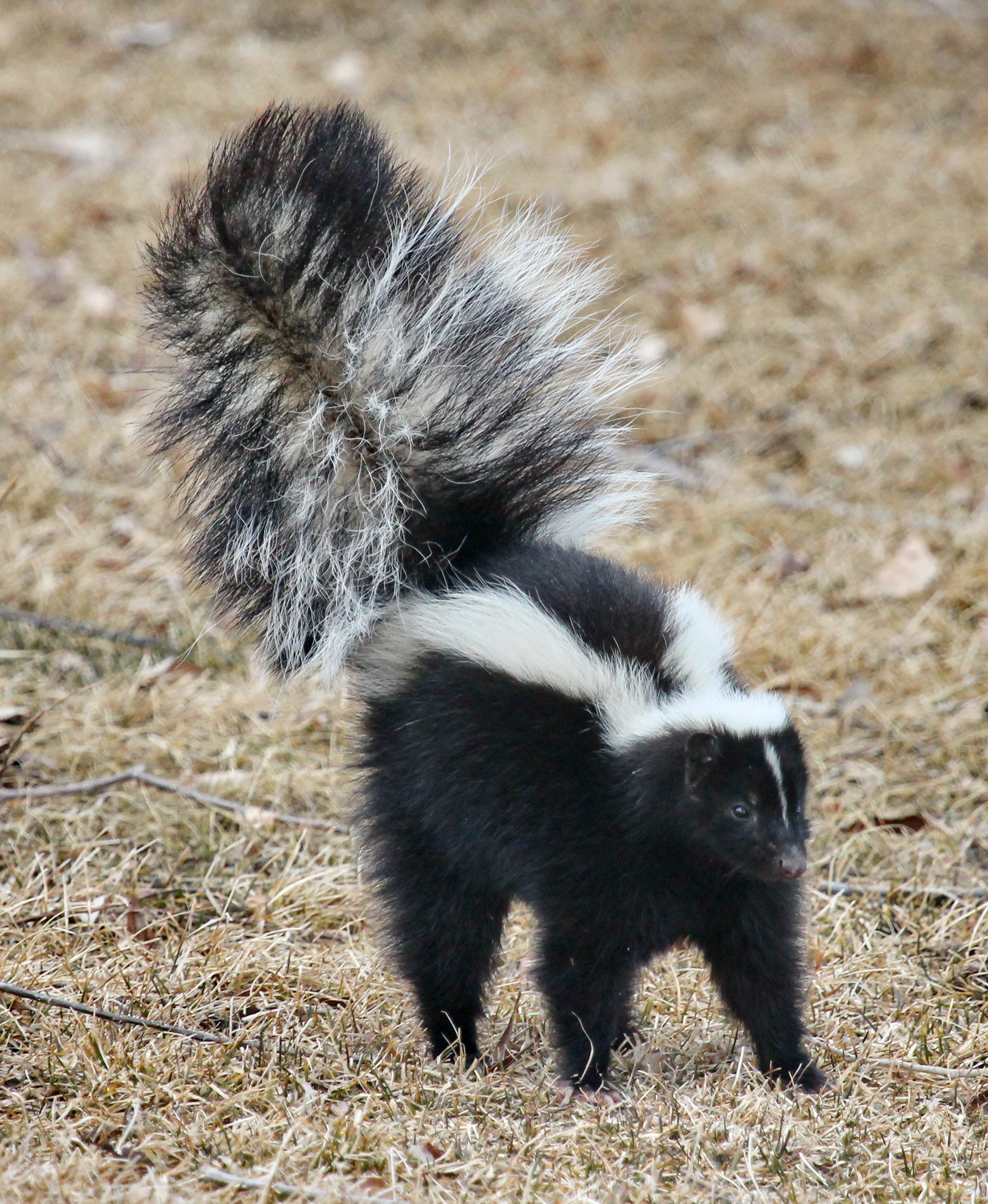
A North American carnivoran famous for the noxious spray of its anal glands, kept as an exotic pet usually after those glands are surgically removed. Legality is highly restricted and varies enormously by jurisdiction, and skunks demand specialist care and an exotics vet.
ℹ️
Educational only. KinStation content is reviewed by licensed veterinarians but cannot replace an in-person exam. Always consult a licensed veterinarian or board-certified specialist for diagnosis, treatment, or any decision affecting your pet's health.
🩺 Need expert help with your striped skunk?
Connect with a specialist near you or ask a licensed vet — never substitute online guidance for hands-on care in an emergency.
Cat-sized; body 13-18 in (33-46 cm) plus a bushy tail of 7-10 in (18-25 cm); typically 4-10 lb (1.8-4.5 kg), and pet skunks often become overweight.
Lifespan
6–10 years
Social needs
solo
Native region
North America (southern Canada through the United States into northern Mexico; woodland edges, grassland, and suburban a
Origin
New World
Climate
🍂 Temperate
Family
Mephitidae
Genus
Mephitis
Part of the Exotic Mammals
Unusual mammals kept by specialist and exhibitor keepers, ranging from small exotic rodents to wild felids. Many are legally restricted, require permits, and have demanding space, diet, and welfare needs far beyond ordinary pets.
Captive-bred descented skunks are kept as house pets in a free-roam, cat-style model, not in cages. The welfare floor is a fully skunk-proofed room (≥ 100 sq ft) with a litter pan, climbing/digging structures, hides, a secure food storage system (they raid cupboards), and several hours of supervised out-of-room time daily. Only descented, captive-bred animals are appropriate — wild-caught skunks carry rabies and roundworm risk and are illegal to keep almost everywhere. Pet skunks are banned outright in many US states and most of the EU/UK; specialist exotic vets are scarce, so confirm one is willing to treat before acquiring.
Photo coming soon
Recommended
Free-roam skunk-proofed household
Multi-room free-roam home + enriched indoor environment
A cat-style multi-room free-roam home with a skunk-proofed kitchen and pantries, low-rise climbing furniture, dig boxes, foraging puzzles, and daily varied diet. Skunks are inquisitive omnivores and need foraging enrichment to prevent obesity and destructive behaviour. Most owners pair the skunk with secure outdoor playpen time.
Photo coming soon
Ideal
House + secure outdoor enclosure / acreage
Free-roam house + secure outdoor pen ≥ 8 × 16 ft
A fully skunk-proofed home paired with a secure outdoor pen or fenced acreage for supervised digging and foraging. Outdoor space lets skunks express natural rooting/digging behaviour and burns calories that indoor-only animals struggle to. Closest to the welfare ceiling for a captive skunk.
Life & growth stages
How this animal changes through its life — each stage often has its own care, diet and space needs.
Photo coming soon
Newborn
Newborn mammals are nursed on their mother's milk. Many are born helpless — blind, deaf, and sparsely furred (altricial, as in dogs, cats, and rodents) — while others stand and follow within hours (precocial, as in hoofed livestock).
Photo coming soon
Juvenile
After weaning, juveniles grow quickly and become increasingly active, playful, and independent. Adult coat, proportions, and (in many species) the permanent teeth come in as they approach full size.
Photo coming soon
Adult
Adults reach full body size and sexual maturity, with the species' mature coat and build. Sexual dimorphism — differences in size, mane, horns, or markings — is pronounced in some mammals and subtle in others.
Senior
Senior animals show aging signs such as graying fur, reduced activity, and a greater need for veterinary monitoring of joints, teeth, and organ function. Lifespan and the onset of old age vary widely by species and size.
Color & pattern variants
Natural variants occur in the wild; selectively bred (man-made) variants were developed in captivity.
Natural
representative
Standard black-and-white
The wild-type coat: glossy black with the classic white nape patch splitting into two white stripes down the back and tail. The most common pattern in both wild and captive animals.
Selectively bred (man-made)
representative
Color morphs (albino, chocolate, apricot, lavender, smoke, white)
A range of captive-bred color variations selected by exotic-pet breeders, including albino, brown/chocolate, apricot, lavender, smoke, and largely white skunks. These morphs exist only because of selective breeding within the pet trade and are not found in healthy wild populations.
Habitat & enclosure
A descented pet skunk is kept much like a free-roaming house companion rather than in a cage, with a securely escape-proofed, skunk-proofed room or home (they are strong, curious diggers and will open cabinets and raid food). A large dog crate or pen serves for safe confinement when unsupervised. Provide a litter area, soft bedding and a den-like hide, and outlets for digging and foraging behavior. Keep them indoors at normal household temperatures; they tolerate cool conditions but should not be left in heat or cold extremes. Outdoor access must be in a fully secure enclosure, as escaped or released pet skunks rarely survive and may be killed as suspected rabies carriers.
Substrate
Not a substrate-based terrarium animal: provide a litter box with paper-based or other low-dust litter (avoid clumping clay, which is a risk if ingested while digging), soft washable bedding or blankets in the den, and a dig-box of safe material to satisfy burrowing instincts. Keep flooring secure and non-slip, and skunk-proof against chewed cords and ingested foreign objects.
Equipment & setup
No heat lamp or UVB is required for an indoor mammal kept at room temperature. Key equipment: a secure pen or large crate for unsupervised times, litter box and litter, food and water dishes (puzzle feeders help curb overeating), a harness and leash for supervised outings where legal, climbing and digging enrichment, and chew-safe toys. Most important is a relationship with an exotics vet and the legal paperwork or permits your area requires.
Diet
Omnivorous with a strong tendency to obesity in captivity, so diet must be carefully managed. A common regimen pairs a generous portion of vegetables with measured lean protein (cooked poultry, egg, some fish), small amounts of cooked grains, and limited fruit, plus a calcium and taurine supplement, because poorly formulated diets cause metabolic bone disease and other deficiencies. Growing skunks in particular need adequate quality protein. Avoid feeding cat or dog food as a staple, excess fat, and excess treats. Follow a current pet-skunk nutrition guide or an exotics vet's plan, and provide fresh water at all times. Note: there is no established commercial pet-skunk feed, which is part of why their care is demanding.
Behavior & temperament
Intelligent, inquisitive, playful, and strongly individual, ranging from affectionate to stubborn or nippy. They are not domesticated, explore relentlessly with paws and nose, dig, climb, and can be destructive without enrichment and supervision. Most pet skunks sold in the US are descented (anal glands removed as kits), removing the spray defense; wild and non-descented skunks can discharge a powerful, far-reaching musk and will stamp and raise the tail as a warning first. They are crepuscular, can be litter-trained with patience, and generally do best as a solo pet without other skunks. They do not reliably bond like dogs and require an owner prepared for a high-needs exotic.
Health
Need a veterinarian experienced with skunks, which can be hard to find. Common issues include obesity and the resulting metabolic bone disease, dental disease, fatty liver, heart disease, and parasites tied to improper diet and housing. Pet skunks should follow a vet-directed parasite-prevention plan; critically, there is no USDA-approved rabies vaccine licensed for skunks in the US, so any vaccination is off-label and, in the eyes of animal control, the animal is still considered unvaccinated. Because skunks are a primary wild rabies reservoir, a reported bite (even to the owner) commonly results in the skunk being seized and euthanized for rabies testing, since there is no approved quarantine protocol. They can also carry zoonotic roundworms, so captive-bred, vet-supervised animals and good hygiene are essential. Spaying or neutering is strongly advised for behavior and health.
Tips, DIY & hacks
Before anything, verify legality: keeping striped skunks as pets is banned outright in many places (e.g. New York, Alaska, Hawaii, and others that classify them as rabies-vector species) and permit-restricted or limited to in-state captive-bred descented animals elsewhere, so confirm with state and local authorities first. Buy only from a licensed captive breeder; never take a skunk from the wild (rabies and welfare risks, and it is usually illegal). Plan for a 6-10 year commitment, obesity-proof feeding, daily enrichment, and the difficulty of finding skunk-experienced vets and pet-sitters. Spay or neuter, descent only via a qualified vet if you choose, and skunk-proof your home as you would for a toddler. Remember that a single reported bite can cost the animal its life.