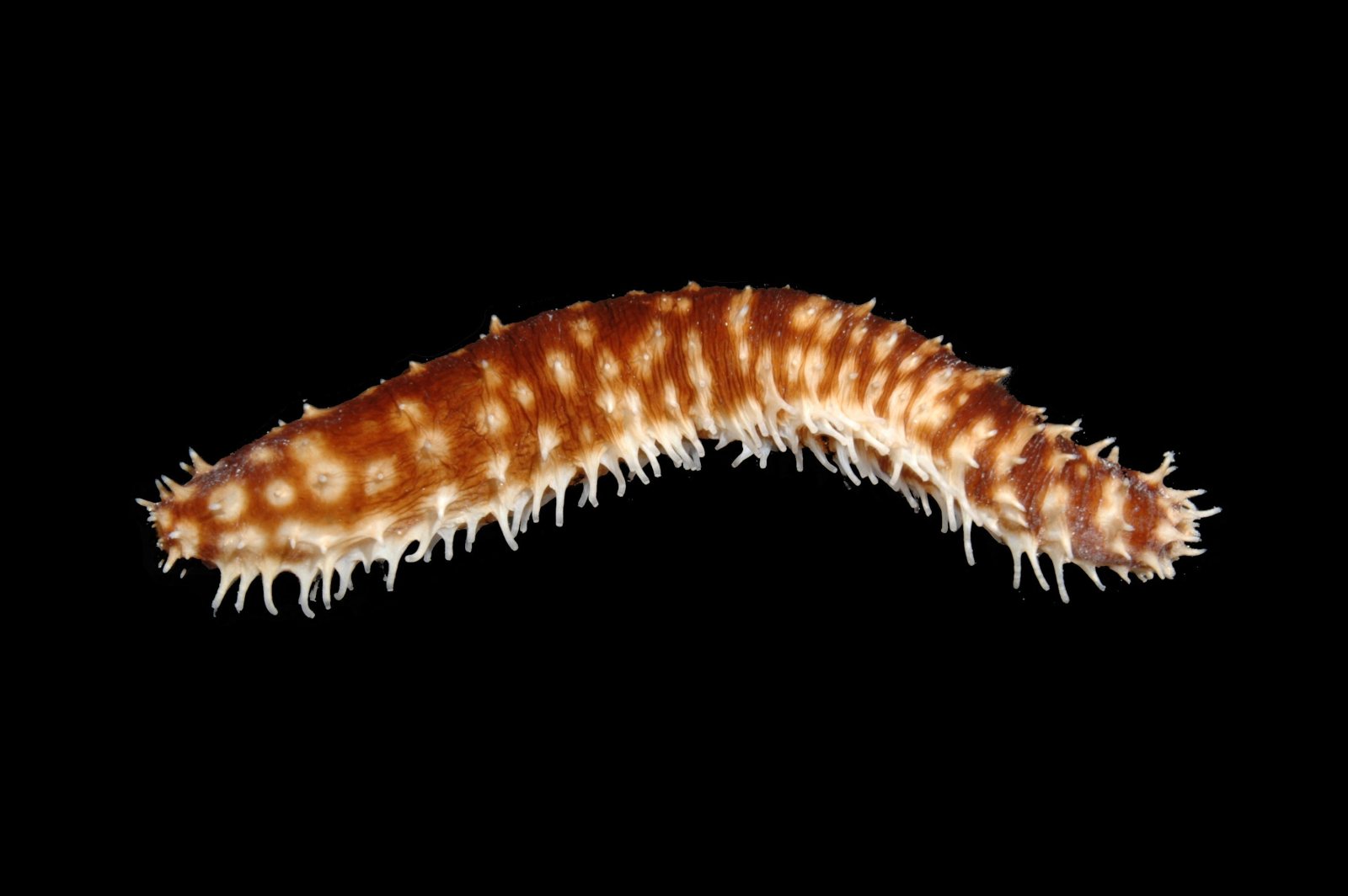
A long, mottled-brown detritivore and one of the most popular reef sand-cleaners — it works the substrate and rock, picking up sand and detritus with sticky oral tentacles, digesting the bacteria, algae and organic particles, and voiding clean sand. It is excellent natural sand-bed maintenance, but carries the classic sea-cucumber risk: if it dies or is shredded by a pump, it can release toxins that wipe out the tank (a 'cuke nuke').
ℹ️
Educational only. KinStation content is reviewed by licensed veterinarians but cannot replace an in-person exam. Always consult a licensed veterinarian or board-certified specialist for diagnosis, treatment, or any decision affecting your pet's health.
🩺 Need expert help with your tiger tail sea cucumber?
Connect with a specialist near you or ask a licensed vet — never substitute online guidance for hands-on care in an emergency.
Elongate body to about 40 cm (16 in) long and 5 cm (2 in) wide, though usually smaller in tanks.
Lifespan
3–8 years
Social needs
solo
Native region
Red Sea, Persian Gulf and tropical Indo-Pacific (east to Hawaii)
Origin
Old World
Climate
🌴 Tropical
Water type
🌊 Marine
Family
Holothuriidae
Genus
Holothuria
Part of the Sea Cucumbers
Soft-bodied echinoderm detritivores that work the sand bed and rockwork, swallowing substrate or sweeping it with sticky oral tentacles to extract detritus, bacteria and uneaten food. Excellent natural sand cleaners, but copper-sensitive and capable of releasing toxins if injured or sucked into a pump.
More sea cucumbers coming soon.
Life & growth stages
How this animal changes through its life — each stage often has its own care, diet and space needs.
Photo coming soon
Larva
Most marine invertebrates hatch into microscopic planktonic larvae (such as the zoea of crustaceans or the bipinnaria/veliger of echinoderms and mollusks) that drift and feed in the water column. The larva looks nothing like the adult and undergoes major reorganization.
Photo coming soon
Juvenile
After settling out of the plankton, the juvenile takes on a recognizable miniature of the adult body plan — a tiny shell, a small star, or a translucent shrimp. Crustaceans grow by molting, shedding the exoskeleton to enlarge.
Photo coming soon
Adult
Adults reach full size and reproductive maturity with the species' mature shell, shape, or coloration. Many continue to molt or grow throughout life, and some show sex differences in size or claw/appendage shape.
Color & pattern variants
Natural variants occur in the wild; selectively bred (man-made) variants were developed in captivity.
Natural
representative
Typical (mottled)
The usual form: an elongate, soft body mottled in brown and tan with rows of pointed papillae, often with banded or 'tiger-tail' markings toward the rear. A natural species, not a bred strain.
Habitat & enclosure
Keep one in a mature, established reef or FOWLR tank of at least 30 gallons (115 L) with a real sand bed and live rock that has built up a standing supply of detritus and microfauna for it to process. Maintain stable tropical reef parameters: temperature 72-80F (22-27C), pH 8.1-8.4, salinity SG 1.024-1.026, alkalinity 8-11 dKH and low nitrate with zero ammonia/nitrite.
Holothuria hilla is widespread across the Red Sea, Persian Gulf and tropical Indo-Pacific east to Hawaii, on shallow reef flats, sand and rubble. A mature tank with detritus to eat is the real requirement; a too-clean or undersized system will slowly starve it. Any reef lighting and moderate flow are fine, but guard pump intakes (see health).
Substrate
A sand bed is essential — this animal makes its living swallowing and cleaning sand, so a fine-to-medium sand substrate of at least 1-2 inches (2.5-5 cm) and a reasonable footprint are needed; a bare-bottom tank is unsuitable. Live sand and mature rock supply the detritus and bacteria it eats.
Equipment & setup
Standard reef equipment suffices biologically: live-rock biofiltration, a heater, a protein skimmer and moderate flow. The critical extra is SAFETY: cover or screen every pump, powerhead and overflow intake so the cucumber can't be drawn in and shredded, and keep activated carbon on hand to pull toxins fast if it dies. No special lighting is needed.
Diet
A deposit-feeding detritivore that sweeps the sand and rock with its branched oral tentacles, ingesting sand and surface film, extracting and digesting bacteria, microalgae and animal and vegetal organic particles, and expelling cleaned sand. This makes it a genuine, effective sand-bed and rock cleaner. In an over-clean or small tank it can run out of food and waste away, so it needs a mature, detritus-rich system rather than a sterile one; some keepers spot-feed fine sinking foods.
Behavior & temperament
Slow, peaceful and reef-safe toward fish, corals and other inverts, roaming the sand and lower rock as it feeds and often partly hiding by day. Its risks are not aggression but husbandry: it can crawl into a powerhead or overflow and be injured or killed, and a dying or damaged cucumber may eviscerate or break down and release toxins. House one per tank, give it room to roam, and screen pump intakes.
Health
TOXIN RISK ('cuke nuke'): like many sea cucumbers, if it dies, rots, or is shredded by a pump it can release holothurin/saponin toxins into the water that can poison or kill fish and inverts across the whole tank. Screen all pump and powerhead intakes, give it a tank large enough that a death is more dilutable, and remove any dead or dying cucumber IMMEDIATELY and run carbon. As an echinoderm it is also extremely sensitive to copper (never use copper meds), to salinity and temperature swings, and to air exposure; drip-acclimate very slowly (often over several hours) and never lift it into the air, which can be fatal. Starvation in clean or undersized tanks is a common slow killer. (Educational only, not a substitute for advice from an aquatic veterinarian.)
Tips, DIY & hacks
Buy it as dedicated sand-bed cleanup for a mature tank with detritus to eat, not for a brand-new or spotless system where it will starve. Screen all pump intakes, keep one per tank, drip-acclimate very slowly and never expose it to air. If it ever looks limp, eviscerating, or dead, remove it at once and run carbon to head off a tank-wide toxin event.
Reviewed and signed off by: KinStation Editorial — pre-launch draft (pending DVM review) on 2026-06-10