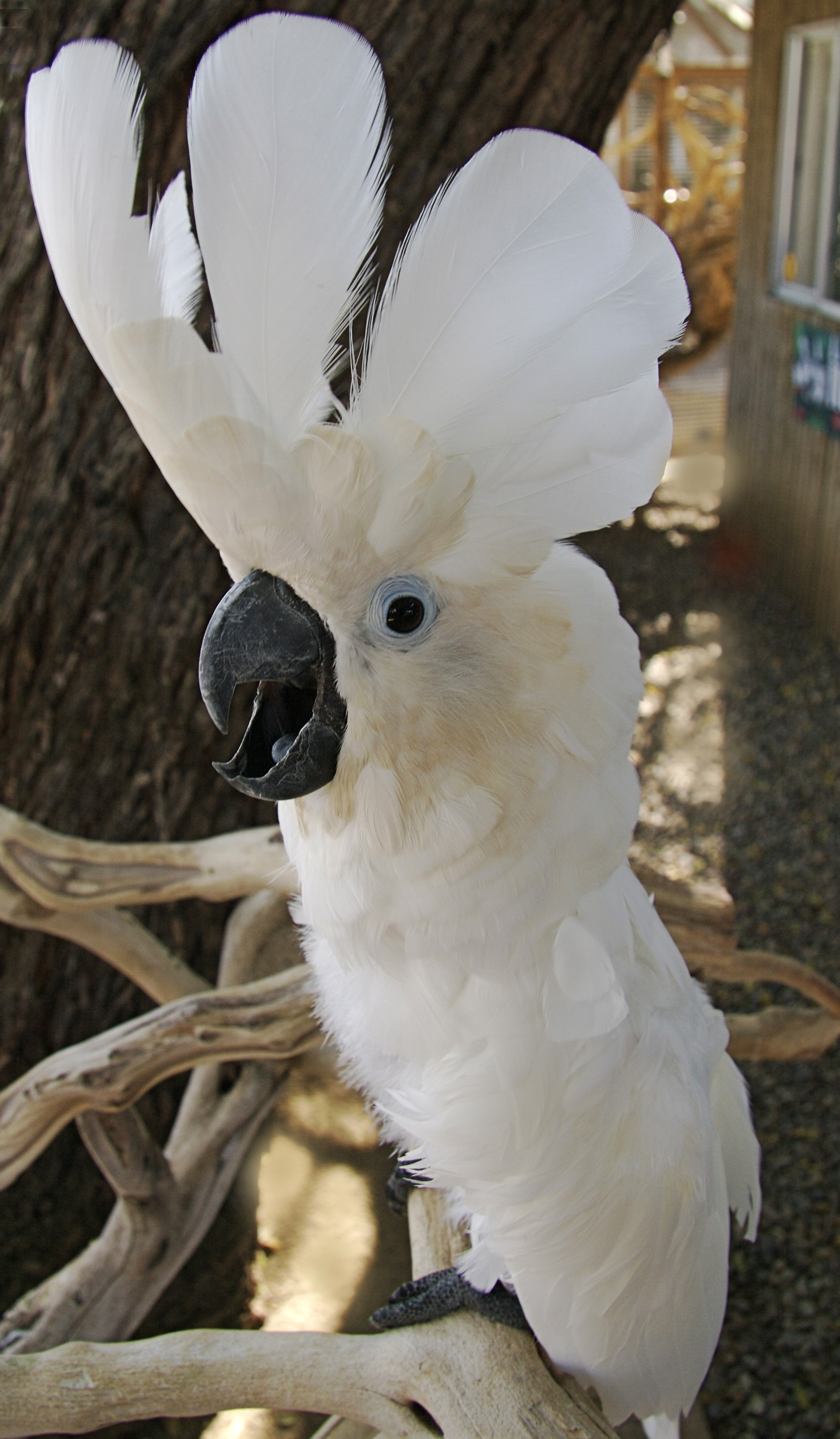
Umbrella cockatoos are large white cockatoos from the Maluku Islands of Indonesia. They are profoundly affectionate, dramatic, and the most commonly surrendered large parrot species — their welfare needs are difficult to meet in a typical home.
ℹ️
Educational only. KinStation content is reviewed by licensed veterinarians but cannot replace an in-person exam. Always consult a licensed veterinarian or board-certified specialist for diagnosis, treatment, or any decision affecting your pet's health.
🩺 Need expert help with your umbrella cockatoo?
Connect with a specialist near you or ask a licensed vet — never substitute online guidance for hands-on care in an emergency.
From the minimum an animal needs to be kept humanely, up to the ideal setup. Bigger is almost always better — minimums are floors, not targets.
Photo coming soon
Minimum
Large cockatoo cage + out time
≈ 36 × 36 × 48 in, 1–1.5 in bar spacing
A large cockatoo cage of at least 36 × 36 in floor and 4 ft tall with 1–1.5 in bar spacing and secure complex locks is only a base, used with many hours of daily out-of-cage interaction. Provide hardwood and softwood to shred, foraging toys, varied perches, and frequent showers or baths. Umbrella cockatoos are extraordinarily needy, cuddle-bonding birds, so a lone bird must have intense daily attention or a compatible companion or it will scream and self-mutilate.
Photo coming soon
Recommended
Flight cage / cockatoo enclosure
≈ 5 × 3 × 6 ft (flight-width cage)
A flight-width cage around 5 ft wide allows wing-stretching, climbing, and short flights, furnished with natural branches, swings, shreddable wood, and rotating foraging puzzles, plus regular bathing. Keep it in a stable, draught-free room at roughly 18–27 °C (65–80 °F) away from fumes. These intensely social birds need structured companionship, a foraging-rich routine, and consistent independence training to prevent the screaming and plucking the species is notorious for.
Ideal
Outdoor aviary / bird room
Walk-in aviary ≥ 12 ft long, or bird room
A walk-in aviary at least 12 ft long, or a dedicated bird-safe room, gives genuine flight, climbing, and bathing in rain or a misting station, with sun for natural vitamin D and a sheltered, frost-free roost. Provide live or replaceable branches, shreddable foraging material, and a constantly rotated toy supply. The best welfare outcome is a bonded pair with room to fly, forage, and behave naturally rather than depend solely on a human.
Benjamin Graves / CC BY 2.0 (Wikimedia Commons)
Life & growth stages
How this animal changes through its life — each stage often has its own care, diet and space needs.
Photo coming soon
Egg
Birds develop inside a hard-shelled egg incubated by the parent(s). Egg size, shell color, and clutch size vary by species; the embryo develops over days to weeks before hatching.
Photo coming soon
Hatchling / Chick
Hatchlings are either altricial — naked, blind, and dependent on parents (typical of parrots and songbirds) — or precocial — downy, mobile, and self-feeding soon after hatching (typical of poultry and waterfowl). Down gives way to the first feathers.
Photo coming soon
Juvenile / Fledgling
Fledglings grow in their juvenile plumage and begin to fly and feed themselves, though they may still beg from parents at first. Juvenile feathering is often duller than the adult and is replaced as the bird matures.
Adult
Adults attain full body size and mature plumage, and are capable of breeding. Many species show distinct adult coloration, and in sexually dimorphic birds males and females differ in plumage, size, or markings.
(c) dbeadle, some rights reserved (CC BY-NC) via iNaturalist — https://www.inaturalist.org/observations/145586219
Habitat & enclosure
Umbrella cockatoos are large, powerful parrots that require a big, strong cage with secure locks — cockatoos are notorious escape artists who learn to open simple latches. The enclosure must let a sizable bird with an expressive crest climb, turn, and stretch its wings fully, and it should be built to withstand a beak capable of destroying soft metal and wood.
These are extraordinarily social birds that cannot live as cage ornaments. They need many hours of daily out-of-cage time and direct interaction, plus a heavy rotation of destructible foraging toys, shreddables, and wood to chew. Under-enrichment is a primary driver of the screaming and feather-destructive behavior the species is known for.
As with all parrots, keep them away from PTFE/Teflon fumes, smoke, and aerosols. Provide bathing, natural or full-spectrum light cycles, and a predictable routine. Their dander is significant, so good ventilation benefits both bird and household.
Substrate
Use a large cage with a slide-out tray lined with newspaper or paper-based bedding changed daily; avoid dusty loose litter given their heavy powder-down. Aviary floors can use rakeable wood chips kept dry to prevent mold and bacterial buildup.
Equipment & setup
Provide an extra-large, escape-proof stainless or heavy-gauge cage with secure complex latches, multiple natural hardwood perches, and an endless rotation of chewable and foraging toys. They need full-spectrum light, frequent showers or misting for skin and feather health, and an air purifier to handle the substantial feather dust.
Diet
Base the diet on a complete formulated pellet, supplemented with vegetables, leafy greens, and limited fruit, with nuts and seeds reserved as small training rewards rather than staples. As with other large parrots, an all-seed diet is too high in fat and nutritionally incomplete, contributing to obesity and fatty liver disease over a long lifespan.
Fresh water daily and foraging-based feeding help occupy a busy, intelligent bird. Hiding and wrapping food encourages natural foraging and reduces the boredom that feeds problem behaviors.
Avoid avocado, chocolate, caffeine, alcohol, and salty or sugary snacks. Because cockatoos are long-lived, partner with an avian veterinarian to monitor weight and body condition and to adjust the diet across the bird's life stages.
Behavior & temperament
Umbrella cockatoos are affectionate, intensely social 'velcro birds' that crave physical closeness and constant companionship — a trait that makes them endearing and also extremely demanding. They bond hard and can suffer real distress when separated from their person, which is a leading cause of separation-related screaming and feather-plucking. They are not a low-maintenance or beginner parrot.
They are also among the loudest of all companion birds. Ear-splitting screams, especially when isolated or frustrated, are normal cockatoo behavior and carry through walls; they are unsuitable for apartments or noise-sensitive homes. A large cockatoo beak can inflict a serious bite, particularly from a hormonal or over-stimulated bird, so respectful handling and consistent positive-reinforcement training are essential.
The core behavioral challenge is meeting an enormous need for interaction, enrichment, and routine. Cockatoos that are cuddled excessively can also become hormonally over-bonded; balanced, independence-building interaction is healthier than treating the bird like a perpetual lap pet.
Health
Umbrella cockatoos are a lifelong commitment, commonly living 40 to 60 years and sometimes longer. Establish care with an avian veterinarian and schedule routine wellness exams with weight tracking; birds hide illness, so subtle changes in droppings, appetite, weight, posture, or voice deserve prompt attention.
Feather-destructive behavior and even self-mutilation are particularly associated with cockatoos and are usually rooted in a mix of medical and psychological factors — they require a veterinary work-up, not home fixes. Other concerns include obesity and fatty liver disease, psittacosis (a zoonosis), and psittacine beak and feather disease (PBFD), a viral illness that cockatoos can carry.
Preventive themes are a balanced formulated diet, generous exercise and enrichment, clean air, stable routine and social contact, and regular professional exams. The most common 'health' failures in this species are really welfare failures — under-stimulation and isolation — so meeting behavioral needs is itself preventive medicine.
Tips, DIY & hacks
Umbrella cockatoos are intensely social and prone to screaming and feather-plucking if under-stimulated, so schedule hours of daily interaction plus DIY shredding toys (phone-book paper, untreated wicker, cardboard) for foraging. Resist over-cuddling that triggers hormonal behavior, and provide a sleep cage with 10-12 hours of dark, quiet rest.
Origin & history
The umbrella cockatoo (Cacatua alba), also called the white cockatoo, is native to the rainforests of the North Maluku islands of Indonesia. It is a wild species, not domesticated, and like many cockatoos it has been heavily affected by capture for the pet trade and by habitat loss; it is listed as Endangered on the IUCN Red List and protected under CITES.
Its striking all-white plumage, expressive backward-folding crest, and affectionate disposition made it enormously popular in the international parrot trade. That same popularity, combined with the species' demanding social needs, means cockatoos are among the most frequently surrendered parrots to rescues and sanctuaries — a sobering part of their modern history.
Anecdotes & owner lore
Community experience and cultural notes — not veterinary advice. Every animal is an individual; treat these as colour, not care instructions.
Few pets are as famously needy and dramatic as the umbrella cockatoo. Owners trade videos of cockatoos throwing full-blown 'tantrums' — flinging toys, stomping, and screaming — when asked to step back into the cage, and of birds 'arguing' back in startlingly human cadence. The internet is full of dancing cockatoos bobbing to music, a behavior that even drew scientific interest as evidence of spontaneous rhythm in a non-human animal.
The nickname 'velcro bird' captures their need to be glued to a person; many will burrow under a shirt collar or ride on a shoulder for hours and 'cry' when their human leaves the room. That intensity is also the heartbreak of the species — sanctuaries describe loud, brilliant, deeply affectionate birds who were rehomed simply because their need for companionship outlasted a household's capacity to give it.
Common ailments
Obesity — common
Feather-destructive behavior (feather plucking) — very common — Cockatoos are especially prone to plucking and self-mutilation, frequently tied to separation distress and under-enrichment; seek an avian-veterinary work-up early.
Psittacine beak and feather disease (PBFD) — rare
Reviewed and signed off by: KinStation Editorial - pre-launch draft (pending DVM review)