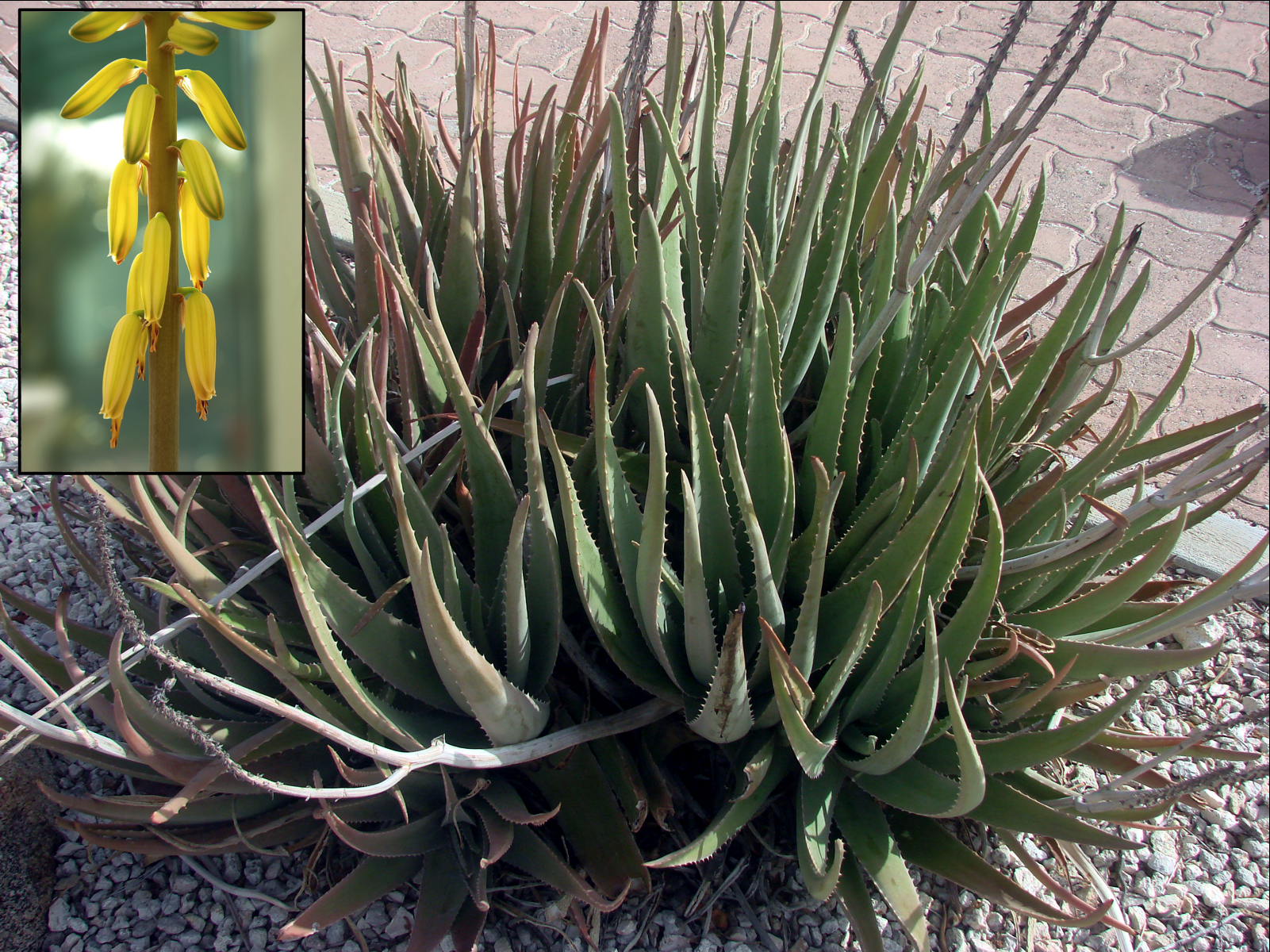
Aloe vera · also called True aloe, Medicinal aloe, Barbados aloe, Aloe barbadensis
Photo: Collage by en:User:MidgleyDJ , original images from Wikimedia commons ( Image:Aloe_vera_offsets.jpg and Image:Aloe_vera_C.jpg ) · CC BY-SA 3.0
Toxic to pets
Toxic to cats and/or dogs — keep out of reach.
A rosette of thick, gel-filled, toothed leaves, aloe vera is one of the most forgiving succulents and a fixture of sunny windowsills. It thrives on neglect and a gritty, fast-draining pot, and is far more often killed by kindness (overwatering) than by drought.
ℹ️
Educational only. KinStation content is reviewed by licensed veterinarians but cannot replace an in-person exam. Always consult a licensed veterinarian or board-certified specialist for diagnosis, treatment, or any decision affecting your pet's health.
Quick facts
Category
Succulents & Cacti
Family
Asphodelaceae
Native origin
Arabian Peninsula; now cultivated and naturalized across the world's drylands
Care difficulty
Beginner
Light
Full sun
Pet toxicity
Toxic to pets
Light
Aloe vera wants the brightest light you can give it — a south- or west-facing window indoors, or full sun outdoors once acclimatized. In too little light the leaves grow thin, pale, and flop outward instead of standing in a tight rosette. Introduce a plant to strong direct sun gradually, since a shade-grown aloe can sunburn (brown or reddish patches) if moved abruptly into intense afternoon rays.
Water
Water deeply, then let the soil dry out completely before watering again — the thick leaves are a built-in water reservoir, so the plant tolerates long dry spells but rots quickly if kept moist. In winter, when growth slows, water only sparingly. The single most common way aloe is killed is chronic overwatering in dense soil, which turns the base soft and brown; always discard water that collects in the saucer.
Soil & potting
Use a gritty, fast-draining cactus or succulent mix, ideally amended with extra perlite, pumice, or coarse sand so water runs straight through. A pot with a drainage hole is essential; decorative pots without drainage are a frequent cause of rot. Terracotta is a good choice because it wicks moisture from the soil and dries the rootball faster.
Environment — humidity, temperature, placement
Aloe is adapted to warm, arid conditions and dislikes cold; protect it from frost and keep it above roughly 50F (10C). Ordinary dry household air suits it perfectly — no misting or humidity tray is wanted, and high humidity can actually encourage rot. A spell outdoors in summer sun helps it grow sturdy, but bring it in before cold nights arrive.
Propagation
Aloe propagates most easily from 'pups' (offsets) — the small clones that sprout around the base of a mature plant. Once a pup has a few of its own roots, separate it and pot it in dry succulent mix, waiting several days before the first watering so cut surfaces can callus. Aloe is not reliably grown from a single leaf the way some succulents are; leaf cuttings usually just rot.
Toxicity detail
Toxic to cats and dogs. The ASPCA lists Aloe (Aloe vera) as toxic, attributing it to saponins and anthraquinone glycosides concentrated in the latex layer just under the leaf skin. Ingestion typically causes vomiting, lethargy, diarrhea, and a change in urine color. (The clear inner gel used in cosmetics is the least problematic part, but pets chew the whole leaf, so the plant should be kept out of reach.) Contact a veterinarian or animal poison control if eaten. Source: ASPCA Animal Poison Control toxic-plant database.
Origin & history
Aloe vera has been used and traded for thousands of years — it appears in ancient Egyptian, Greek, and Middle Eastern medical texts — and was spread by traders and colonists until its exact wild origin became blurred; it is now thought to derive from the Arabian Peninsula. The clear leaf gel's long folk reputation for soothing burns and skin made it a household plant on nearly every continent. It belongs to a large genus of African and Arabian succulents and is the most economically important aloe by far.
Growth stages
How this plant changes through its life — each stage often has its own care, diet and space needs.
Photo coming soon
Seed
Most plants begin as a seed (or spore in ferns) — a dormant package holding the embryo and a food reserve within a protective coat. Given moisture, warmth, and sometimes light, the seed breaks dormancy and germinates.
Photo coming soon
Seedling
The seedling emerges with a root and its first leaves (cotyledons), then true leaves. It is tender and shallow-rooted, dependent on steady moisture and light as it establishes the beginnings of stem and root systems.
Photo coming soon
Vegetative growth
In the vegetative phase the plant focuses on growing roots, stems, and foliage, building the size and structure it needs before flowering. This is the main period of leafing out and, for many houseplants, the stage at which they are grown and propagated.
Mature / Flowering
A mature plant reaches its full habit and, when conditions and age allow, flowers and sets seed (or, for foliage plants, simply attains its full adult size and form). This is the stage shown in most reference photos.
Problems & solutions
Each problem lists a proven fix (horticulture / extension-backed) and, where useful, an anecdotal remedy from the grower community — clearly labeled so you can judge for yourself.
Soft, mushy, brown base (root and crown rot)
severe
Symptoms:The base of the rosette turns soft, brown, or black and mushy; leaves yellow, become translucent, and detach easily.
Likely cause:Overwatering, dense water-retentive soil, or a pot without drainage keeping the roots and crown wet. This is the leading cause of death in aloe vera.
✓ Proven fix
Let the soil dry completely between waterings and water sparingly in winter; grow in a gritty, fast-draining mix in a pot with a drainage hole. If rot has set in, unpot the plant, cut away all soft tissue, let the healthy upper portion callus for a few days, and re-root it in dry succulent mix.
◇ Anecdotal remedy — grower lore, unverified
Many succulent growers deliberately keep aloe on the dry side, reasoning that a thirsty, slightly wrinkled plant is trivial to revive while a rotted one is usually lost.
Thin, pale leaves that flop outward (etiolation)
mild
Symptoms:The leaves stretch, grow thin and pale, and splay flat or droop rather than standing upright in a tidy rosette.
Likely cause:Too little light. Aloe stretches and weakens reaching for brighter conditions, a process called etiolation.
✓ Proven fix
Move the plant to the brightest spot available — a sunny window or supplemental grow light. New growth will be tighter and sturdier, though already-stretched leaves will not re-thicken. Rotate the pot periodically so the rosette grows evenly.
◇ Anecdotal remedy — grower lore, unverified
Hobbyists often summer their aloe outdoors in strong sun (acclimatizing it gradually) and report that it 'firms up' far faster than under any indoor light.
Browning or reddening leaf surfaces (sunburn / stress)
mild
Symptoms:Leaves develop brown, tan, or reddish-bronze patches, sometimes after a move or a heatwave.
Likely cause:Abrupt exposure to intense direct sun on a plant that was acclimated to shade, or severe heat and drought stress. Aloe can also blush reddish under strong light, which is a stress signal rather than damage.
✓ Proven fix
Acclimate aloe to strong sun gradually over a week or two rather than moving it suddenly. If it is scorching, give light afternoon shade and ensure it is not also bone-dry. A mild reddish tint in good light is normal and harmless once the plant adjusts.
◇ Anecdotal remedy — grower lore, unverified
Some growers prize the reddish 'sun stress' color and intentionally grow aloe hard and bright to bring it out, treating it as a feature rather than a flaw.
Anecdotes & grower lore
Community experience and cultural notes — not horticultural guarantees. Conditions vary by home; treat these as colour, not prescriptions.
Aloe is the quintessential 'burn plant' of kitchen-windowsill lore: generations of growers have snapped off a leaf tip and dabbed the cool gel on a minor cooking burn or sunburn. Owners also trade the half-joke that aloe is impossible to kill except by loving it too much — the plant that survives a forgotten month on a hot sill but dies in a week of attentive watering. Many keepers report a single plant quietly throwing off a whole nursery of pups until the pot is a crowded family.
Reviewed and signed off by: KinStation Editorial — pre-launch draft (pending horticulture review) on 2026-05-28