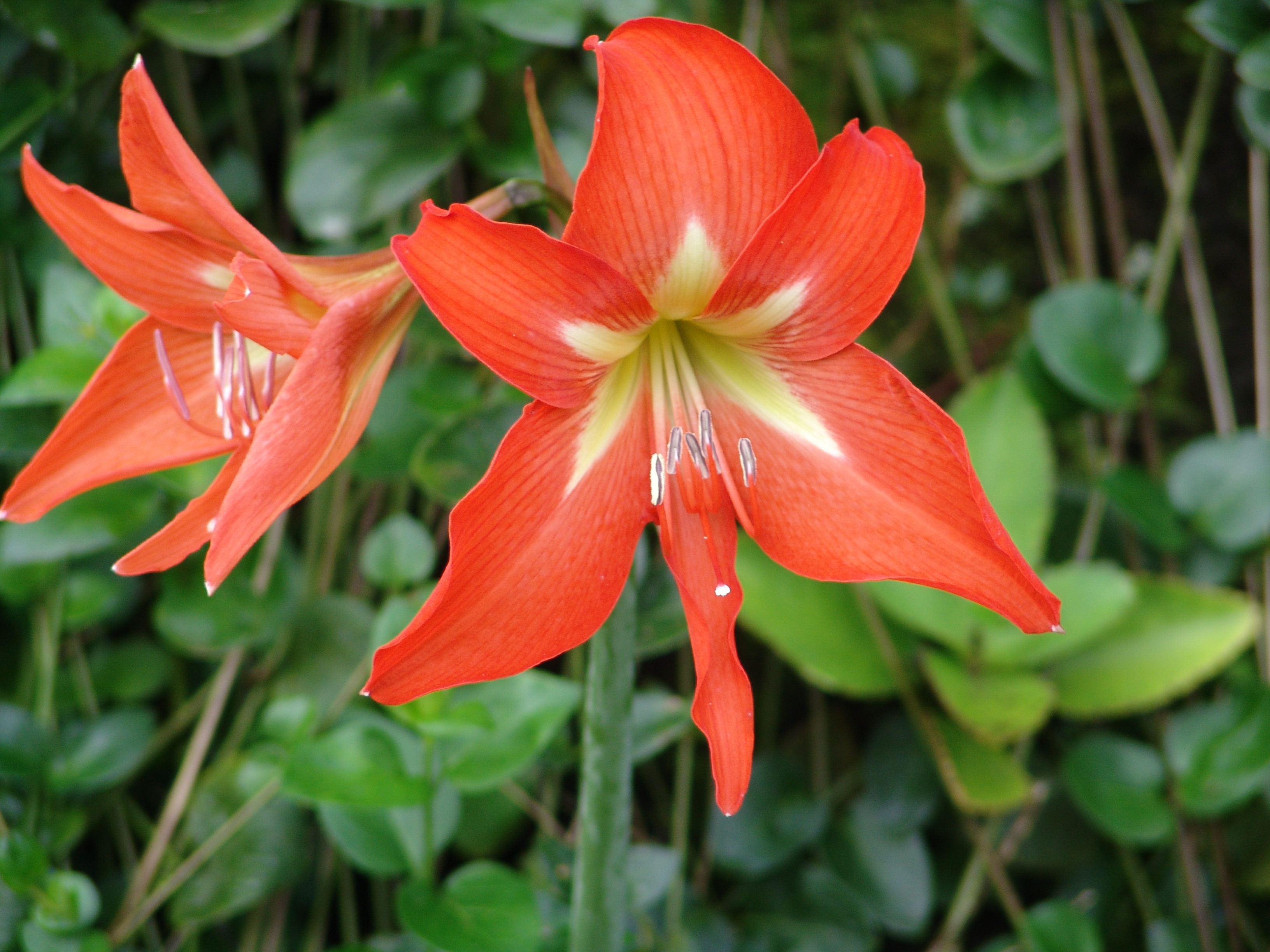
Hippeastrum spp. · also called Hippeastrum, Knight's star lily, Barbados lily
Photo: Drew Avery · CC BY 2.0
Toxic to pets
Toxic to cats and/or dogs — keep out of reach.
Grown from a large bulb, the amaryllis throws up tall stalks topped with huge trumpet flowers, famous as a winter holiday forcing bulb. With a proper rest period it can rebloom for many years.
ℹ️
Educational only. KinStation content is reviewed by licensed veterinarians but cannot replace an in-person exam. Always consult a licensed veterinarian or board-certified specialist for diagnosis, treatment, or any decision affecting your pet's health.
Quick facts
Category
Flowering
Family
Amaryllidaceae
Native origin
Tropical and subtropical Americas (Hippeastrum is native to Central and South America)
Care difficulty
Beginner
Light
Bright indirect
Pet toxicity
Toxic to pets
Light
While forcing into bloom, give the bulb bright light to keep the flower stalk sturdy and upright; turning the pot daily prevents it leaning toward the window. After flowering, the strappy leaves need bright light (and ideally a summer outdoors in a sheltered spot) to recharge the bulb for next year. Direct sun is fine once the plant is in leaf.
Water
When first potting a dormant bulb, water sparingly until the flower stalk and roots are growing, then water regularly to keep the soil lightly moist, never soggy. Overwatering a barely rooted bulb rots it. During the leaf-growing phase after bloom, water and feed regularly; then withhold water to induce dormancy (see Environment).
Soil & potting
Plant in a heavy, well-draining potting mix in a pot only slightly wider than the bulb, leaving the top third to half of the bulb above the soil line. The snug pot and exposed shoulder both help prevent rot and encourage flowering. Refresh the top layer of soil each year and repot every few years.
Environment — humidity, temperature, placement
The key to reblooming is a dormancy rest: after the leaves have grown all spring and summer to feed the bulb, stop watering in autumn, let the foliage die back, and store the bulb cool and dark (a basement or cool closet) for roughly 8-10 weeks. Then bring it back into warmth and light, resume watering, and a new flower stalk follows in weeks. They are frost-tender and enjoy ordinary warm room conditions when in growth.
Propagation
Amaryllis multiply by offset bulbs ('bulblets') that form alongside the parent; detach these when repotting a dormant bulb and grow them on, though they take a few years to reach flowering size. The plants can also be grown from seed, which takes several years to bloom. Most growers simply keep and rebloom their original bulb and pot up its offsets over time.
Toxicity detail
Toxic to cats and dogs. The ASPCA lists Amaryllis (Hippeastrum) as toxic; it contains lycorine and related alkaloids, most concentrated in the bulb. Ingestion can cause vomiting, drooling, diarrhea, lethargy, appetite loss, and abdominal discomfort, with larger ingestions of bulb causing more pronounced effects. Note that the true genus Amaryllis (Amaryllis belladonna) is also toxic; keep both the plant and especially the bulb away from pets and contact a veterinarian if eaten. Source: ASPCA Animal Poison Control toxic-plant database.
Origin & history
The plants sold as 'amaryllis' are almost all hybrids of the American genus Hippeastrum, a long-standing source of botanical name confusion with the separate African genus Amaryllis. Bred extensively since the 19th century, they became a beloved winter forcing bulb because a dry, dormant bulb can be potted up to bloom indoors in the depths of winter. Today huge Dutch- and South-African-grown bulbs are a fixture of the holiday season.
Growth stages
How this plant changes through its life — each stage often has its own care, diet and space needs.
Photo coming soon
Seed
Most plants begin as a seed (or spore in ferns) — a dormant package holding the embryo and a food reserve within a protective coat. Given moisture, warmth, and sometimes light, the seed breaks dormancy and germinates.
Photo coming soon
Seedling
The seedling emerges with a root and its first leaves (cotyledons), then true leaves. It is tender and shallow-rooted, dependent on steady moisture and light as it establishes the beginnings of stem and root systems.
Photo coming soon
Vegetative growth
In the vegetative phase the plant focuses on growing roots, stems, and foliage, building the size and structure it needs before flowering. This is the main period of leafing out and, for many houseplants, the stage at which they are grown and propagated.
Mature / Flowering
A mature plant reaches its full habit and, when conditions and age allow, flowers and sets seed (or, for foliage plants, simply attains its full adult size and form). This is the stage shown in most reference photos.
Problems & solutions
Each problem lists a proven fix (horticulture / extension-backed) and, where useful, an anecdotal remedy from the grower community — clearly labeled so you can judge for yourself.
Tall flower stalk flops or leans
mild
Symptoms:The heavy flower stalk leans hard toward the light or topples under the weight of the blooms.
Likely cause:Light coming from one side (the stalk grows toward it) and the sheer top-heaviness of the large flowers, sometimes worsened by a too-warm, dim spot that makes the stalk stretch.
✓ Proven fix
Give bright light and rotate the pot daily so the stalk grows straight, keep it in a cooler bright room to limit stretching, and stake tall stalks if needed. A heavier pot also helps prevent toppling.
◇ Anecdotal remedy — grower lore, unverified
A popular display trick is to grow the bulb in a tall, narrow glass vase or cylinder that physically supports the stalk while showing it off.
Leaves but no flowers (won't rebloom)
mild
Symptoms:After its first year the bulb produces only strappy leaves and no flower stalk.
Likely cause:The bulb was not recharged or rested properly: too little light/feeding during the leaf phase, or skipping the autumn dormancy rest that triggers flower formation.
✓ Proven fix
Grow the leaves in bright light all spring and summer with regular feeding to fatten the bulb, then withhold water in autumn, let foliage die back, and rest the bulb cool and dark for about 8-10 weeks before restarting it. Flowering should follow.
◇ Anecdotal remedy — grower lore, unverified
Many growers move the potted bulb outdoors for the summer and report markedly better reblooming, crediting the stronger light on the recharging leaves.
Soft, rotting bulb
moderate
Symptoms:The bulb feels soft or mushy, may smell bad, and fails to grow.
Likely cause:Overwatering, especially before roots have developed, or planting the bulb too deep so its shoulder stays wet. 'Red blotch' fungal disease can also cause reddish lesions and rot.
✓ Proven fix
Plant with the top third to half of the bulb above the soil, water sparingly until growth is well underway, and use a free-draining mix with good drainage. Discard badly rotted bulbs; minor surface issues can sometimes be trimmed and dried.
◇ Anecdotal remedy — grower lore, unverified
Some growers dust a cut or trimmed bulb with cinnamon as a folk antifungal before replanting; evidence is limited and good drainage matters far more.
Anecdotes & grower lore
Community experience and cultural notes — not horticultural guarantees. Conditions vary by home; treat these as colour, not prescriptions.
The amaryllis is the plant that turns skeptics into bulb-forcers: people are routinely astonished that a brown, seemingly lifeless bulb in a box produces a towering, dinner-plate-sized bloom within weeks on a windowsill. Veteran growers take quiet pride in keeping the same bulb going for years or even decades, and trade tips on the autumn 'put it to bed' dormancy ritual that makes reblooming possible.
Reviewed and signed off by: KinStation Editorial — pre-launch draft (pending horticulture review) on 2026-05-28