Aquatic PlantsBeginnerMedium light
Amazon Sword
Echinodorus grisebachii · also called Amazon Sword Plant, Broadleaf Amazon Sword, Echinodorus bleheri, Echinodorus grisebachii 'Bleheri'
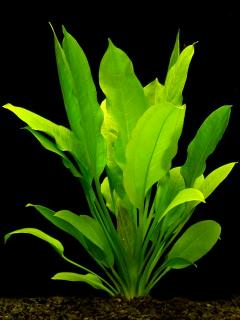
Photo: Salvatore vitale · Public domain
Generally non-toxic to cats and dogs.
A large, robust rosette plant that produces broad, lance-shaped green leaves and makes an excellent centerpiece or background plant in larger aquariums. Forgiving and fast-growing once its heavy root feeding is satisfied.
Educational only. KinStation content is reviewed by licensed veterinarians but cannot replace an in-person exam. Always consult a licensed veterinarian or board-certified specialist for diagnosis, treatment, or any decision affecting your pet's health.
Quick facts
| Category | Aquatic Plants |
| Family | Alismataceae |
| Native origin | South America (Amazon basin; widely cultivated) |
| Care difficulty | Beginner |
| Light | Medium light |
| Pet toxicity | Pet-safe |
Light
Tolerates low to high light. Grows well under moderate light (roughly 30-50 PAR); higher light speeds growth and keeps the plant compact but increases the need for nutrients and CO2 to avoid algae. Under low light it grows more slowly and may shed older leaves.
Water
Adaptable across a wide range. Temp 22-28 C (72-82 F), pH 6.5-7.5, soft to moderately hard water (2-15 dGH). A heavy root feeder that benefits most from substrate nutrients; supplement with comprehensive water-column ferts (especially iron and micros) to prevent pale, yellowing leaves.
Soil & potting
This is a true rooted rosette plant (NOT an epiphyte): plant the crown in a nutrient-rich substrate, but keep the white crown/rosette base at the substrate surface and not buried, or it can rot. A heavy root feeder, so push 1-2 root tabs near the root mass in inert gravel/sand and re-dose every 1-3 months. Aquasoil or a mineralized topsoil cap is ideal for lush growth.
Environment — humidity, temperature, placement
CO2 is not required but injection produces dramatically larger, faster, healthier growth. Moderate flow. Best as a midground-to-background centerpiece in tanks 20 gallons and up; mature specimens can exceed 40 cm tall and wide. Grows emersed in nurseries (often sold emersed), then converts to submersed leaves after a brief melt-back.
Propagation
Spreads mainly by adventitious plantlets on flower/inflorescence stalks; once a plantlet has several leaves and roots, cut it free and plant it. Large rhizomatous crowns can also be divided. Occasionally produces daughter plants via runners.
Toxicity detail
Non-toxic and safe with fish, shrimp, snails, and pets. Not considered invasive in the aquarium trade and not federally restricted in the US/EU; still, never release into the wild - dispose of trimmings in the trash.
Growth stages
How this plant changes through its life — each stage often has its own care, diet and space needs.
Sources
- Tropica - Echinodorus bleheri (care guide)
- Wikipedia - Echinodorus (encyclopedia)