Aquatic PlantsBeginnerMedium light
Aponogeton
Aponogeton crispus · also called Crinkled Aponogeton, Wavy-edged Swordplant, Ruffled Sword
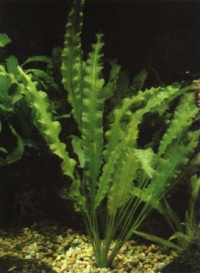
Photo: Drhyperlaur at English Wikipedia · Public domain
Generally non-toxic to cats and dogs.
A bulb plant that erupts into a rosette of long, translucent, crinkly-edged leaves, making a fast and dramatic background centerpiece. Easy to grow and known for occasional dormancy periods.
Educational only. KinStation content is reviewed by licensed veterinarians but cannot replace an in-person exam. Always consult a licensed veterinarian or board-certified specialist for diagnosis, treatment, or any decision affecting your pet's health.
Quick facts
| Category | Aquatic Plants |
| Family | Aponogetonaceae |
| Native origin | Sri Lanka |
| Care difficulty | Beginner |
| Light | Medium light |
| Pet toxicity | Pet-safe |
Light
Low to high light. Grows fast under moderate light; brighter light increases growth but also algae pressure on its broad leaves. Provide enough light to support its rapid leaf production after the bulb sprouts.
Water
Temp 22-28 C (72-82 F), pH 6.0-7.5, soft to moderately hard water (2-12 dGH). A hungry grower that benefits from comprehensive water-column dosing; pale leaves usually indicate a need for more nutrients (iron/micros).
Soil & potting
This grows from a bulb/tuber, not a rhizome and not an epiphyte. Set the bulb so the growing tip points up and leave roughly the top third exposed (burying the whole bulb invites rot); roots anchor into the substrate. A heavy root feeder - use nutrient-rich substrate or root tabs near the bulb for vigorous growth.
Environment — humidity, temperature, placement
CO2 not required but boosts growth; this plant is fast even without it. Moderate flow. Background placement where its tall, flowing leaves can spread. Some Aponogeton enter a dormancy period - if leaves die back, lift the bulb, let it rest in cool water for several weeks, then replant to restart growth.
Propagation
Mature plants flower (a stalk reaches the surface) and can self- or cross-pollinate to set seed for new bulbs. Established bulbs may also split, and side bulbs/daughter bulbs can be separated and replanted.
Toxicity detail
Non-toxic and safe with fish, shrimp, snails, and pets. Not invasive or restricted in the aquarium trade. Still, never release into the wild - dispose of excess in the trash.
Growth stages
How this plant changes through its life — each stage often has its own care, diet and space needs.
Sources
- Tropica - Aponogeton crispus (care guide)
- Wikipedia - Aponogeton crispus (encyclopedia)