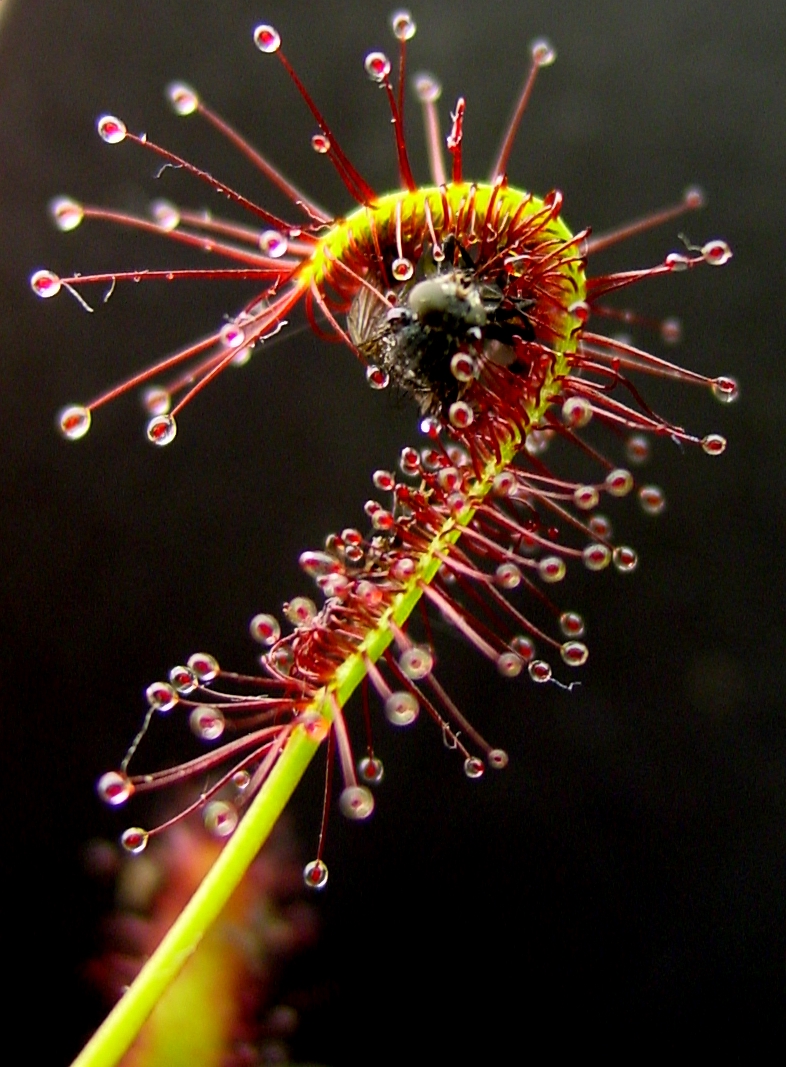
Drosera capensis · also called Cape drosera, Sundew, Drosera
Photo: NoahElhardt · CC BY-SA 3.0
Pet-safe
Generally non-toxic to cats and dogs.
The Cape sundew is widely considered the best beginner sundew: strappy leaves studded with glittering, sticky 'dew' droplets curl around trapped insects. It is vigorous and forgiving by carnivorous-plant standards, but still needs pure water and lean media.
ℹ️
Educational only. KinStation content is reviewed by licensed veterinarians but cannot replace an in-person exam. Always consult a licensed veterinarian or board-certified specialist for diagnosis, treatment, or any decision affecting your pet's health.
Quick facts
Category
Carnivorous
Family
Droseraceae
Native origin
Cape region of South Africa
Care difficulty
Intermediate
Light
Full sun
Pet toxicity
Pet-safe
Light
Cape sundews want very bright light, ideally several hours of direct sun, which keeps them compact and flushes the sticky tentacles a healthy red. In low light the plant grows green, floppy, and produces less of the glistening 'dew.' A sunny windowsill or a grow light close overhead works well, and they thrive outdoors in full sun in warm weather.
Water
Water only with pure water — distilled, reverse-osmosis, or rainwater — never tap or mineral water, whose salts accumulate and kill carnivorous plants. Keep the media constantly wet by standing the pot in a tray of an inch or so of pure water, mimicking the boggy ground sundews grow in. Consistent moisture keeps the dewy traps glistening and functional.
Soil & potting
Use a nutrient-poor carnivorous mix such as sphagnum peat moss with perlite or silica sand, with no fertilizer or lime and never ordinary potting soil. As with all carnivores, the lean, acidic media is essential; rich soil or plant food burns the roots. The plant gets its nutrients from trapped insects, not the soil.
Environment — humidity, temperature, placement
The Cape sundew comes from a mild climate and, unlike temperate sundews and Venus flytraps, does not require a strict cold dormancy, which is part of why it is so beginner-friendly. It enjoys warm, bright, humid conditions but is tolerant of average room humidity. It can be kept growing year-round in a sunny, consistently wet pot, and self-sows freely.
Propagation
Cape sundews are exceptionally easy to propagate: they readily self-seed, and they also grow from leaf cuttings (a leaf laid on wet media or floated on pure water sprouts plantlets) and root cuttings. They produce abundant seed from self-pollinating flowers, so a single plant quickly becomes many. This vigor makes them an ideal first sundew.
Toxicity detail
Considered safe (non-toxic) to cats and dogs. The Cape sundew (Drosera capensis) and sundews generally are not on the ASPCA's list of plants toxic to cats or dogs and are regarded as non-toxic. The sticky 'dew' is a harmless mucilage; a pet that licked or chewed the plant might get the sticky residue on its fur and at most mild, transient stomach upset. Source: ASPCA Animal Poison Control toxic-plant database (Drosera is not listed as toxic).
Origin & history
Drosera capensis hails from the Cape region of South Africa and is one of the most widely grown sundews in cultivation, valued for its toughness, fast growth, and willingness to self-seed. The genus name Drosera comes from the Greek for 'dewy,' describing the glistening droplets that lured Charles Darwin into his pioneering studies of plant carnivory. Its ease of culture has made it the gateway plant for countless carnivorous-plant hobbyists.
Growth stages
How this plant changes through its life — each stage often has its own care, diet and space needs.
Photo coming soon
Seed
Most plants begin as a seed (or spore in ferns) — a dormant package holding the embryo and a food reserve within a protective coat. Given moisture, warmth, and sometimes light, the seed breaks dormancy and germinates.
Photo coming soon
Seedling
The seedling emerges with a root and its first leaves (cotyledons), then true leaves. It is tender and shallow-rooted, dependent on steady moisture and light as it establishes the beginnings of stem and root systems.
Photo coming soon
Vegetative growth
In the vegetative phase the plant focuses on growing roots, stems, and foliage, building the size and structure it needs before flowering. This is the main period of leafing out and, for many houseplants, the stage at which they are grown and propagated.
Mature / Flowering
A mature plant reaches its full habit and, when conditions and age allow, flowers and sets seed (or, for foliage plants, simply attains its full adult size and form). This is the stage shown in most reference photos.
Problems & solutions
Each problem lists a proven fix (horticulture / extension-backed) and, where useful, an anecdotal remedy from the grower community — clearly labeled so you can judge for yourself.
Leaves lose their 'dew' and look dry
mild
Symptoms:The tentacles stop producing the glistening sticky droplets and the leaves look dull or dry.
Likely cause:Too little light, low humidity, or letting the media dry out. Stress and impure water can also reduce the dewy mucilage the plant uses to catch prey.
✓ Proven fix
Give brighter light, keep the media constantly wet with pure water using the tray method, and avoid drafts or sudden drying. Healthy, well-lit, well-watered plants quickly resume dewing.
◇ Anecdotal remedy — grower lore, unverified
Growers note that moving a dull plant into direct sun often brings the dew back within a day or two, glistening more heavily than before.
Slow decline from impure water
severe
Symptoms:The plant gradually weakens, browns, and stops growing despite light and moisture.
Likely cause:Watering with tap, spring, or mineral water. Accumulated minerals and salts are toxic to sundews, which evolved in pure, nutrient-poor bog water.
✓ Proven fix
Switch to distilled, reverse-osmosis, or rainwater exclusively, and keep the pot standing in pure water. Repot into fresh carnivorous mix and flush with pure water if salts have built up.
◇ Anecdotal remedy — grower lore, unverified
Many hobbyists keep a dedicated jug or rain barrel of pure water for their carnivores so tap water never slips into the routine by accident.
Green, floppy, etiolated growth
mild
Symptoms:Leaves grow long, pale green, and limp, leaning toward the light with little red coloration.
Likely cause:Insufficient light. In dim conditions the plant stretches and loses the compact, reddish, vigorous form it shows in strong light.
✓ Proven fix
Move the plant to a sunny window or place a grow light close overhead; with strong light new growth comes in shorter, redder, and dewier. Outdoor summer sun produces the best color and vigor.
◇ Anecdotal remedy — grower lore, unverified
Hobbyists often summer their sundews outdoors in full sun and report deep-red, jewel-like tentacles that windowsill plants never quite match.
Anecdotes & grower lore
Community experience and cultural notes — not horticultural guarantees. Conditions vary by home; treat these as colour, not prescriptions.
Sundew growers delight in the slow-motion drama of the leaf curling around a captured gnat over hours, and in the way the 'dew' sparkles like glass beads in sunlight despite being a sticky trap. The Cape sundew has a particular reputation as a 'weed' among carnivores — owners joke that one plant becomes a windowsill full of volunteers, with seedlings popping up in every neighboring pot. It is also a favorite for putting a small dent in indoor fungus-gnat populations, which it catches with quiet efficiency.
Reviewed and signed off by: KinStation Editorial — pre-launch draft (pending horticulture review) on 2026-05-28