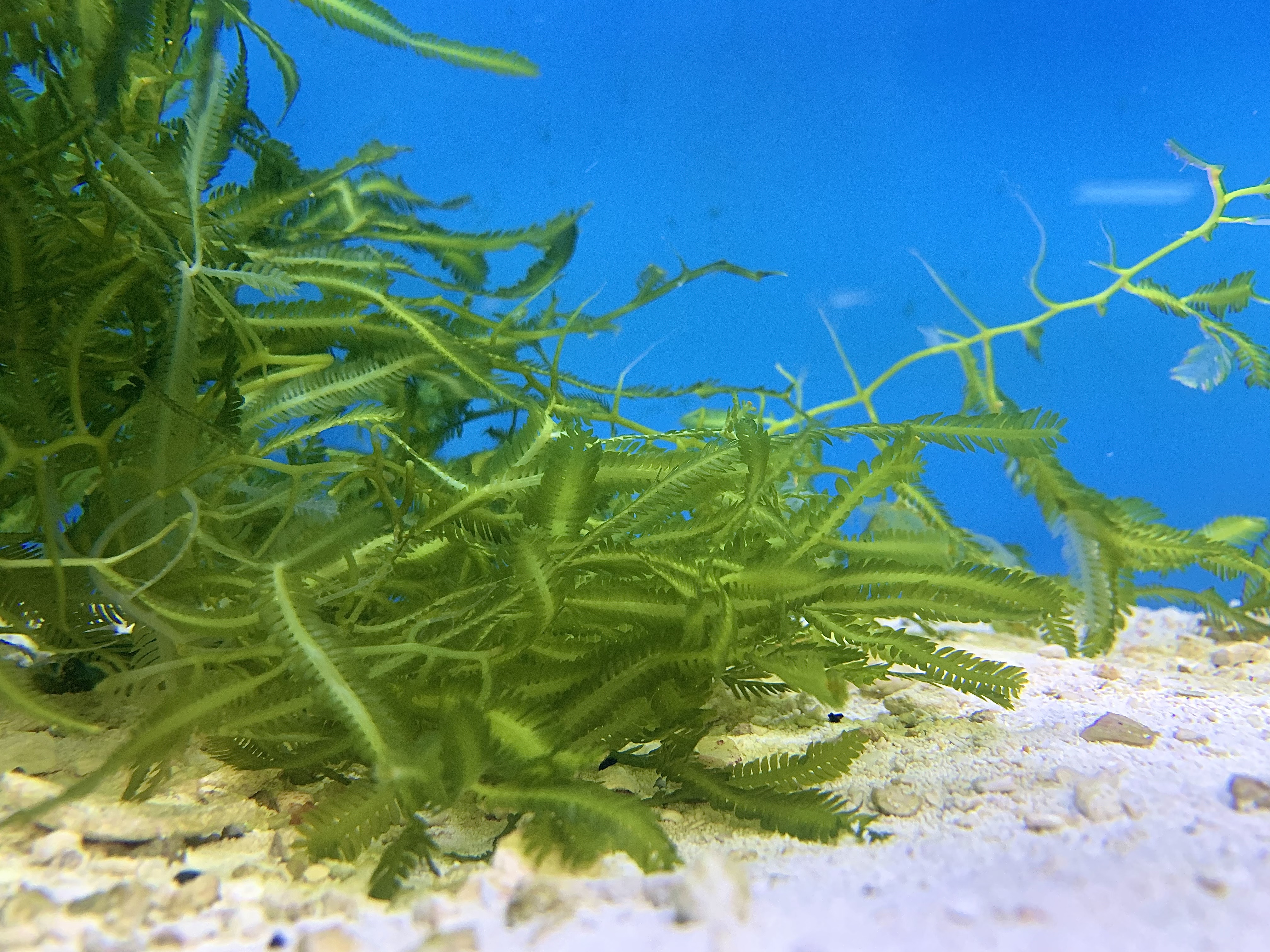
Caulerpa taxifolia · also called Killer algae, Caulerpa taxifolia, Aquarium-strain Caulerpa
Photo: Coughdrop12 · CC BY-SA 4.0
Mildly toxic
Can cause mild irritation or GI upset if chewed.
LISTED AS A WARNING, NOT A CARE RECOMMENDATION. Caulerpa taxifolia is the fern-frond Caulerpa nicknamed 'killer algae.' A cold-tolerant aquarium clone escaped into the Mediterranean in the 1980s and spread uncontrollably, smothering native seabeds. In the United States it is a FEDERALLY PROHIBITED noxious weed and is BANNED to possess, sell, transport, or release in California. Do NOT acquire it; reputable macro vendors (including MosaicMacros) do not sell it. This entry exists so keepers can identify and avoid it.
ℹ️
Educational only. KinStation content is reviewed by licensed veterinarians but cannot replace an in-person exam. Always consult a licensed veterinarian or board-certified specialist for diagnosis, treatment, or any decision affecting your pet's health.
Quick facts
Category
Marine & Algae
Family
Caulerpaceae
Native origin
Native to tropical waters of the Pacific Ocean, Indian Ocean, and Caribbean Sea; an aquarium clone became a catastrophic invader of the Mediterranean
Care difficulty
Advanced
Light
Medium light
Pet toxicity
Mildly toxic
Light
Documented for identification only. Like other Caulerpa it grows under medium reef lighting with a long photoperiod. We are deliberately NOT providing acquisition or husbandry encouragement for a prohibited species — the legal status, not the lighting, is the point of this entry.
Water
It tolerates standard reef parameters (temperature ~22-27 C / 72-80 F, salinity ~1.025 SG, pH 8.1-8.4). Critically, the escaped aquarium strain is unusually cold-tolerant, which is exactly what let it colonize temperate Mediterranean waters far outside the genus's normal tropical range — a key reason it is treated as an extreme invasive risk. No CO2 (marine).
Soil & potting
Like other Caulerpa it spreads via creeping stolons anchored by rhizoids, sending up sparsely branched, fern-like (yew-leaf-shaped) upright fronds 20-60 cm tall. It is not buried. Any fragment can regenerate — which is precisely why a few discarded aquarium clippings were able to seed a Mediterranean-wide invasion.
Environment — humidity, temperature, placement
Submersed only. No CO2 (marine). RESTRICTED — it should not be in a hobby system in the US at all. If it is ever found or received by mistake, it must be bagged, killed (e.g. frozen or treated), and disposed of in the trash, and the incident reported to local invasive-species authorities. NEVER release it, rinse it down a drain, or pass it to another keeper.
Propagation
Propagation is intentionally not described as guidance. For context only: it regenerates from the smallest stolon fragment, has no need of sexual reproduction to spread, and grows over almost any surface — the trait set that made it 'killer algae.' This regenerative ability is the basis of its prohibition.
Toxicity detail
RESTRICTED / PROHIBITED. The Mediterranean aquarium clone of Caulerpa taxifolia was listed as a U.S. federal noxious weed by USDA APHIS in 1999 (interstate transport prohibited without a permit), and California passed a 2001 law forbidding its possession, sale, transport, or release; the genus is also regulated in Australia, New Zealand, and the EU, and it is on the IUCN's '100 of the World's Worst Invasive Alien Species.' Chemically it carries caulerpenyne (mildly toxic/grazer-deterrent), but the operative hazard is legal and ecological, not pet toxicity. Do not keep, ship, or release it.
Growth stages
How this plant changes through its life — each stage often has its own care, diet and space needs.
Photo coming soon
Spore / recruit
Aquatic plants and macroalgae establish from spores, seeds, or drifting fragments that settle and attach to substrate or rock. Many freshwater aquarium plants and marine macroalgae also spread readily from a detached piece that takes root or holdfast.
Photo coming soon
Young growth
Young growth puts out its first blades, fronds, or leaves and anchors with roots or a holdfast. Submersed plants may look different from their emersed form, and growth speeds up as the plant adapts to the water's light and nutrients.
Photo coming soon
Mature
A mature aquatic plant or macroalga reaches its full size and characteristic shape, forming the dense growth, runners, or fronds typical of the species. Established plants spread to fill space and can be divided or trimmed to propagate.
Reviewed and signed off by: KinStation Editorial — pre-launch draft (pending horticulture review) on 2026-06-10