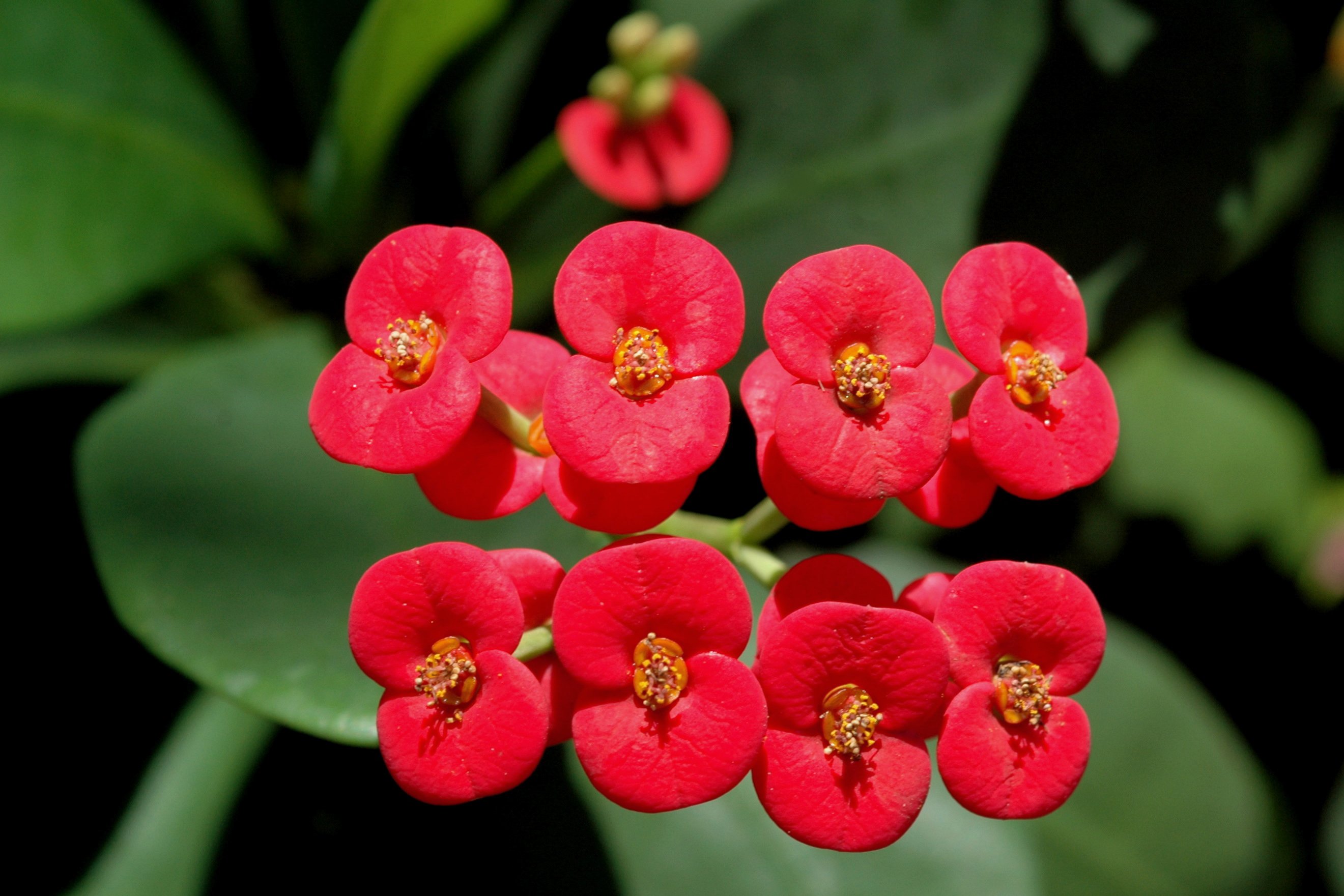
Euphorbia milii · also called Christ plant, Christ thorn, Christ's thorn, Crown-of-thorns
Photo: Ezra Katz · CC BY-SA 3.0
Toxic to pets
Toxic to cats and/or dogs — keep out of reach.
A thorny, woody-stemmed succulent euphorbia that can flower nearly year-round, Euphorbia milii bears small but vivid bracts in red, pink, yellow, or white above dense spines. It is one of the few succulents that blooms heavily indoors, but its sharp thorns and irritant milky sap make it toxic to pets.
ℹ️
Educational only. KinStation content is reviewed by licensed veterinarians but cannot replace an in-person exam. Always consult a licensed veterinarian or board-certified specialist for diagnosis, treatment, or any decision affecting your pet's health.
Quick facts
Category
Succulents & Cacti
Family
Euphorbiaceae
Native origin
Madagascar
Care difficulty
Beginner
Light
Full sun
Pet toxicity
Toxic to pets
Light
Crown of thorns is one of the most sun-loving flowering succulents and needs lots of bright light — full sun or the sunniest window — to bloom well; the more light, the more flowers. In low light it produces few blooms and weak, leggy stems. A south- or west-facing window or a sunny patio (frost-free) is ideal.
Water
Water thoroughly, then let the soil dry out before watering again — as a succulent it stores water and rots if kept constantly moist, but unlike a desert cactus it appreciates fairly regular watering during active growth and bloom. Reduce watering in winter. Overwatering causes leaf drop and root rot, so let the top of the soil dry between drinks.
Soil & potting
Use a gritty, well-draining cactus/succulent mix with added perlite or sand, in a pot with a drainage hole. Good drainage prevents the root and stem rot this plant is prone to in soggy soil. Repot carefully and infrequently, taking sap and thorn precautions (see Toxicity).
Environment — humidity, temperature, placement
Native to Madagascar, it loves warm, bright, dry conditions and ordinary household humidity, and is frost-tender — keep it above roughly 50-55F (10-13C). Warmth and strong light, more than humidity, drive its near-continuous flowering. It is well suited to sunny, dry indoor spots and tolerates the dry air of heated homes.
Propagation
Propagates from stem cuttings, with two cautions: the thorns and the irritant sap. Wearing gloves and eye protection, cut a stem tip, rinse or blot the milky sap (some growers dip the cut end briefly in water to stop the flow), and let it callus for several days to a week before potting in dry mix. Keep cuttings on the dry side until rooted, and wash hands and tools afterward.
Toxicity detail
Toxic to cats and dogs. The ASPCA lists Crown of Thorns (Euphorbia milii) as toxic; like other euphorbias the irritant principle is the milky latex sap, which contains diterpene esters. Ingestion causes irritation of the mouth and stomach with drooling and vomiting, and the sap irritates skin and eyes; the thorns add a physical injury risk. Keep it away from pets, handle with gloves and eye protection, and contact a veterinarian if a pet chews it or is exposed to the sap. Source: ASPCA Animal Poison Control toxic-plant database (Euphorbia milii).
Origin & history
Euphorbia milii is native to Madagascar and was introduced to Europe in the early 19th century, named after Baron Milius, a French governor who reportedly brought it to France around 1821. Its common name 'crown of thorns' and the alternates 'Christ plant' and 'Christ thorn' come from a long tradition associating its densely thorned stems with the crown worn by Christ. Centuries of breeding, especially of larger-bracted Thai hybrids, have produced bigger, more colorful, heavier-blooming forms.
Growth stages
How this plant changes through its life — each stage often has its own care, diet and space needs.
Photo coming soon
Seed
Most plants begin as a seed (or spore in ferns) — a dormant package holding the embryo and a food reserve within a protective coat. Given moisture, warmth, and sometimes light, the seed breaks dormancy and germinates.
Photo coming soon
Seedling
The seedling emerges with a root and its first leaves (cotyledons), then true leaves. It is tender and shallow-rooted, dependent on steady moisture and light as it establishes the beginnings of stem and root systems.
Photo coming soon
Vegetative growth
In the vegetative phase the plant focuses on growing roots, stems, and foliage, building the size and structure it needs before flowering. This is the main period of leafing out and, for many houseplants, the stage at which they are grown and propagated.
Mature / Flowering
A mature plant reaches its full habit and, when conditions and age allow, flowers and sets seed (or, for foliage plants, simply attains its full adult size and form). This is the stage shown in most reference photos.
Problems & solutions
Each problem lists a proven fix (horticulture / extension-backed) and, where useful, an anecdotal remedy from the grower community — clearly labeled so you can judge for yourself.
Irritant sap and sharp thorns (handling / pet hazard)
moderate
Symptoms:Broken stems ooze milky latex that irritates skin and eyes; the dense thorns cause puncture injuries; pets that chew it drool and may vomit.
Likely cause:The plant's dual defenses — toxic euphorbia latex throughout the tissues and woody spines along the stems.
✓ Proven fix
Handle only with thick gloves and eye protection, site it out of reach of pets and children, and wash skin and tools after contact. Flush eyes with water and seek medical or veterinary care for eye exposure or ingestion.
◇ Anecdotal remedy — grower lore, unverified
Growers commonly keep crown of thorns on a high shelf or out-of-the-way sunny sill specifically because of the thorns and sap, treating placement as the main safety measure.
Few or no flowers
mild
Symptoms:The plant grows but produces few of its colorful bracts.
Likely cause:Most often too little light; crown of thorns flowers in proportion to the strong, direct light it receives. Cool temperatures and very erratic watering can also reduce bloom.
✓ Proven fix
Give it the brightest spot available with several hours of direct sun, keep it warm, and water and feed moderately during active growth. Improved light usually brings on far more flowering within weeks.
◇ Anecdotal remedy — grower lore, unverified
Many growers summer the plant outdoors in full sun (acclimatizing it first) and report it covering itself in bracts in a way it never does on a dim windowsill.
Leaf drop with yellowing and soft stems (overwatering / stress)
moderate
Symptoms:Leaves yellow and fall, and stems may soften or rot at the base; the plant looks bare.
Likely cause:Overwatering and soggy soil rotting the roots, or sudden stress such as a cold draft or a big change in conditions, which prompts the plant to shed leaves.
✓ Proven fix
Let the top of the soil dry between waterings, water less in winter, grow in free-draining mix with drainage, and keep it warm and stable. Some seasonal leaf drop is normal; if stems are rotting, take a healthy cutting (with sap and thorn precautions) and re-root a clean plant.
◇ Anecdotal remedy — grower lore, unverified
Owners note the plant often drops leaves after a move or a cold spell but re-leafs once it settles in a warm, bright, stable spot, so they avoid relocating it unnecessarily.
Anecdotes & grower lore
Community experience and cultural notes — not horticultural guarantees. Conditions vary by home; treat these as colour, not prescriptions.
Crown of thorns is steeped in religious folklore — its thorny stems gave rise to the legend that it formed the biblical crown of thorns, and it is still grown and gifted with that symbolism in mind. Growers prize it as the rare succulent that flowers almost nonstop on a sunny sill, joking that it 'pays rent' year-round in blooms. The flip side of every owner's story is the thorns and the sticky white sap, which together earn it a firm 'handle with care, keep away from curious pets' reputation.
Reviewed and signed off by: KinStation Editorial — pre-launch draft (pending horticulture review) on 2026-05-28