Marine & AlgaeIntermediateBright indirect
Halimeda (money plant)
Halimeda sp. · also called Money plant, Money algae, Cactus algae, Halimeda
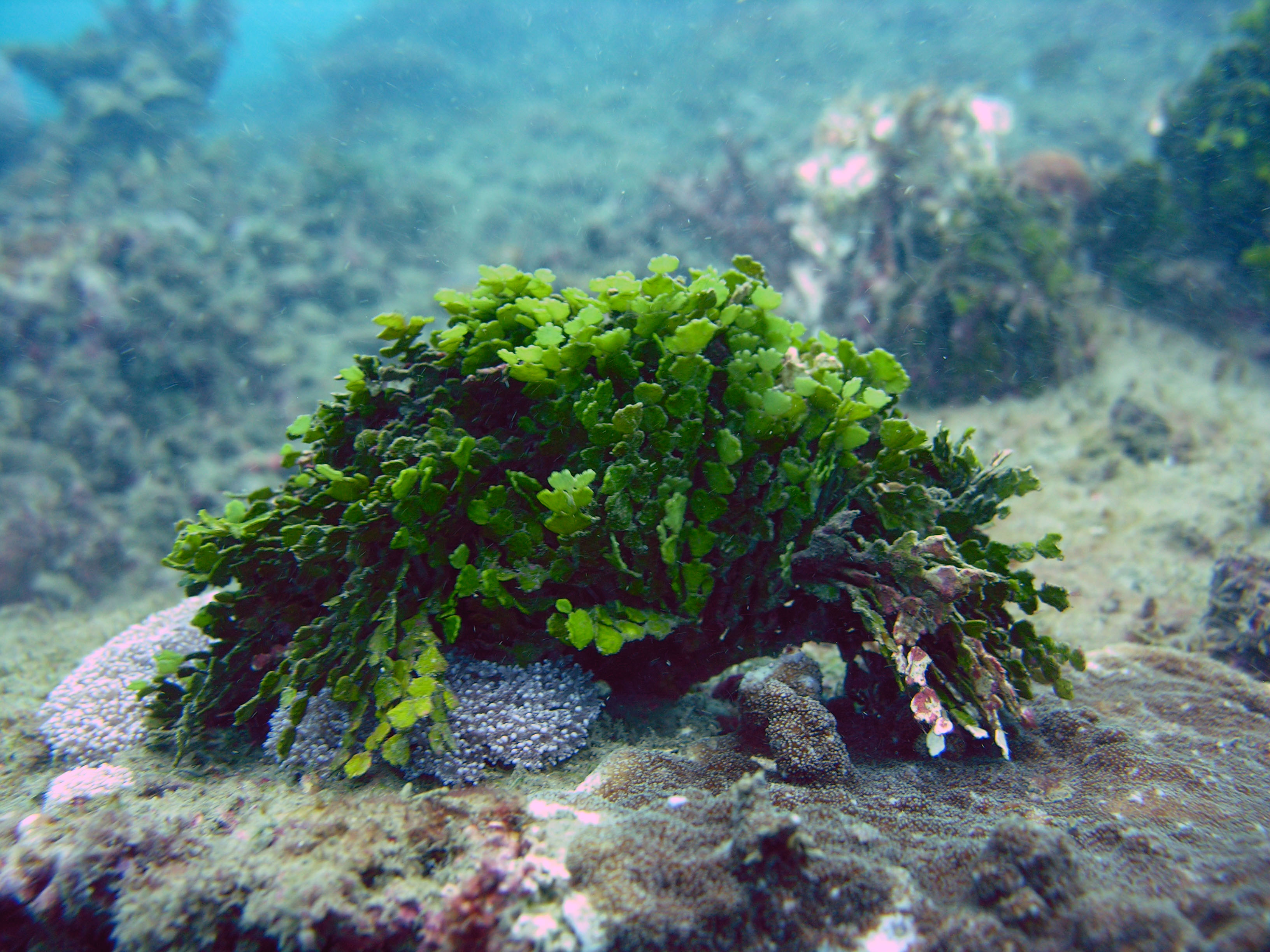
Photo: Vardhan Patankar · CC BY-SA 4.0
Generally non-toxic to cats and dogs.
Halimeda is a calcified green macroalgae made of stacked coin-shaped segments (hence "money plant") that grows like a small green cactus. It deposits calcium carbonate, so it draws down calcium and alkalinity, and looks attractive in both display and refugium settings.
Educational only. KinStation content is reviewed by licensed veterinarians but cannot replace an in-person exam. Always consult a licensed veterinarian or board-certified specialist for diagnosis, treatment, or any decision affecting your pet's health.
Quick facts
| Category | Marine & Algae |
| Family | Halimedaceae |
| Native origin | Tropical reefs worldwide - Caribbean, Indo-Pacific, and Red Sea coral lagoons and rubble zones |
| Care difficulty | Intermediate |
| Light | Bright indirect |
| Pet toxicity | Pet-safe |
Light
Wants moderate-to-strong reef lighting (medium-high aquarium light / good PAR) to support calcification and growth. Refugium or display reef LEDs both work; better light yields denser, healthier segments. Mapped to bright lighting needs.
Water
Reef parameters: 23-27 C (74-80 F), salinity ~1.025 SG, pH 8.1-8.4. Because it is calcifying, it needs well-maintained calcium (~400-450 ppm), alkalinity (8-11 dKH), and magnesium (~1300 ppm); it competes with corals for these. Less aggressive at nutrient export than chaeto but still uses some nitrate/phosphate. No CO2 (marine).
Soil & potting
Attaches to rock and rubble with a small holdfast, or roots loosely into sand in the wild. In the aquarium it is usually placed on or wedged into rock; the holdfast is not buried in nutrient substrate. No root tabs or aquasoil - it feeds from the water column and calcifies from dissolved minerals.
Environment — humidity, temperature, placement
Submersed only. CO2 not used (marine). Moderate flow keeps detritus off the segments. Good for display reef tanks as well as refugiums. Place midground/foreground where it gets adequate light. Resists grazing better than soft macros because of its calcified, gritty texture.
Propagation
Grows by adding new segments at the tips and branching. Propagate by cutting or breaking off a healthy branched section and securing it to rock; new holdfasts and segments will form. Can also drop segments that re-root.
Toxicity detail
Safe and reef-friendly; its calcified, somewhat distasteful tissue means most fish and invertebrates leave it alone, making it useful in herbivore tanks. Not invasive or regulated in aquarium contexts. Old/dying segments bleach white and should be removed.
Growth stages
How this plant changes through its life — each stage often has its own care, diet and space needs.
Sources
- Halimeda - Wikipedia (encyclopedia)
- Halimeda (Money Plant) Macroalgae Care - Reef2Reef (care guide)