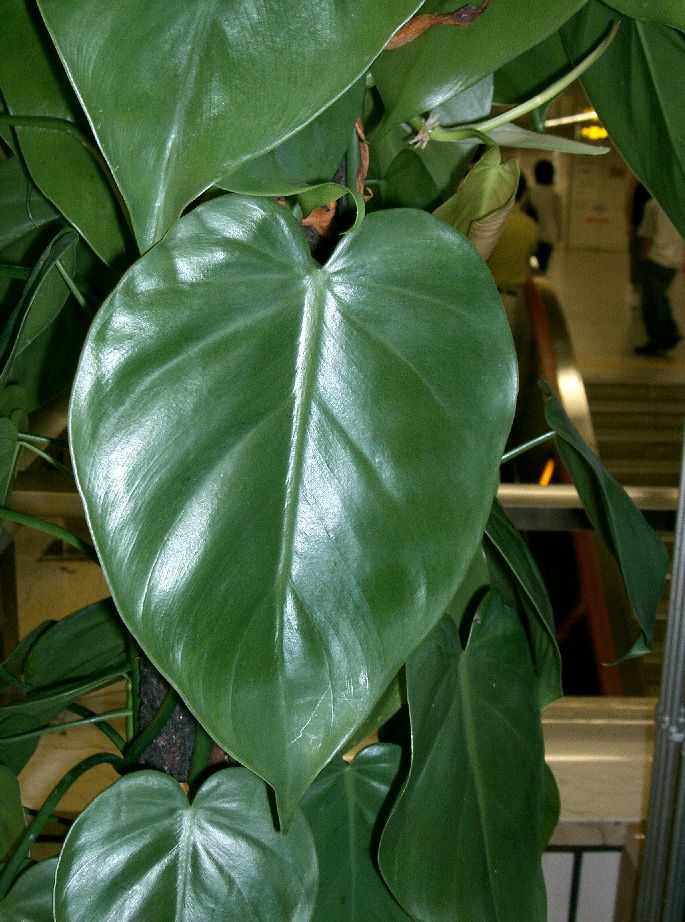
Philodendron hederaceum · also called Sweetheart plant, Philodendron scandens, Philodendron oxycardium, Heart-leaf ivy
Photo: KENPEI · CC BY-SA 3.0
Toxic to pets
Toxic to cats and/or dogs — keep out of reach.
A classic trailing aroid with soft, glossy, heart-shaped leaves on slender vines. Tolerant of low light and easy to grow, it is one of the most popular and forgiving hanging or climbing houseplants, often confused with pothos.
ℹ️
Educational only. KinStation content is reviewed by licensed veterinarians but cannot replace an in-person exam. Always consult a licensed veterinarian or board-certified specialist for diagnosis, treatment, or any decision affecting your pet's health.
Quick facts
Category
Foliage
Family
Araceae
Native origin
Tropical Central America and the Caribbean
Care difficulty
Beginner
Light
Low light
Pet toxicity
Toxic to pets
Light
Heartleaf philodendron grows well in medium to bright indirect light and tolerates low light better than most plants, though growth slows and vines space out in dim spots. Bright indirect light keeps it full and richly green. Avoid direct sun, which scorches the thin leaves.
Water
Water when the top inch of soil dries, soaking thoroughly and draining off the excess. It likes evenly moist (never soggy) soil and is forgiving of the occasional missed watering. Drooping leaves usually mean it is thirsty and recover quickly after watering, while yellowing often signals overwatering.
Soil & potting
Use a rich, well-draining potting mix; an all-purpose blend with added perlite or some orchid bark suits it. Good drainage prevents root rot in its fine roots. It tolerates being slightly pot-bound and needs repotting only every year or two.
Environment — humidity, temperature, placement
A warm, humid tropical plant, it prefers temperatures above about 60F (15C) and appreciates extra humidity, though it copes with ordinary indoor air. Keep it from cold drafts. It can trail gracefully from a shelf or climb a moss pole, where it tends to produce slightly larger leaves.
Propagation
Extremely easy to propagate: cut a stem section just below a node and root it in water or moist soil, where it readily forms roots. Pot several rooted cuttings together for a fuller plant, or tuck cuttings back into the parent pot to thicken a thin specimen.
Toxicity detail
Toxic to cats and dogs. The ASPCA lists Philodendron species (including the heartleaf philodendron) as toxic due to insoluble calcium oxalate crystals. Chewing the leaves or stems causes oral and esophageal irritation, intense burning of the mouth and lips, drooling, vomiting, and difficulty swallowing. Keep it out of reach of pets — particularly cats, who may bat at and chew trailing vines — and contact a veterinarian if ingested. Source: ASPCA Animal Poison Control toxic-plant database.
Origin & history
Philodendron hederaceum is a tropical American aroid that has been a houseplant staple for over a century, valued for its tolerance of indoor conditions. It has accumulated many former names (Philodendron scandens, P. oxycardium, P. cordatum in the trade), reflecting a tangled taxonomic history. The genus name 'Philodendron' comes from Greek for 'tree-loving,' a nod to its climbing habit.
Growth stages
How this plant changes through its life — each stage often has its own care, diet and space needs.
Photo coming soon
Seed
Most plants begin as a seed (or spore in ferns) — a dormant package holding the embryo and a food reserve within a protective coat. Given moisture, warmth, and sometimes light, the seed breaks dormancy and germinates.
Photo coming soon
Seedling
The seedling emerges with a root and its first leaves (cotyledons), then true leaves. It is tender and shallow-rooted, dependent on steady moisture and light as it establishes the beginnings of stem and root systems.
Photo coming soon
Vegetative growth
In the vegetative phase the plant focuses on growing roots, stems, and foliage, building the size and structure it needs before flowering. This is the main period of leafing out and, for many houseplants, the stage at which they are grown and propagated.
Mature / Flowering
A mature plant reaches its full habit and, when conditions and age allow, flowers and sets seed (or, for foliage plants, simply attains its full adult size and form). This is the stage shown in most reference photos.
Varieties & cultivars
Natural forms are the wild species; cultivars are selectively-bred colour or variegation forms of the same plant.
Natural forms2
Heartleaf (green)
The classic species form with glossy, deep-green heart-shaped leaves on trailing vines. The forgiving baseline philodendron.
Tolerates low light well; no variegation to protect.
Micans
Velvety-textured form with heart-shaped leaves in deep bronze-green flushed with iridescent purple, especially on new growth. A naturally occurring velvet variety.
Bright indirect light brings out the purple flush; keep humidity up for the velvet sheen.
Cultivars2
Brasil
Heartleaf sport with each green leaf brushed by a central streak of lime-yellow, like a painted flame down the midrib. No two leaves are marked alike.
Bright indirect light keeps the lime stripe vivid; in low light leaves come in solid green.
Lemon-Lime
Solid bright chartreuse-to-golden foliage with no variegation, glowing yellow-green on new growth and deepening slightly with age.
Bright indirect light maintains the lime glow; too much direct sun bleaches it.
Problems & solutions
Each problem lists a proven fix (horticulture / extension-backed) and, where useful, an anecdotal remedy from the grower community — clearly labeled so you can judge for yourself.
Yellowing leaves
mild
Symptoms:Leaves turn yellow, usually starting lower down the vine, and may fall.
Likely cause:Most often overwatering and soggy soil; can also reflect very low light or natural aging of the oldest leaves. Widespread yellowing points to a watering problem.
✓ Proven fix
Let the top inch of soil dry between waterings and ensure the pot drains. Improve light if the plant is very dim, remove yellowed leaves, and check roots if the problem spreads.
◇ Anecdotal remedy — grower lore, unverified
Some keepers move a sulking philodendron into water-propagation mode for a few weeks to recover, then repot it once it is growing strongly again.
Leggy vines with widely spaced small leaves
mild
Symptoms:Vines grow long and bare with large gaps between increasingly small leaves.
Likely cause:Insufficient light, causing the plant to stretch toward the nearest source and skimp on foliage.
✓ Proven fix
Move it to brighter indirect light and pinch back the long vines to encourage branching and bushier growth. Root the trimmings and add them back to the pot to fill it out.
◇ Anecdotal remedy — grower lore, unverified
Growers commonly 'chop and prop' a leggy plant — cutting it back hard and replanting the cuttings — and report a dense, full pot within a season.
Brown leaf tips and edges
mild
Symptoms:Leaf tips and margins turn brown and crisp, often in dry indoor conditions.
Likely cause:Low humidity, underwatering, or salt/mineral buildup from fertilizer or tap water.
✓ Proven fix
Keep watering consistent, raise humidity, and flush the soil occasionally to wash out accumulated salts. Trim crispy edges for appearance.
◇ Anecdotal remedy — grower lore, unverified
Many growers report fewer brown tips simply by grouping their tropicals together to create a more humid microclimate.
Anecdotes & grower lore
Community experience and cultural notes — not horticultural guarantees. Conditions vary by home; treat these as colour, not prescriptions.
The heartleaf philodendron is one of the most-shared houseplants in existence — a windowsill jar of cuttings is a classic housewarming gift, and many people's grandmothers kept the same plant trailing over a bookshelf for decades. Growers love to point out the difference between it and the look-alike pothos (the philodendron's leaves are softer, thinner, and more perfectly heart-shaped), a friendly identification debate that never seems to end in plant groups.
Reviewed and signed off by: KinStation Editorial — pre-launch draft (pending horticulture review) on 2026-05-28