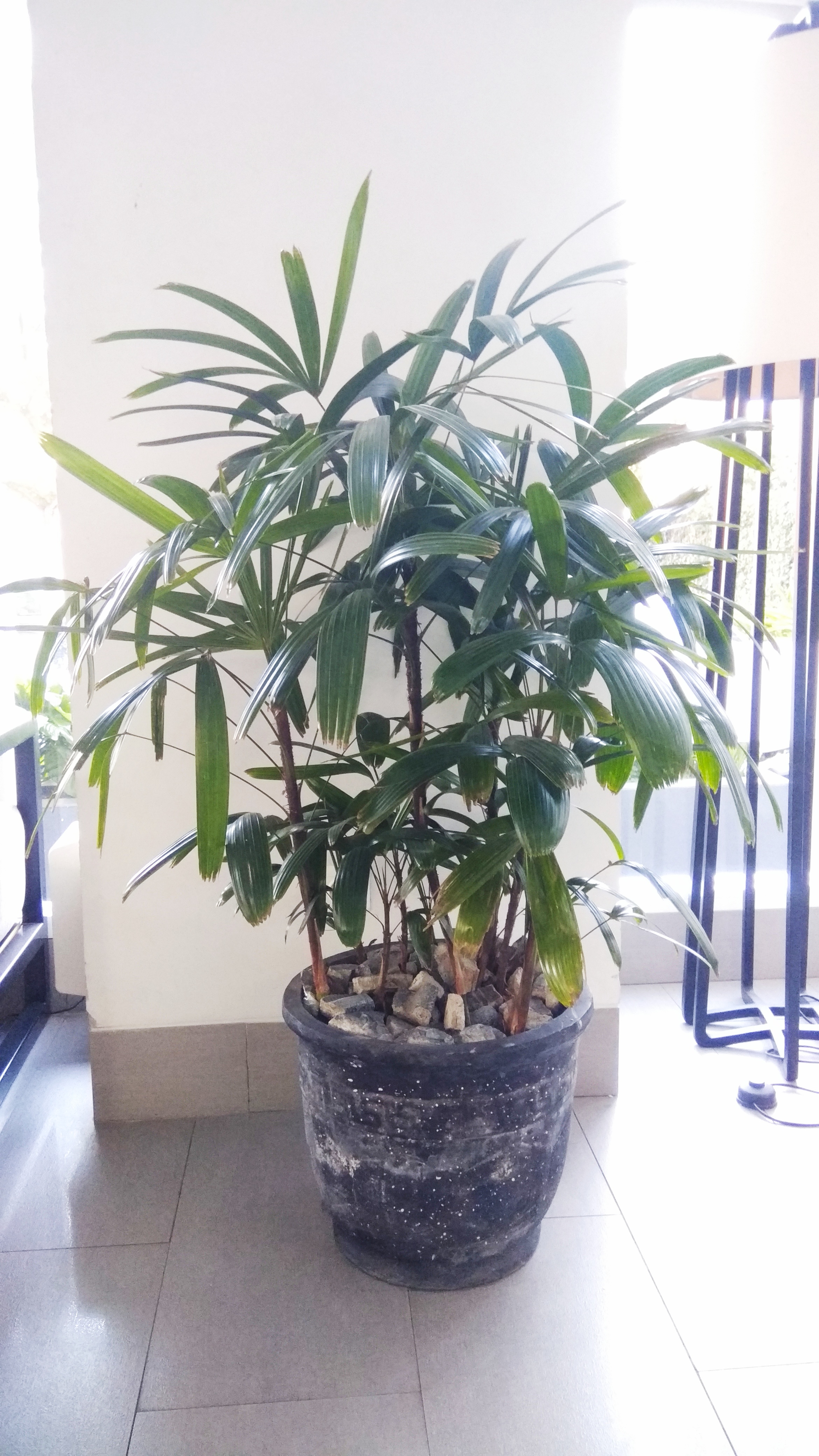
Rhapis excelsa · also called Bamboo palm, Broadleaf lady palm, Rhapis
Photo: Aris riyanto · CC BY-SA 4.0
Pet-safe
Generally non-toxic to cats and dogs.
A clumping fan palm with glossy, deeply divided fronds on slender bamboo-like canes, the lady palm is one of the toughest and most refined indoor palms. It is pet-safe, tolerates lower light, and forms a dense, elegant multi-stemmed clump.
ℹ️
Educational only. KinStation content is reviewed by licensed veterinarians but cannot replace an in-person exam. Always consult a licensed veterinarian or board-certified specialist for diagnosis, treatment, or any decision affecting your pet's health.
Quick facts
Category
Palms
Family
Arecaceae
Native origin
Long cultivated in China and Japan; wild origin in southern China and Vietnam
Care difficulty
Beginner
Light
Medium light
Pet toxicity
Pet-safe
Light
Lady palms are adaptable to a range of light, thriving in medium to bright indirect light and tolerating lower light better than most palms, which makes them excellent for interiors. Keep them out of harsh direct sun, which can scorch and yellow the glossy fronds. Brighter (indirect) light produces a fuller, denser clump; rotate for even growth.
Water
Water when the top inch or two of mix dries, soaking thoroughly and letting it drain; lady palms like steady, moderate moisture and dislike both drought and waterlogging. As with other palms, their roots rot in standing water, so empty the saucer, and they appreciate low-salt or filtered water to prevent tip browning. Reduce watering in winter.
Soil & potting
Use a rich, free-draining potting mix with perlite for aeration; the dense, vigorous root system dislikes compaction and sogginess. Provide a pot with good drainage. Lady palms tolerate being somewhat pot-bound and divide well, so repot every few years as the clump expands.
Environment — humidity, temperature, placement
Lady palms like warm rooms (above about 50-55F / 10-13C; they are more cold-tolerant than many tropical palms) and average to moderate humidity, handling typical indoor air gracefully. Higher humidity reduces frond-tip browning. Keep them away from cold drafts and hot vents. Their toughness, tolerance of lower light, and slow steady growth make them prized long-lived interior palms.
Propagation
Unlike most indoor palms, lady palms propagate readily by division: the clump spreads by underground rhizomes producing new canes, and at repotting a section with several canes and roots can be separated and potted up. Keep divisions warm, humid, and evenly moist while they re-establish. They are also grown from seed, but division is the easy, reliable home method.
Toxicity detail
Safe (non-toxic) to cats and dogs. The ASPCA lists the lady palm (Rhapis excelsa, sometimes sold as 'bamboo palm') as non-toxic to both cats and dogs, making it one of the best large pet-safe palms. It contains no known toxic compounds; a pet eating a lot of the fibrous fronds could get mild, temporary stomach upset. Source: ASPCA Animal Poison Control toxic-plant database.
Origin & history
Rhapis excelsa has been cultivated for centuries in China and especially Japan, where Edo-period collectors developed prized named varieties, including variegated forms, treated almost as living heirlooms. Its true wild origin was long obscured by this long cultivation, but it traces to southern China and Vietnam. Valued for tolerating shade, pollution, and indoor conditions, it became a favored palm for interiors, lobbies, and shaded gardens worldwide.
Growth stages
How this plant changes through its life — each stage often has its own care, diet and space needs.
Photo coming soon
Seed
Most plants begin as a seed (or spore in ferns) — a dormant package holding the embryo and a food reserve within a protective coat. Given moisture, warmth, and sometimes light, the seed breaks dormancy and germinates.
Photo coming soon
Seedling
The seedling emerges with a root and its first leaves (cotyledons), then true leaves. It is tender and shallow-rooted, dependent on steady moisture and light as it establishes the beginnings of stem and root systems.
Photo coming soon
Vegetative growth
In the vegetative phase the plant focuses on growing roots, stems, and foliage, building the size and structure it needs before flowering. This is the main period of leafing out and, for many houseplants, the stage at which they are grown and propagated.
Mature / Flowering
A mature plant reaches its full habit and, when conditions and age allow, flowers and sets seed (or, for foliage plants, simply attains its full adult size and form). This is the stage shown in most reference photos.
Problems & solutions
Each problem lists a proven fix (horticulture / extension-backed) and, where useful, an anecdotal remedy from the grower community — clearly labeled so you can judge for yourself.
Brown frond tips
mild
Symptoms:Tips of the fan-shaped leaf segments turn brown and dry.
Likely cause:Salt and fluoride buildup from tap water and fertilizer, low humidity, or inconsistent watering — the usual palm tip-browning causes.
✓ Proven fix
Use filtered or stood-overnight water, flush the pot occasionally to leach salts, water consistently when the top inch dries, and raise humidity a little. Trim brown tips for appearance; they will not regreen.
◇ Anecdotal remedy — grower lore, unverified
Many growers credit switching to filtered or rainwater with keeping the glossy fronds clean-tipped on this otherwise easy palm.
Yellowing fronds / root rot
moderate
Symptoms:Fronds yellow broadly and the clump declines while the soil stays wet; roots are brown and soft.
Likely cause:Overwatering and poor drainage rotting the dense roots. Some yellowing of the oldest fronds is natural, but widespread yellowing with soggy soil indicates rot.
✓ Proven fix
Let the top inch or two of mix dry before watering, ensure free drainage, and never leave the palm standing in water. Repot or divide a rotting clump into fresh free-draining mix, trimming away dead roots.
◇ Anecdotal remedy — grower lore, unverified
Growers often take the chance to divide a large clump when repotting a rot-stressed plant, treating it as both a cure and free propagation.
Scorched, yellow fronds in direct sun
mild
Symptoms:Fronds bleach to a sickly yellow-green or develop dry burned patches.
Likely cause:Too much direct sunlight for a palm that prefers medium to bright indirect light; the glossy fronds scorch in harsh sun.
✓ Proven fix
Move the plant out of direct sun into medium-to-bright indirect light. New fronds will emerge a healthy dark green; remove badly scorched fronds. The lady palm rewards a shadier spot than most plants tolerate.
◇ Anecdotal remedy — grower lore, unverified
Owners often place the lady palm specifically in a darker corner that defeats other palms, reporting it stays lush where sun-lovers would fry.
Anecdotes & grower lore
Community experience and cultural notes — not horticultural guarantees. Conditions vary by home; treat these as colour, not prescriptions.
The lady palm enjoys a quietly exalted reputation: in Japan it has been collected and bred for generations, and rare variegated specimens have historically commanded astonishing prices, treated more like fine art than houseplants. Owners praise it as the 'bulletproof' refined palm — slow, dense, and forgiving of the low light and dry air that doom flashier palms — and divide-and-share their clumps among friends, since each rhizome division carries the heirloom forward.
Reviewed and signed off by: KinStation Editorial — pre-launch draft (pending horticulture review) on 2026-05-28