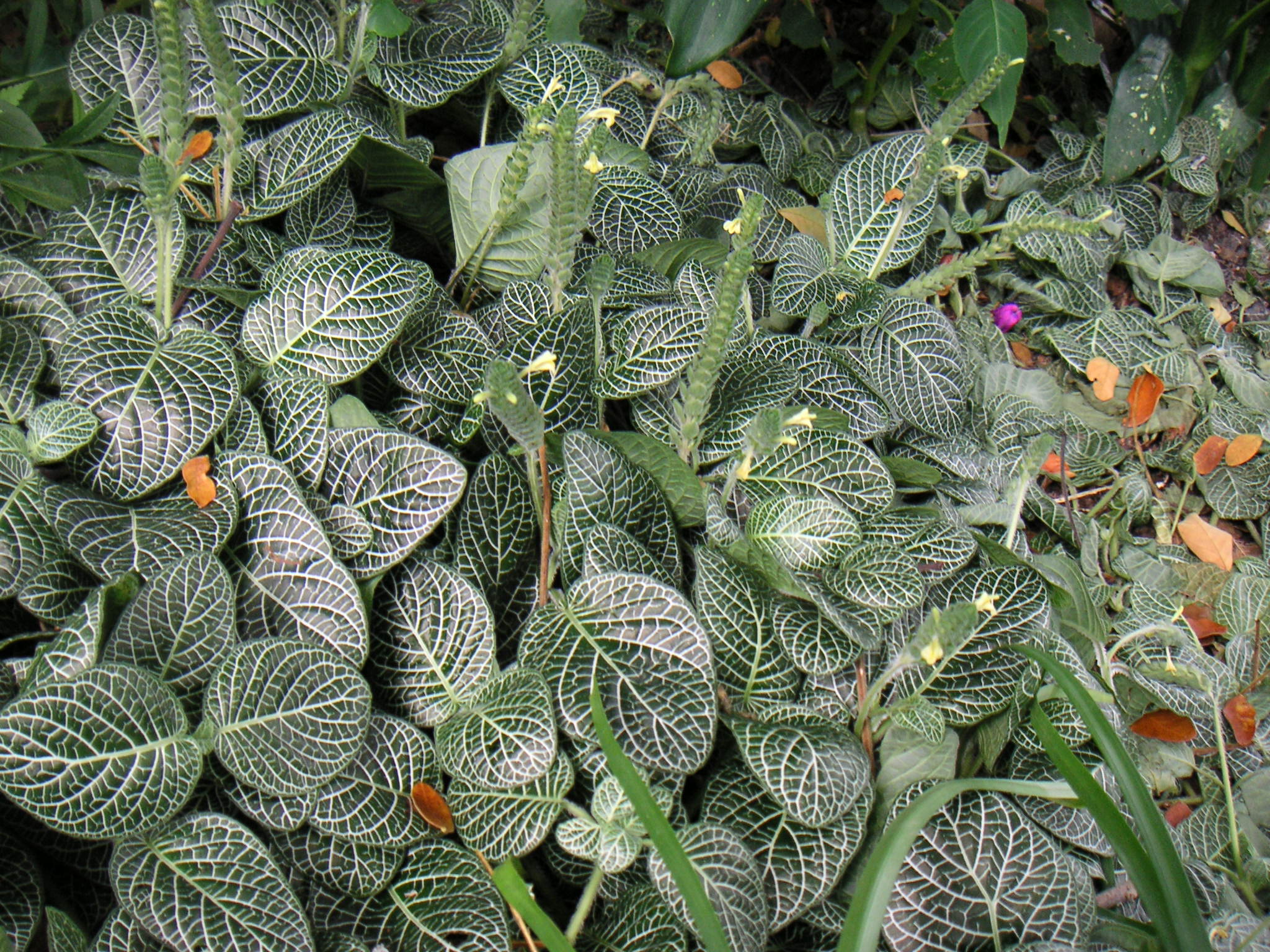
Fittonia albivenis · also called mosaic plant, painted-net leaf, silver nerve plant, Fittonia
Photo: Louise Wolff -- darina 00:12, 7 May 2005 (UTC) · CC BY-SA 3.0
Pet-safe
Generally non-toxic to cats and dogs.
A low, spreading rainforest groundcover prized for olive-green leaves laced with a fine network of white, pink, or red veins. It is famously dramatic — wilting flat when thirsty and reviving within hours of a drink — and rewards steady humidity, making it a classic terrarium plant.
ℹ️
Educational only. KinStation content is reviewed by licensed veterinarians but cannot replace an in-person exam. Always consult a licensed veterinarian or board-certified specialist for diagnosis, treatment, or any decision affecting your pet's health.
Quick facts
Category
Foliage
Family
Acanthaceae
Native origin
Tropical rainforest understory of South America, chiefly Peru
Care difficulty
Intermediate
Light
Medium light
Pet toxicity
Pet-safe
Light
Give bright, indirect light; an east window or a spot a little back from a brighter window is ideal. As an understory plant it tolerates medium and lower light but the vein contrast fades and growth stretches in deep shade. Direct sun scorches the thin leaves, so filter or diffuse any strong rays.
Water
Keep the soil lightly and evenly moist, never waterlogged and never bone dry. Fittonia is notorious for fainting — collapsing dramatically when the soil dries — then perking up within hours once watered, but repeated wilting stresses it, so aim for consistency. Use room-temperature water and let the top of the mix just begin to dry between drinks.
Soil & potting
Plant in a light, moisture-retentive but well-draining mix; a peat- or coir-based houseplant mix with added perlite works well. The roots are shallow and fine, so a wide, shallow pot suits it better than a deep one. Good drainage prevents the root rot that follows soggy, airless soil.
Environment — humidity, temperature, placement
Humidity is the key to a happy nerve plant: it thrives in 50% or higher and resents dry, drafty air, which crisps the leaf edges. This is why it excels in terrariums, closed glass cases, and bathrooms. Keep it warm (roughly 60-80F / 16-27C) and away from cold drafts and heat vents.
Propagation
Propagate easily from stem-tip cuttings: snip a few-inch tip with a couple of leaf nodes and root it in water or directly in moist mix. Warmth and high humidity (a covered tray or bag) speed rooting in a couple of weeks. Pinching the growing tips also keeps the plant bushy and gives you free cuttings.
Toxicity detail
Safe (non-toxic) to cats and dogs. Fittonia (nerve plant) in the Acanthaceae family is not on the ASPCA list of toxic plants and is widely regarded as pet-safe, making it a good choice for homes with curious cats and dogs. As with any houseplant, a pet that eats a large quantity could get mild, temporary stomach upset, but it contains no known toxic compounds. Source: ASPCA Animal Poison Control toxic/non-toxic plant database.
Origin & history
Fittonia albivenis is native to the warm, humid rainforest floors of South America, especially Peru, where it spreads as a low groundcover beneath the canopy. The genus was named for the 19th-century botanist sisters Elizabeth and Sarah Mary Fitton. Its striking contrasting veins made it a Victorian conservatory favorite and, more recently, a staple of the modern terrarium and small-pot houseplant trade.
Growth stages
How this plant changes through its life — each stage often has its own care, diet and space needs.
Photo coming soon
Seed
Most plants begin as a seed (or spore in ferns) — a dormant package holding the embryo and a food reserve within a protective coat. Given moisture, warmth, and sometimes light, the seed breaks dormancy and germinates.
Photo coming soon
Seedling
The seedling emerges with a root and its first leaves (cotyledons), then true leaves. It is tender and shallow-rooted, dependent on steady moisture and light as it establishes the beginnings of stem and root systems.
Photo coming soon
Vegetative growth
In the vegetative phase the plant focuses on growing roots, stems, and foliage, building the size and structure it needs before flowering. This is the main period of leafing out and, for many houseplants, the stage at which they are grown and propagated.
Mature / Flowering
A mature plant reaches its full habit and, when conditions and age allow, flowers and sets seed (or, for foliage plants, simply attains its full adult size and form). This is the stage shown in most reference photos.
Problems & solutions
Each problem lists a proven fix (horticulture / extension-backed) and, where useful, an anecdotal remedy from the grower community — clearly labeled so you can judge for yourself.
Sudden dramatic wilting (fainting)
mild
Symptoms:The whole plant collapses flat and limp seemingly overnight, looking close to dead.
Likely cause:The soil has dried out past the plant's low tolerance; Fittonia wilts theatrically the moment its shallow roots run short of water.
✓ Proven fix
Water thoroughly with room-temperature water and the plant usually revives within a few hours. Prevent it by keeping the mix evenly moist and not letting the surface dry out completely, and improve consistency with a more moisture-retentive mix.
◇ Anecdotal remedy — grower lore, unverified
Some growers treat a wilting plant as a built-in moisture meter, but most agree repeated fainting weakens it over time, so steady watering is kinder.
Crispy, browning leaf edges
mild
Symptoms:Leaf margins and tips turn dry, brown, and brittle while the centers stay green.
Likely cause:Low humidity and dry, drafty air, sometimes worsened by underwatering or a position near a heat vent.
✓ Proven fix
Raise humidity with a pebble tray, grouping plants, a humidifier, or a terrarium, and move the plant away from vents and drafts. Trim damaged edges and keep watering consistent.
◇ Anecdotal remedy — grower lore, unverified
Many owners report a nerve plant that sulks on an open shelf transforms completely once moved into a closed glass jar or a steamy bathroom.
Yellowing, mushy lower leaves
moderate
Symptoms:Lower leaves turn yellow and soft and the base of the plant feels mushy.
Likely cause:Overwatering and soggy, poorly drained soil leading to root rot, the opposite failure from letting it dry out.
✓ Proven fix
Let the top of the mix dry slightly before watering again, ensure the pot drains freely, and refresh with an airier mix if soil stays wet. Remove rotted roots and take healthy tip cuttings as insurance.
Anecdotes & grower lore
Community experience and cultural notes — not horticultural guarantees. Conditions vary by home; treat these as colour, not prescriptions.
Growers affectionately call it the 'drama queen' or 'fainting plant' for its theatrical flop the moment it gets thirsty, then its near-miraculous recovery within hours of watering — a trick new owners often panic over before learning it is just the plant's way of asking for a drink. Many terrarium hobbyists swear by it as the perfect 'living carpet,' and pass around the lore that letting it wilt occasionally 'reminds' you to water, though most agree the kinder path is to keep it from fainting at all.
Reviewed and signed off by: KinStation Editorial — pre-launch draft (pending horticulture review) on 2026-05-28