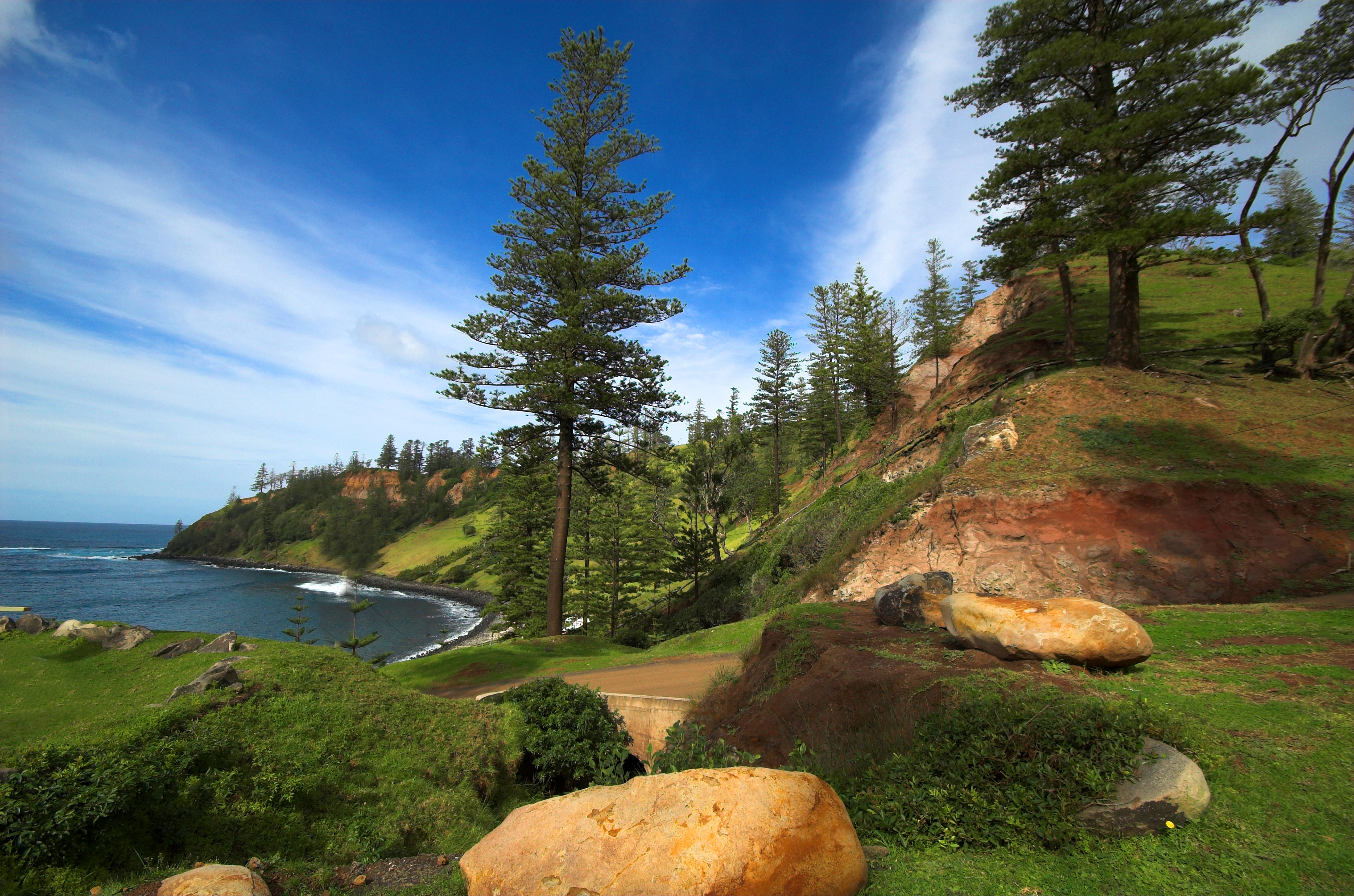
Araucaria heterophylla · also called Star pine, Triangle tree, Living Christmas tree, House pine
Photo: thinboyfatter · CC BY 2.0
Mildly toxic
Can cause mild irritation or GI upset if chewed.
Not a true pine but an ancient Southern-Hemisphere conifer, the Norfolk Island pine is grown indoors for its tiered, symmetrical, soft-needled branches — often as a living Christmas tree. It wants bright light and steady humidity.
ℹ️
Educational only. KinStation content is reviewed by licensed veterinarians but cannot replace an in-person exam. Always consult a licensed veterinarian or board-certified specialist for diagnosis, treatment, or any decision affecting your pet's health.
Quick facts
Category
Other
Family
Araucariaceae
Native origin
Norfolk Island, in the Pacific Ocean between Australia and New Zealand
Care difficulty
Intermediate
Light
Bright indirect
Pet toxicity
Mildly toxic
Light
Norfolk Island pines need bright light, including some direct sun, to keep their branches full and prevent the drooping, sparse growth that low light causes. A bright south- or west-facing window is best indoors. Rotate the plant regularly, because it leans strongly toward the light and grows lopsided otherwise.
Water
Water when the top inch of soil dries, soaking thoroughly and letting it drain; keep the soil lightly moist but never soggy, as constant wetness rots the roots while drought causes browning, dropping branches. Consistency is key — both extremes cause permanent needle and branch loss that does not regrow. Reduce watering somewhat in winter.
Soil & potting
Use a well-draining, slightly acidic potting mix (a peat- or coir-based mix with added sand or perlite) in a pot with drainage. Good drainage prevents the root rot these trees are prone to in heavy, wet soil. They grow slowly indoors and need repotting only every few years.
Environment — humidity, temperature, placement
Coming from a mild, humid Pacific island climate, the Norfolk Island pine likes moderate-to-high humidity and cool-to-warm rooms, and it dislikes hot, dry, stagnant air, which browns the needles. A pebble tray, humidifier, or occasional misting helps in dry winter homes. It is frost-tender and should be kept above the mid-30s F, away from cold drafts.
Propagation
Norfolk Island pines are difficult to propagate at home: cuttings root poorly and, importantly, only a cutting taken from the upright growing tip will grow into a normal symmetrical tree — side-branch cuttings keep growing sideways. They are realistically grown from seed, which is how the commercial trade produces them. For most owners, propagation is impractical and buying a young plant is the sensible route.
Toxicity detail
Toxic (generally mild) to cats and dogs. The ASPCA lists the Norfolk Island pine (Araucaria heterophylla, also called house pine or 'Australian pine') as toxic, with ingestion typically causing mild effects such as vomiting and depression, and the sap potentially irritating skin. It is far less dangerous than severely toxic houseplants, but it is not pet-safe, so keep it out of reach and contact a veterinarian if a pet eats a significant amount. Source: ASPCA Animal Poison Control toxic-plant database.
Origin & history
Araucaria heterophylla is endemic to tiny Norfolk Island in the South Pacific and belongs to the ancient Araucariaceae, a conifer family with roots in the age of the dinosaurs. Captain James Cook's expedition encountered the towering trees in the 1770s, and their straight trunks were once eyed as potential ship masts. Its neat, tiered symmetry made it a beloved indoor 'living Christmas tree' worldwide, though outdoors in mild climates it grows into a massive coastal landmark tree.
Growth stages
How this plant changes through its life — each stage often has its own care, diet and space needs.
Photo coming soon
Seed
Most plants begin as a seed (or spore in ferns) — a dormant package holding the embryo and a food reserve within a protective coat. Given moisture, warmth, and sometimes light, the seed breaks dormancy and germinates.
Photo coming soon
Seedling
The seedling emerges with a root and its first leaves (cotyledons), then true leaves. It is tender and shallow-rooted, dependent on steady moisture and light as it establishes the beginnings of stem and root systems.
Photo coming soon
Vegetative growth
In the vegetative phase the plant focuses on growing roots, stems, and foliage, building the size and structure it needs before flowering. This is the main period of leafing out and, for many houseplants, the stage at which they are grown and propagated.
Mature / Flowering
A mature plant reaches its full habit and, when conditions and age allow, flowers and sets seed (or, for foliage plants, simply attains its full adult size and form). This is the stage shown in most reference photos.
Problems & solutions
Each problem lists a proven fix (horticulture / extension-backed) and, where useful, an anecdotal remedy from the grower community — clearly labeled so you can judge for yourself.
Lower branches browning and dropping
moderate
Symptoms:Needles brown and the lower branches dry out and fall off, leaving bare gaps that never refill.
Likely cause:Inconsistent watering (drought or waterlogging), low humidity, or insufficient light. Once a Norfolk Island pine loses a branch, it does not regrow there, so damage is permanent.
✓ Proven fix
Keep the soil lightly and evenly moist (never bone-dry or soggy), provide bright light, and raise humidity in dry rooms. Stable, consistent care preserves the remaining branches; lost ones will not return.
◇ Anecdotal remedy — grower lore, unverified
Owners often move the tree away from heat vents and onto a humidity tray for winter, reporting it holds its lower branches far better that way.
Drooping, sparse, leaning growth
mild
Symptoms:Branches droop and the plant grows thin, stretched, and lopsided toward the window.
Likely cause:Too little light. In dim conditions the tree stretches, the branches weaken and sag, and it leans strongly toward its light source.
✓ Proven fix
Move it to a brighter spot with some direct sun, and rotate the pot regularly so it grows evenly rather than leaning. Better light firms up the new growth, though already-drooped branches stay as they are.
◇ Anecdotal remedy — grower lore, unverified
Growers commonly summer the tree outdoors in bright (but not scorching) light and report sturdier, fuller new growth on its return indoors.
Brown needles from hot, dry air
mild
Symptoms:Needles turn brown and crispy, often broadly across the plant, in a warm dry room.
Likely cause:Low humidity and hot, dry, stagnant indoor air, frequently worsened by proximity to heating vents in winter.
✓ Proven fix
Raise humidity with a pebble tray, humidifier, or occasional misting, keep the tree away from heat sources and drafts, and maintain cooler, more humid conditions. Consistent moisture in the air and soil reduces browning.
◇ Anecdotal remedy — grower lore, unverified
Many owners keep a humidifier running near the tree through the heating season, crediting it with keeping the needles green.
Anecdotes & grower lore
Community experience and cultural notes — not horticultural guarantees. Conditions vary by home; treat these as colour, not prescriptions.
The Norfolk Island pine leads a double life that delights owners: a tidy tabletop 'Christmas tree' indoors, decorated with lights each December, and — in frost-free coastal towns — a giant decades-old landmark towering over the seafront. A common bit of hard-won wisdom is that its lost lower branches never grow back, so owners learn to protect the tree from drought, low light, and rough handling to keep its classic full, layered shape. Many a holiday plant is kept and grown on for years as a sentimental living keepsake.
Reviewed and signed off by: KinStation Editorial — pre-launch draft (pending horticulture review) on 2026-05-28