Aquatic PlantsAdvancedBright indirect
Pogostemon stellatus
Pogostemon stellatus · also called Eusteralis stellata, Star pogostemon, Pogostemon stellatus 'Octopus'
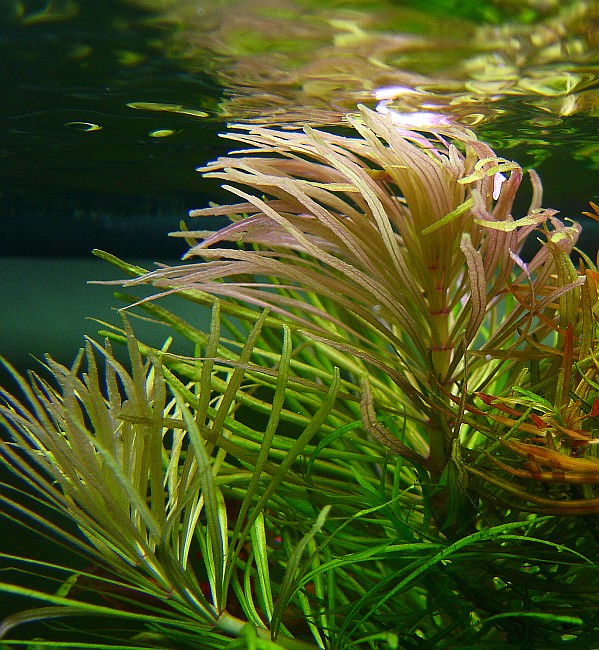
Generally non-toxic to cats and dogs.
A spectacular large background stem plant with whorls of narrow leaves that form star-like rosettes, flushing pink, orange, and purple under intense light. A demanding showpiece for high-tech tanks.
Educational only. KinStation content is reviewed by licensed veterinarians but cannot replace an in-person exam. Always consult a licensed veterinarian or board-certified specialist for diagnosis, treatment, or any decision affecting your pet's health.
Quick facts
| Category | Aquatic Plants |
| Family | Lamiaceae |
| Native origin | Asia and Australia (India, Southeast Asia, northern Australia) |
| Care difficulty | Advanced |
| Light | Bright indirect |
| Pet toxicity | Pet-safe |
Light
Requires high light (typically 50+ PAR) to display its dramatic coloration and tight, star-shaped whorls; under low light it grows green, sparse, and leggy. Among the more light-hungry stems in the hobby.
Water
Temperature 22-28 C (72-82 F), pH 5.5-7.5, soft to moderately hard water (GH 3-12). A heavy feeder: needs generous, balanced water-column dosing of macros and micros. Sensitive to deficiencies — nitrogen and potassium shortfalls quickly show as deformed or pale new growth.
Soil & potting
A rooted stem plant (not an epiphyte) that does best in nutrient-rich aquasoil; supplement inert substrates with root tabs. Strong root feeding plus water-column dosing gives the healthiest, most colorful growth. Plant stems individually into the substrate.
Environment — humidity, temperature, placement
CO2 is effectively required for good results — this is a high-tech plant that struggles without stable, pressurized CO2. Use as a background centerpiece. Prefers good, even flow and stable parameters. Grows emersed and submersed; transitioning stems may melt before adapting.
Propagation
Propagate by topping and replanting the tops; the base branches vigorously into side shoots, and lateral shoots can be separated and replanted. Grows tall quickly under ideal conditions, requiring regular trimming.
Toxicity detail
Non-toxic and safe with fish, shrimp, and snails. Native across Asia and Australia; not regarded as an aquarium-trade invasive, but do not release into waterways.
Growth stages
How this plant changes through its life — each stage often has its own care, diet and space needs.
Sources
- Pogostemon stellatus - Tropica Aquarium Plants (care guide)
- Pogostemon stellatus - Wikipedia (encyclopedia)