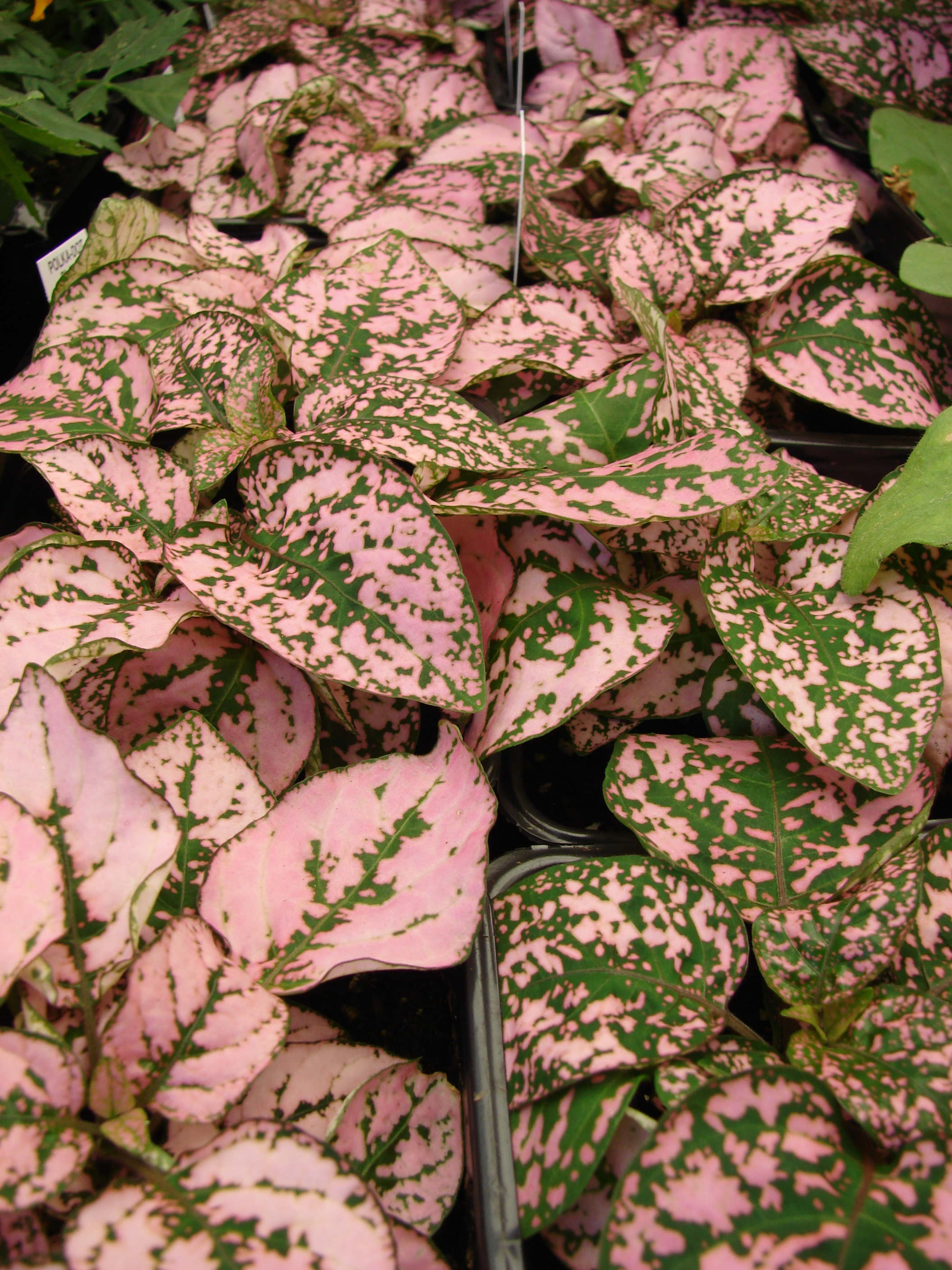
Hypoestes phyllostachya · also called freckle face, measles plant, flamingo plant, Hypoestes
Photo: Forest Kim Starr · CC BY 3.0
Pet-safe
Generally non-toxic to cats and dogs.
A small, cheerful foliage plant whose green leaves are heavily spattered with pink, white, or red speckles like flung paint. Bright light keeps the spots bold, and regular pinching keeps the otherwise leggy plant compact and colorful.
ℹ️
Educational only. KinStation content is reviewed by licensed veterinarians but cannot replace an in-person exam. Always consult a licensed veterinarian or board-certified specialist for diagnosis, treatment, or any decision affecting your pet's health.
Quick facts
Category
Foliage
Family
Acanthaceae
Native origin
Madagascar
Care difficulty
Beginner
Light
Bright indirect
Pet toxicity
Pet-safe
Light
Give bright, indirect light to keep the speckled coloring vivid; in low light the spots fade toward plain green and the plant grows leggy. Avoid harsh direct sun, which can bleach or scorch the thin leaves. A bright windowsill out of midday sun is ideal.
Water
Keep the soil consistently, evenly moist during growth — the polka dot plant wilts quickly if it dries out, then revives after watering. Avoid waterlogging, which rots the roots, and ease back in winter. Use room-temperature water and water when the surface just begins to dry.
Soil & potting
Use a rich, well-draining houseplant mix that retains some moisture; peat or coir with perlite works well. Reliable drainage prevents rot while still holding the steady moisture this plant likes. A pot with drainage holes is important.
Environment — humidity, temperature, placement
As a Madagascan tropical, it enjoys warmth and moderate-to-high humidity and dislikes cold drafts and dry air, which crisp the foliage. Keep it above about 60F (16C). It often grows as a short-lived but colorful plant and tends to get leggy or go to seed and decline after flowering, so many growers refresh it from cuttings.
Propagation
Propagate easily from stem-tip cuttings, which root readily in water or moist mix in warm, humid conditions. Because plants often decline after flowering, taking fresh cuttings is the standard way to keep the color going. Pinching the tips regularly both keeps the plant bushy and supplies cuttings.
Toxicity detail
Safe (non-toxic) to cats and dogs. The polka dot plant (Hypoestes phyllostachya) is regarded as non-toxic and is not listed on the ASPCA toxic-plant database, making it a pet-friendly pick. It contains no known toxic compounds, though as with any plant, a pet eating a large amount might get mild, temporary stomach upset. Source: ASPCA Animal Poison Control toxic/non-toxic plant database.
Origin & history
Hypoestes phyllostachya is native to Madagascar and belongs to the Acanthaceae, the same family as the nerve plant. Breeding has produced a range of named series with varying spot density and colors — pink, white, rose, and red on green. Compact and colorful, it became a popular bedding and houseplant, often sold as a small, decorative 'splash of color' plant.
Growth stages
How this plant changes through its life — each stage often has its own care, diet and space needs.
Photo coming soon
Seed
Most plants begin as a seed (or spore in ferns) — a dormant package holding the embryo and a food reserve within a protective coat. Given moisture, warmth, and sometimes light, the seed breaks dormancy and germinates.
Photo coming soon
Seedling
The seedling emerges with a root and its first leaves (cotyledons), then true leaves. It is tender and shallow-rooted, dependent on steady moisture and light as it establishes the beginnings of stem and root systems.
Photo coming soon
Vegetative growth
In the vegetative phase the plant focuses on growing roots, stems, and foliage, building the size and structure it needs before flowering. This is the main period of leafing out and, for many houseplants, the stage at which they are grown and propagated.
Mature / Flowering
A mature plant reaches its full habit and, when conditions and age allow, flowers and sets seed (or, for foliage plants, simply attains its full adult size and form). This is the stage shown in most reference photos.
Problems & solutions
Each problem lists a proven fix (horticulture / extension-backed) and, where useful, an anecdotal remedy from the grower community — clearly labeled so you can judge for yourself.
Faded spots and leggy growth
mild
Symptoms:The colorful speckling washes out toward plain green and the stems stretch tall and sparse.
Likely cause:Too little light; the polka dot plant needs bright indirect light to keep its spots bold and its habit compact.
✓ Proven fix
Move it to brighter indirect light and pinch back the leggy stems to force bushier, more colorful growth. New leaves emerging under better light show stronger speckling.
◇ Anecdotal remedy — grower lore, unverified
Growers routinely pinch the tips every few weeks and root the trimmings, keeping a tidy, vivid plant and a backup supply.
Sudden wilting / collapse
mild
Symptoms:The plant droops and wilts dramatically, looking close to dead.
Likely cause:The soil dried out; this plant is thirsty and wilts fast when underwatered, though it usually recovers after a drink.
✓ Proven fix
Water thoroughly with room-temperature water and the plant typically perks up within hours. Prevent repeated wilting by keeping the mix evenly moist and not letting it dry out completely.
Decline after flowering
mild
Symptoms:The plant sends up small flower spikes, then becomes leggy, stops producing nice foliage, and fades.
Likely cause:Hypoestes naturally weakens and can die back after flowering and setting seed; it is often short-lived as a tidy foliage plant.
✓ Proven fix
Pinch off flower spikes as they appear to prolong leafy growth, and start fresh cuttings before the parent declines so you always have a vigorous replacement.
◇ Anecdotal remedy — grower lore, unverified
Many keepers simply treat it as a 'renewable' plant, rooting new cuttings each season rather than fighting the natural post-bloom decline.
Anecdotes & grower lore
Community experience and cultural notes — not horticultural guarantees. Conditions vary by home; treat these as colour, not prescriptions.
Owners trade affectionate names like 'freckle face' and 'measles plant' for the way the spots look flicked on by a careless painter, and many enjoy hunting for cultivars where the speckling almost overwhelms the green. A common bit of community lore is that the polka dot plant 'lives fast' — dazzling for a season, then going leggy or flowering itself into decline — so experienced growers keep a few cuttings rooting as a perpetual supply of fresh, spotty replacements.
Reviewed and signed off by: KinStation Editorial — pre-launch draft (pending horticulture review) on 2026-05-28