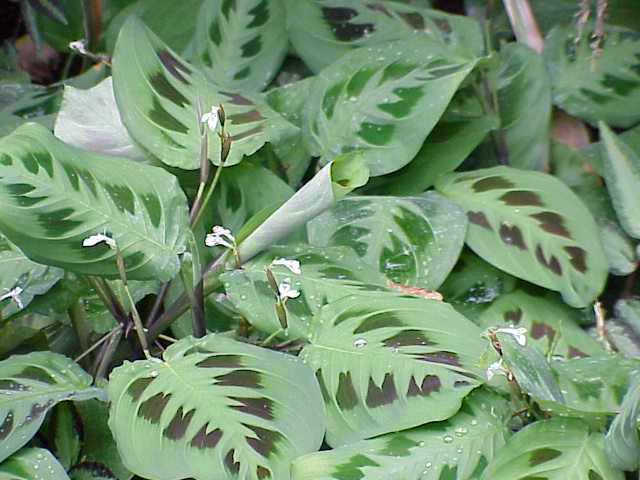
Maranta leuconeura · also called herringbone plant, rabbit's foot prayer plant, Maranta
Pet-safe
Generally non-toxic to cats and dogs.
A spreading tropical foliage plant famous for nyctinasty — its boldly patterned leaves fold upward at night like praying hands and open again by day. Varieties show red veins ('Erythroneura') or dark herringbone blotches, all on velvety oval leaves.
ℹ️
Educational only. KinStation content is reviewed by licensed veterinarians but cannot replace an in-person exam. Always consult a licensed veterinarian or board-certified specialist for diagnosis, treatment, or any decision affecting your pet's health.
Quick facts
Category
Foliage
Family
Marantaceae
Native origin
Tropical rainforests of Brazil
Care difficulty
Intermediate
Light
Medium light
Pet toxicity
Pet-safe
Light
Provide medium to bright indirect light; an east- or north-facing window or a sheer-filtered spot is ideal. Direct sun bleaches and scorches the markings, while very low light dulls the colors and flattens the day-night leaf movement. Good but gentle light keeps the patterns vivid.
Water
Keep the soil lightly, evenly moist during the growing season and slightly drier in winter, never letting it dry out fully or become waterlogged. Prayer plants are sensitive to the salts, chlorine, and fluoride in tap water, which can brown the leaf tips, so use filtered, distilled, or left-out rainwater where possible. Water with room-temperature water.
Soil & potting
Use a rich, well-draining mix that holds some moisture — a peat- or coir-based potting mix with perlite suits the shallow root system. A wide, shallow pot matches the spreading, rhizomatous habit. Sharp drainage prevents the root rot that follows soggy soil.
Environment — humidity, temperature, placement
As a rainforest plant, Maranta loves warmth and high humidity (ideally 50% or more) and dislikes cold drafts and dry air, which crisp the edges. Keep it above roughly 60F (16C) and away from heating and cooling vents. A pebble tray, humidifier, or grouping with other plants helps in dry rooms.
Propagation
Propagate by division at repotting time: gently separate the rhizome clump into sections, each with roots and a few leaves, and pot them up. Stem cuttings taken just below a node can also be rooted in water or moist mix. Warmth and humidity speed establishment of the new divisions.
Toxicity detail
Safe (non-toxic) to cats and dogs. The prayer plant (Maranta leuconeura) is listed by the ASPCA as non-toxic to both cats and dogs, making it a popular pet-friendly choice for trailing shelves and tabletops. It contains no known toxic principles, though as with any plant, nibbling a large amount could cause mild, temporary digestive upset. Source: ASPCA Animal Poison Control toxic/non-toxic plant database.
Origin & history
Maranta leuconeura is native to the tropical rainforests of Brazil and belongs to the Marantaceae, the same family as the calatheas. The genus honors Bartolomeo Maranta, a 16th-century Italian physician and botanist. Its hardy day-night leaf movement and bold patterning made it a long-standing favorite houseplant, and it remains one of the most recognizable 'living' foliage plants.
Growth stages
How this plant changes through its life — each stage often has its own care, diet and space needs.
Photo coming soon
Seed
Most plants begin as a seed (or spore in ferns) — a dormant package holding the embryo and a food reserve within a protective coat. Given moisture, warmth, and sometimes light, the seed breaks dormancy and germinates.
Photo coming soon
Seedling
The seedling emerges with a root and its first leaves (cotyledons), then true leaves. It is tender and shallow-rooted, dependent on steady moisture and light as it establishes the beginnings of stem and root systems.
Photo coming soon
Vegetative growth
In the vegetative phase the plant focuses on growing roots, stems, and foliage, building the size and structure it needs before flowering. This is the main period of leafing out and, for many houseplants, the stage at which they are grown and propagated.
Mature / Flowering
A mature plant reaches its full habit and, when conditions and age allow, flowers and sets seed (or, for foliage plants, simply attains its full adult size and form). This is the stage shown in most reference photos.
Problems & solutions
Each problem lists a proven fix (horticulture / extension-backed) and, where useful, an anecdotal remedy from the grower community — clearly labeled so you can judge for yourself.
Brown, crispy leaf tips and edges
mild
Symptoms:The tips and margins of the leaves turn brown and brittle, often with a thin yellow halo.
Likely cause:Most often low humidity and dry air, or a buildup of salts, chlorine, and fluoride from tap water; underwatering can contribute.
✓ Proven fix
Raise humidity (pebble tray, humidifier, grouping), water with filtered, distilled, or rainwater, and keep the soil evenly moist. Trim damaged tips for appearance and move the plant away from drafts and vents.
◇ Anecdotal remedy — grower lore, unverified
Many growers report switching from tap to rainwater clears up persistent tip burn that nothing else fixed.
Leaves no longer fold at night
mild
Symptoms:The plant stops its day-night leaf movement and the leaves stay flat or splayed.
Likely cause:Usually too little light, an irregular light cycle, or general stress from inconsistent watering or temperature.
✓ Proven fix
Give brighter (still indirect) light and a consistent day-night cycle, and keep watering and temperature steady. As the plant recovers its routine, the nightly folding typically returns.
◇ Anecdotal remedy — grower lore, unverified
Some keepers note the praying movement perks back up within days of moving a sulking plant to a brighter, more regular spot.
Faded, washed-out leaf patterns
mild
Symptoms:The vivid veins and herringbone markings dull, and leaves may scorch or pale.
Likely cause:Too much direct sun bleaching the pigments, or conversely very low light muting them.
✓ Proven fix
Move the plant to bright but indirect light, out of any direct sun. Markings usually deepen again as new leaves emerge under the corrected light.
Anecdotes & grower lore
Community experience and cultural notes — not horticultural guarantees. Conditions vary by home; treat these as colour, not prescriptions.
The common name comes straight from folklore: people likened the leaves folding upright at dusk to hands clasped in evening prayer, and many owners still enjoy 'catching' the plant in the act of closing up at nightfall. Growers trade the charming observation that you can almost set a clock by it, and some insist a healthy prayer plant 'rustles' faintly as the leaves shift — a small bit of lore that delights new keepers watching for the nightly performance.
Reviewed and signed off by: KinStation Editorial — pre-launch draft (pending horticulture review) on 2026-05-28