Aquatic PlantsIntermediateMedium light
Riccia
Riccia fluitans · also called Crystalwort, Floating crystalwort, Slender riccia, Riccia
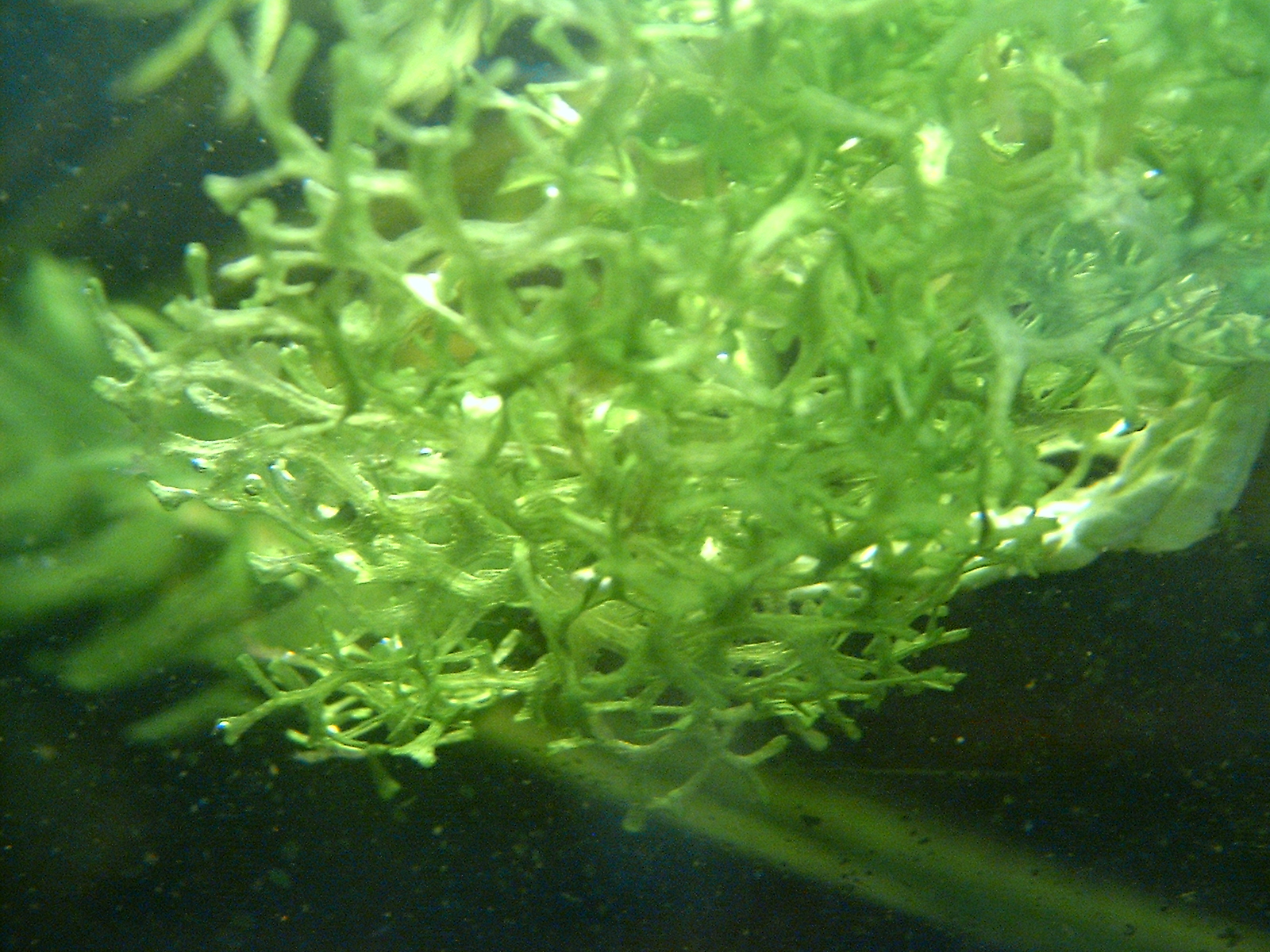
Photo · CC BY 2.5
Generally non-toxic to cats and dogs.
Riccia is a fast-growing floating liverwort of branching, bright-green forked thalli that lacks any true leaves, stems or roots. Made famous by Takashi Amano, it can be tied down to form a shimmering 'pearling' carpet under bright light and CO2, though buoyancy constantly tries to lift it free.
Educational only. KinStation content is reviewed by licensed veterinarians but cannot replace an in-person exam. Always consult a licensed veterinarian or board-certified specialist for diagnosis, treatment, or any decision affecting your pet's health.
Quick facts
| Category | Aquatic Plants |
| Family | Ricciaceae |
| Native origin | Cosmopolitan (found across temperate and tropical regions worldwide) |
| Care difficulty | Intermediate |
| Light | Medium light |
| Pet toxicity | Pet-safe |
Light
Medium to high light (~30-60+ PAR) is needed for compact, healthy carpet growth and the pearling (oxygen bubbling) it is famous for. Under low light it grows leggy and loose and is more prone to detaching.
Water
Temperature 15-28 C (~20-26 C ideal), pH ~6.0-7.5, soft to moderately hard water. As a fast grower under strong light it benefits from consistent water-column dosing of macro- and micronutrients; nutrient deficiency causes thinning and browning.
Soil & potting
A floating liverwort that normally drifts at the surface. It is not a substrate-rooting plant and must never be buried; it does form simple rhizoids (more readily when emersed or pressed against a surface), but these are weak and it will not reliably self-anchor underwater. To grow it as a carpet, sandwich it under mesh or tie it with thread/line to stone or wood rather than relying on it to attach by itself.
Environment — humidity, temperature, placement
CO2 is effectively required to keep a submersed Riccia carpet dense, healthy and pearling; without it the carpet thins and floats off. Prefers gentle flow. Used as a foreground carpet (tied down) or as a floating plant; also grows emersed on damp soil. Submersed carpets need regular trimming because trapped oxygen makes clumps buoyant and they break free.
Propagation
Propagates simply by fragmentation — it grows by dividing/branching, and any broken piece continues growing. Split a clump and re-tie or re-sandwich the pieces under mesh to expand a carpet; floating portions multiply on their own.
Toxicity detail
Non-toxic and safe for fish and shrimp, and a good surface refuge for fry and biofilm. It is a vigorous spreader but is NOT listed as a US Federal Noxious Weed and is generally legal to keep (unlike strictly regulated floaters such as Salvinia molesta, water lettuce/Pistia, and hornwort/Egeria in some states). Still, some jurisdictions regulate floating aquatic plants, so check local rules and never release it into natural waterways.
Growth stages
How this plant changes through its life — each stage often has its own care, diet and space needs.
Sources
- Riccia fluitans (Crystalwort) — Tropica (plant database)
- Riccia fluitans — Wikipedia (encyclopedia)