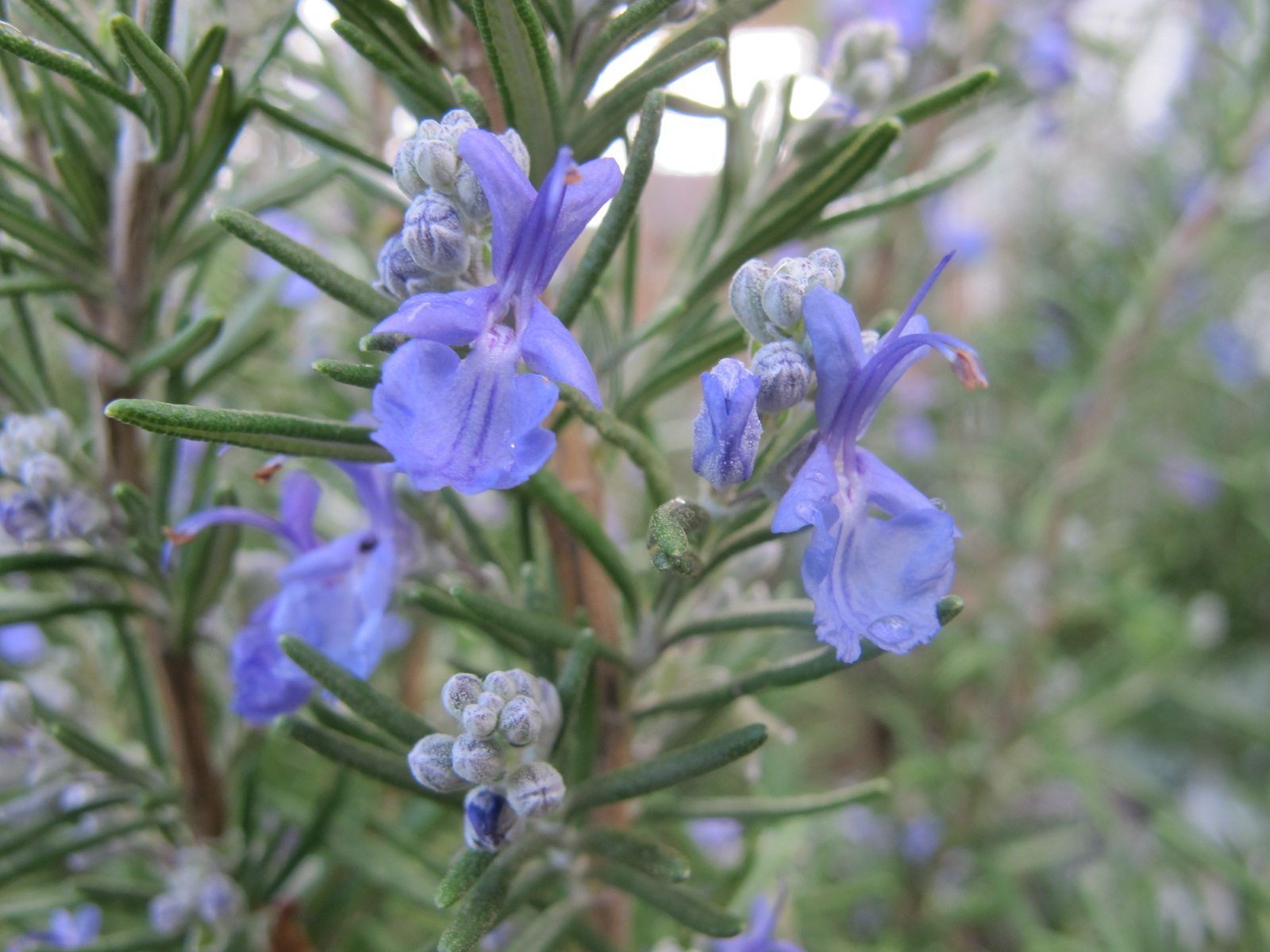
Salvia rosmarinus · also called Rosmarinus officinalis, Old man, Compass plant
Photo: Margalob · CC BY-SA 4.0
Pet-safe
Generally non-toxic to cats and dogs.
A woody, drought-tolerant Mediterranean shrub grown for its needle-like, piney leaves, rosemary wants all the sun it can get and dislikes wet feet. It is harder to keep alive indoors than most herbs, mainly because of overwatering.
ℹ️
Educational only. KinStation content is reviewed by licensed veterinarians but cannot replace an in-person exam. Always consult a licensed veterinarian or board-certified specialist for diagnosis, treatment, or any decision affecting your pet's health.
Quick facts
Category
Herbs & Edible
Family
Lamiaceae
Native origin
Mediterranean Basin (southern Europe and North Africa)
Care difficulty
Intermediate
Light
Full sun
Pet toxicity
Pet-safe
Light
Rosemary craves full sun — at least six to eight hours of direct light — and is one of the hardest herbs to grow indoors precisely because windowsills are usually too dim. Give it the sunniest spot available, or a strong grow light, or it grows weak, sparse, and prone to mildew. Outdoors in summer it thrives in the hottest, brightest position.
Water
Water deeply but infrequently, letting the soil dry out well between waterings — rosemary is drought-adapted and far more often killed by overwatering than by drought. Soggy soil quickly rots its roots, while a plant that has dried slightly recovers easily. In winter, indoor plants need only occasional water as growth slows.
Soil & potting
Use a gritty, sharply draining mix; rosemary resents heavy, water-retentive soil and demands excellent drainage, much like a Mediterranean herb should. Adding sand or perlite to a standard potting mix helps. Terracotta pots, which breathe and dry faster, suit it well, and a drainage hole is non-negotiable.
Environment — humidity, temperature, placement
As a Mediterranean shrub, rosemary loves warm, sunny, airy conditions and good air circulation, which helps prevent the powdery mildew that strikes crowded indoor plants. Many cultivars are only modestly cold-hardy and can be damaged by hard frost, so in cold regions it is grown in pots and sheltered or brought indoors over winter. It tolerates dry air better than humid stagnation.
Propagation
Rosemary is most reliably propagated from softwood cuttings: take a few-inch tip of new growth, strip the lower leaves, and root it in moist, gritty mix or water, keeping it warm and bright. Seed is slow and erratic to germinate, so cuttings are the standard method and let you clone a favorite plant. Cuttings also let you carry a tender plant through winter as backup.
Toxicity detail
Safe (non-toxic) to cats and dogs. The ASPCA lists Rosemary (now Salvia rosmarinus, formerly Rosmarinus officinalis) as non-toxic to both cats and dogs, making it a pet-friendly culinary herb. Its strong aroma also tends to deter casual nibbling. As with any plant, eating a large amount could cause mild, transient stomach upset. Source: ASPCA Animal Poison Control toxic/non-toxic plant database.
Origin & history
Rosemary has been cultivated around the Mediterranean since antiquity, valued by the Greeks and Romans for cooking, medicine, fragrance, and ritual, and long associated with memory and remembrance. Botanists recently reclassified it from its own genus into the sages, so the accepted scientific name is now Salvia rosmarinus, though Rosmarinus officinalis remains widely used. From upright culinary forms to low trailing types, it is grown worldwide as both herb and ornamental.
Growth stages
How this plant changes through its life — each stage often has its own care, diet and space needs.
Photo coming soon
Seed
Most plants begin as a seed (or spore in ferns) — a dormant package holding the embryo and a food reserve within a protective coat. Given moisture, warmth, and sometimes light, the seed breaks dormancy and germinates.
Photo coming soon
Seedling
The seedling emerges with a root and its first leaves (cotyledons), then true leaves. It is tender and shallow-rooted, dependent on steady moisture and light as it establishes the beginnings of stem and root systems.
Photo coming soon
Vegetative growth
In the vegetative phase the plant focuses on growing roots, stems, and foliage, building the size and structure it needs before flowering. This is the main period of leafing out and, for many houseplants, the stage at which they are grown and propagated.
Mature / Flowering
A mature plant reaches its full habit and, when conditions and age allow, flowers and sets seed (or, for foliage plants, simply attains its full adult size and form). This is the stage shown in most reference photos.
Problems & solutions
Each problem lists a proven fix (horticulture / extension-backed) and, where useful, an anecdotal remedy from the grower community — clearly labeled so you can judge for yourself.
Sudden browning and death (root rot from overwatering)
severe
Symptoms:The plant grows dull, then browns from the inside out and collapses, often seemingly overnight, with soft dark roots.
Likely cause:Overwatering and poorly draining soil. Rosemary is drought-adapted and its roots rot in constantly wet conditions; this is the number-one killer of indoor rosemary.
✓ Proven fix
Let the soil dry out well between waterings, grow in a gritty fast-draining mix in a pot with drainage, and never leave it standing in water. If caught early, take healthy cuttings to start fresh, as a badly rotted plant rarely recovers.
◇ Anecdotal remedy — grower lore, unverified
Many growers keep rosemary in unglazed terracotta specifically because the porous pot wicks away excess moisture and is much harder to overwater.
Powdery mildew (white coating)
moderate
Symptoms:A white, dusty film spreads over the stems and needle-like leaves, especially on indoor plants.
Likely cause:A fungal disease favored by stagnant, humid air and poor circulation — common conditions for rosemary grown indoors in winter.
✓ Proven fix
Improve air circulation with a fan or better spacing, give more light, and avoid wetting the foliage. Prune out badly affected growth. Outdoor sun and breeze usually clear it up in the growing season.
◇ Anecdotal remedy — grower lore, unverified
Indoor growers often run a small oscillating fan near winter herbs, reporting that the moving air alone keeps mildew off rosemary.
Weak, sparse, pale growth
mild
Symptoms:The plant grows thin and open with pale, sparse foliage and little of its usual dense, aromatic growth.
Likely cause:Insufficient light. Rosemary needs intense sun, and indoor windowsills are usually too dim to support vigorous growth.
✓ Proven fix
Move it to the sunniest possible window or add a strong grow light, and grow it outdoors in full sun during the warm months. Better light quickly thickens up the foliage.
◇ Anecdotal remedy — grower lore, unverified
Gardeners commonly summer their rosemary outdoors in the hottest, sunniest spot and report it returns indoors far bushier and more fragrant.
Anecdotes & grower lore
Community experience and cultural notes — not horticultural guarantees. Conditions vary by home; treat these as colour, not prescriptions.
Rosemary carries centuries of folklore: it was planted by doorways and tucked into wedding bouquets and funeral wreaths as a symbol of remembrance — 'there's rosemary, that's for remembrance,' as Shakespeare's Ophelia says. A bit of cottage-garden lore claims rosemary grows best in the gardens of households where 'the woman rules,' a saying gardeners still trade with a wink. Indoors, its reputation is humbler: it is the herb most likely to die mysteriously on a kitchen windowsill, almost always from a watering can wielded with too much love.
Reviewed and signed off by: KinStation Editorial — pre-launch draft (pending horticulture review) on 2026-05-28