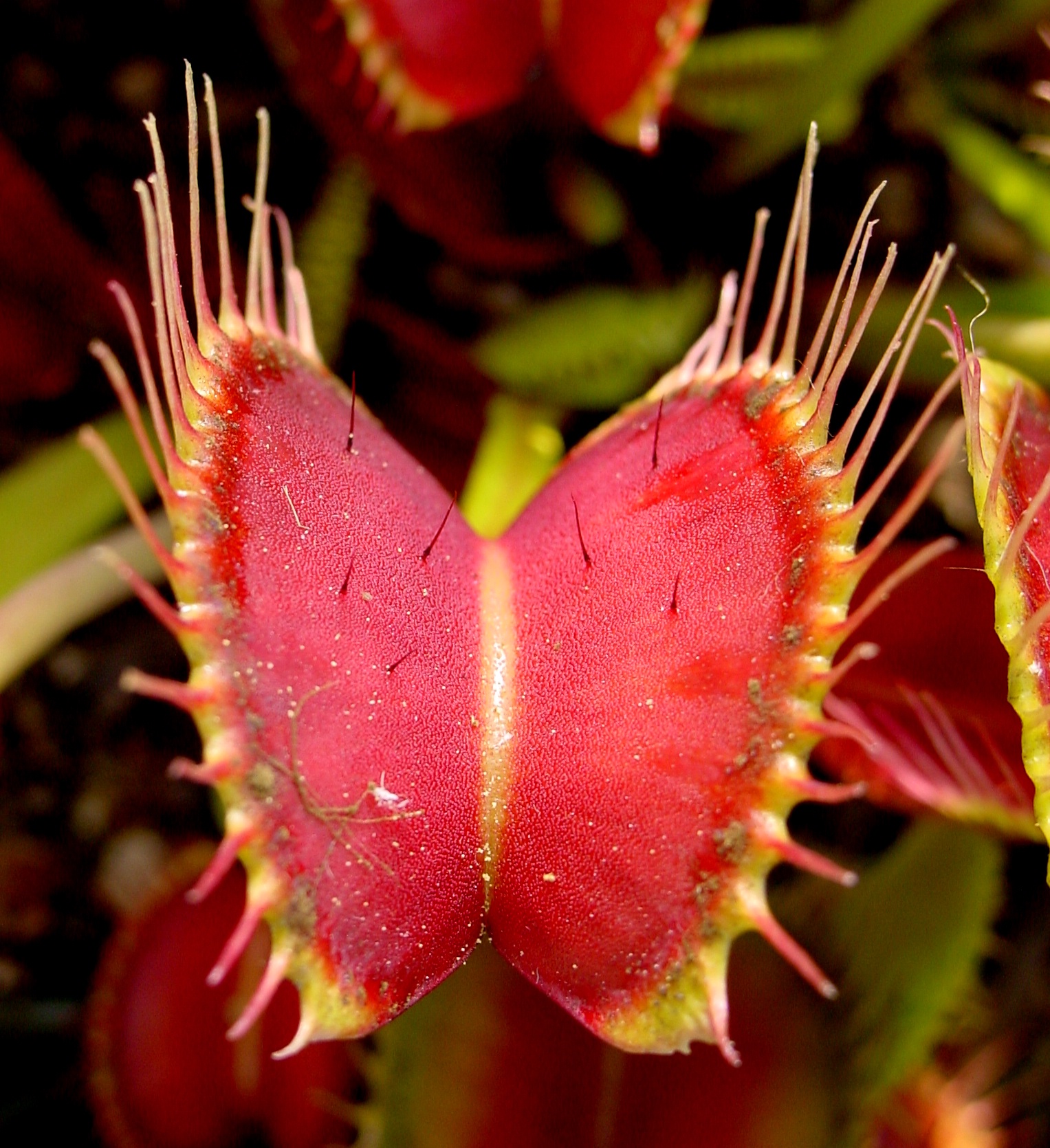
Dionaea muscipula · also called Venus's flytrap, Dionaea, Tippitiwitchet
Pet-safe
Generally non-toxic to cats and dogs.
The iconic snap-trap carnivore, the Venus flytrap catches insects in hinged, trigger-haired leaves. It is demanding in very specific ways: pure water, nutrient-poor media, bright sun, and an essential winter dormancy.
ℹ️
Educational only. KinStation content is reviewed by licensed veterinarians but cannot replace an in-person exam. Always consult a licensed veterinarian or board-certified specialist for diagnosis, treatment, or any decision affecting your pet's health.
Quick facts
Category
Carnivorous
Family
Droseraceae
Native origin
Subtropical wetlands of the Carolinas, southeastern United States
Care difficulty
Advanced
Light
Full sun
Pet toxicity
Pet-safe
Light
Venus flytraps need very bright light — ideally several hours of direct sun a day — to grow vigorously and color their traps red inside. Insufficient light is one of the most common reasons they decline, producing weak, all-green, floppy traps. A sunny windowsill, sunroom, or grow light close overhead suits them; outdoor full sun in summer is ideal.
Water
Use only pure water — distilled, reverse-osmosis, or clean rainwater — never tap or mineral water, whose dissolved salts build up and slowly kill the plant. Keep the media constantly moist by standing the pot in a tray of an inch or so of pure water (the tray method), as flytraps grow in wet, boggy ground. This pure-water rule is non-negotiable and the single most important care point.
Soil & potting
Plant only in a nutrient-poor carnivorous-plant mix — typically sphagnum peat moss with perlite or silica sand, with no fertilizer, lime, or ordinary potting soil. Their native bogs are extremely poor in nutrients, which is precisely why they evolved to trap insects, and ordinary rich soil or fertilizer will burn and kill the roots. Never add plant food to the soil.
Environment — humidity, temperature, placement
A genuine winter dormancy is essential, not optional: in late autumn the plant naturally slows, loses traps, and must be kept cool (roughly just-above-freezing to the low 50s F) for a few months, or it weakens and dies within a year or two from being kept warm year-round. During the growing season it wants bright, warm, humid, airy conditions. They handle light frost in dormancy in their native range.
Propagation
Venus flytraps are propagated by dividing the clumps of rosettes in late winter, by leaf-pullings (a whole leaf pulled with a bit of white base set on damp media can form a plantlet), and from seed, which is slow and takes years to reach size. Division at the end of dormancy is the simplest home method. Flower stalks can be cut off to keep a young plant's energy in growth rather than seed.
Toxicity detail
Considered safe (non-toxic) to cats and dogs. The Venus flytrap (Dionaea muscipula) is not on the ASPCA's list of plants toxic to cats or dogs, and it is widely regarded as non-toxic; its traps are far too small and weak to harm a curious pet's nose or paw. A pet that chews on it might get mild, transient stomach upset from the plant material, and the bigger risk is to the plant itself. Source: ASPCA Animal Poison Control toxic-plant database (Dionaea is not listed as toxic).
Origin & history
The Venus flytrap is native to a tiny region of wet pine savanna around the border of the Carolinas and nowhere else in the wild, where it is now a protected, poaching-threatened species. Described in the 18th century, it captivated naturalists, and Charles Darwin famously called it 'one of the most wonderful in the world,' studying its snapping traps in detail. Its dramatic mechanism has made it the world's most recognizable carnivorous plant and a staple of novelty horticulture.
Growth stages
How this plant changes through its life — each stage often has its own care, diet and space needs.
Photo coming soon
Seed
Most plants begin as a seed (or spore in ferns) — a dormant package holding the embryo and a food reserve within a protective coat. Given moisture, warmth, and sometimes light, the seed breaks dormancy and germinates.
Photo coming soon
Seedling
The seedling emerges with a root and its first leaves (cotyledons), then true leaves. It is tender and shallow-rooted, dependent on steady moisture and light as it establishes the beginnings of stem and root systems.
Photo coming soon
Vegetative growth
In the vegetative phase the plant focuses on growing roots, stems, and foliage, building the size and structure it needs before flowering. This is the main period of leafing out and, for many houseplants, the stage at which they are grown and propagated.
Mature / Flowering
A mature plant reaches its full habit and, when conditions and age allow, flowers and sets seed (or, for foliage plants, simply attains its full adult size and form). This is the stage shown in most reference photos.
Problems & solutions
Each problem lists a proven fix (horticulture / extension-backed) and, where useful, an anecdotal remedy from the grower community — clearly labeled so you can judge for yourself.
Slow decline from tap or mineral water
severe
Symptoms:The plant gradually weakens over weeks or months, with stunted traps and browning, despite seemingly normal care.
Likely cause:Watering with tap, filtered, spring, or mineral water. Dissolved minerals and salts accumulate in the soil and are toxic to carnivorous plants, which are adapted to extremely pure, nutrient-poor bog water.
✓ Proven fix
Use only distilled, reverse-osmosis, or clean rainwater, and keep the pot standing in a tray of that pure water. If salt buildup is suspected, repot into fresh carnivorous mix and flush with pure water. Never use tap water 'just this once.'
◇ Anecdotal remedy — grower lore, unverified
Many growers collect rainwater in barrels specifically for their carnivorous plants, swearing their flytraps look noticeably healthier on rain than on bottled distilled water.
Death from being kept warm all year (no dormancy)
severe
Symptoms:A plant grows for a season or so, then weakens each year and eventually fails to return, often after looking 'tired.'
Likely cause:Lack of winter dormancy. Venus flytraps must have a cool rest period of a few months each winter; kept warm and growing year-round they exhaust themselves and die within a year or two.
✓ Proven fix
Let the plant go dormant in late autumn: reduce light and water somewhat and keep it cool (around just above freezing to the low 50s F), for example in an unheated room, garage, or refrigerator, for a few months, then resume normal growth in spring.
◇ Anecdotal remedy — grower lore, unverified
Cold-climate growers sometimes overwinter dormant flytraps in a sealed bag in the refrigerator's crisper drawer, reporting strong spring regrowth.
Traps stay green, floppy, and won't close well
moderate
Symptoms:Traps are all green (no red interior), grow long and floppy, and snap weakly or not at all.
Likely cause:Too little light. Flytraps need intense light to develop short, vigorous, red-throated, responsive traps; in dim conditions they etiolate and lose vigor.
✓ Proven fix
Move the plant to direct sun or place a grow light close overhead. With strong light the new traps grow more compact, color up red inside, and respond properly. Avoid triggering traps for amusement, which wastes their limited closures.
◇ Anecdotal remedy — grower lore, unverified
Hobbyists often grow flytraps outdoors in full summer sun and report dramatically redder, more robust traps than any windowsill produces.
Anecdotes & grower lore
Community experience and cultural notes — not horticultural guarantees. Conditions vary by home; treat these as colour, not prescriptions.
Almost every new owner does the one thing they shouldn't: poke the traps to watch them snap. Growers warn against it, because each trap can only close a limited number of times before it dies, and triggering it on nothing wastes that budget for no reward. Another enduring myth is that the plant must be 'fed' meat by hand; in fact a healthy outdoor flytrap catches its own insects, and stories abound of people killing their plants with hamburger, fertilizer, or tap water out of misplaced kindness. The trap's speed — among the fastest movements in the plant kingdom — never stops being astonishing.
Reviewed and signed off by: KinStation Editorial — pre-launch draft (pending horticulture review) on 2026-05-28