Cenotes are natural sinkholes formed where limestone bedrock collapses to expose groundwater, creating clear freshwater pools that often connect to vast flooded cave systems. Cool, stable, and dimly lit, they harbor specialized cave-adapted life and form a unique freshwater world, most famously across Mexico's Yucatán Peninsula.
Geography
Cenotes are concentrated in karst (soluble limestone) landscapes, above all the Yucatán Peninsula, where thousands dot the lowlands and link into some of the world's longest underwater cave systems. Similar sinkhole and 'blue hole' features occur in other limestone regions worldwide where slightly acidic water has dissolved the rock over millennia.
Climate
The water is cool, clear, and remarkably constant in temperature year-round, buffered from the surface climate by the surrounding rock. Open cenotes get sunlight; deeper, cave-connected sections are perpetually dark. Low nutrients and stable conditions create a calm, glassy environment very different from sun-warmed surface ponds.
Flora & fauna
Sunlit cenotes support algae, aquatic plants, and fish such as cichlids, mollies, tetras, and livebearers, plus turtles. Deeper, dark zones host blind cave fish, cave shrimp, and other pale, eyeless 'troglobites' adapted to lightlessness. The blend of surface and subterranean species gives cenotes an unusual, layered community.
Conservation
Because cenotes tap directly into the regional aquifer, they are acutely vulnerable to groundwater pollution from sewage, agriculture, and development, as well as tourism pressure. Contamination spreads quickly through the connected cave network. Conservation focuses on protecting the aquifer, managing visitor impact, and safeguarding endemic cave species.
A sturdy, adaptable livebearer available in many colors and fin types, well known for tolerating a range of water conditions including light brackish setups.
A small, colorful, easygoing livebearer that is extremely beginner-friendly, peaceful in community tanks, and available in a wide range of colors and patterns.
A tiny, dazzlingly colored relative of the common guppy, prized for the intense metallic patterning of the males and well suited to small planted nano aquariums.
A hardy, boldly barred Central American cichlid named for its black-and-grey 'jailbird' stripes. Famously easy to keep and breed, but extremely territorial — best known as the fish that taught many hobbyists how prolific and feisty cichlids can be.
A handsome, pearl-grey Central American cichlid with a brilliant red throat and belly. Males flare their crimson 'firemouth' and gill covers in bluffing displays, making this one of the most characterful yet manageable medium cichlids for the hobby.
A tiny, highly aquatic North American turtle named for the musky odor it releases when threatened. Hardy, long-lived, and well-suited to smaller aquariums, it is one of the best beginner aquatic turtles.
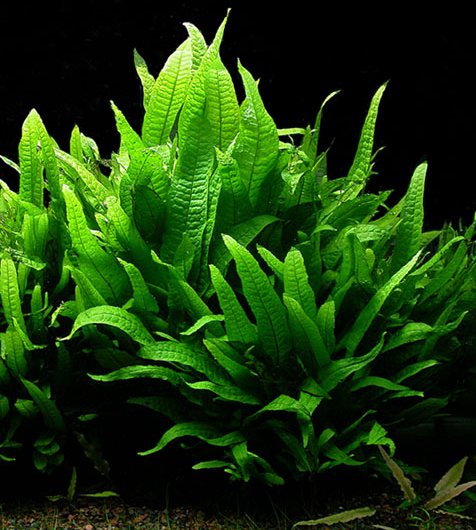
Java fern is one of the hardiest, most beginner-friendly aquarium plants, an epiphyte that attaches to wood and rock by its rhizome and tolerates a wide range of conditions. Its tough, leathery leaves are unpalatable to most fish, making it a staple of low-tech planted tanks. Note: the currently accepted botanical name is Leptochilus pteropus, though Microsorum pteropus remains the standard name in the aquarium trade.
A fast-growing rosette plant with long, ribbon-like leaves that form a flowing grassy curtain across the background. Hardy, undemanding, and excellent for beginners and large display tanks.