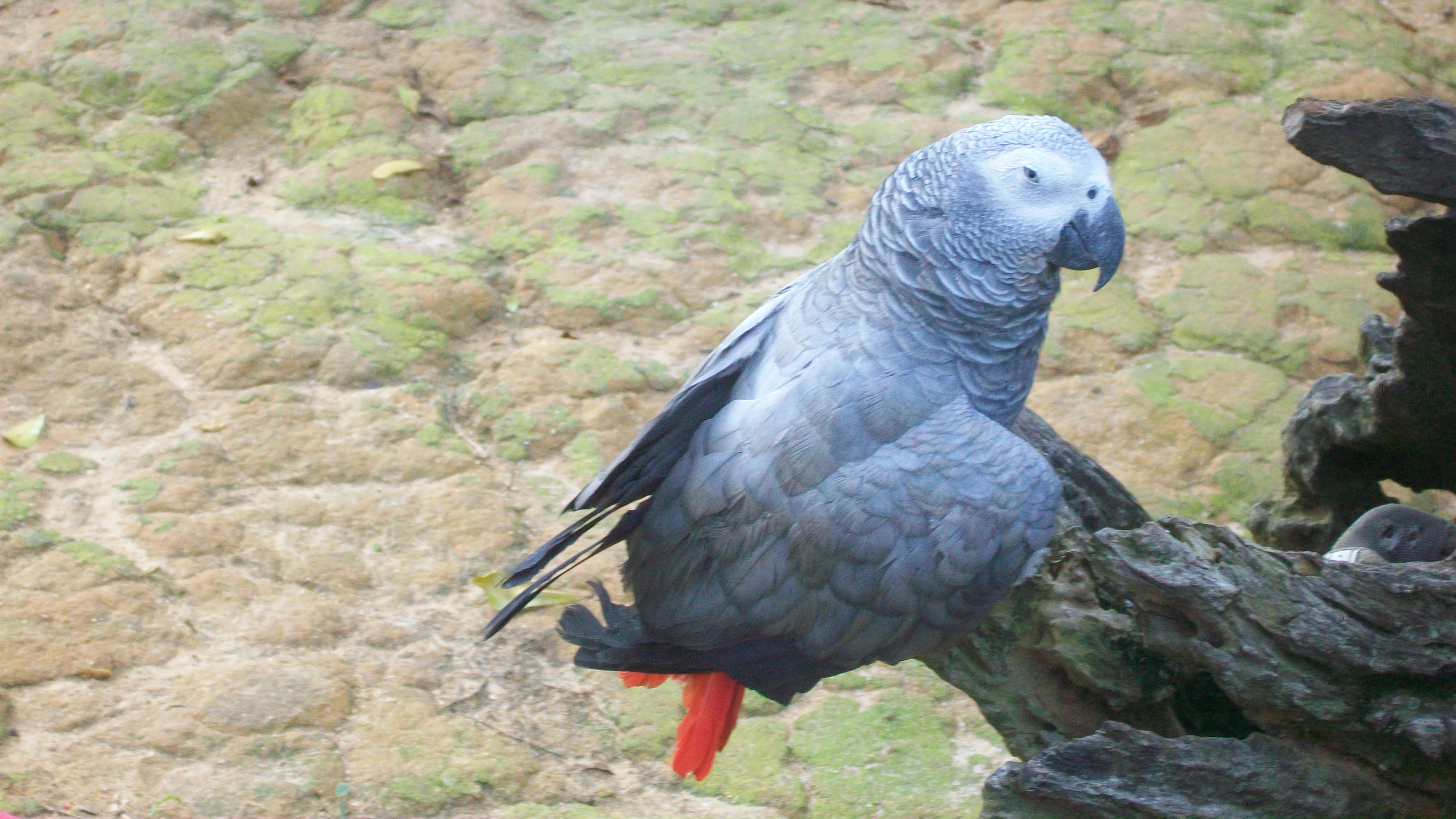
Congo African greys are medium-large African parrots renowned for cognitive ability and human speech mimicry. They are emotionally sensitive, long-lived, and require a level of commitment more comparable to a child than a typical pet.
ℹ️
Educational only. KinStation content is reviewed by licensed veterinarians but cannot replace an in-person exam. Always consult a licensed veterinarian or board-certified specialist for diagnosis, treatment, or any decision affecting your pet's health.
🩺 Need expert help with your congo african grey?
Connect with a specialist near you or ask a licensed vet — never substitute online guidance for hands-on care in an emergency.
From the minimum an animal needs to be kept humanely, up to the ideal setup. Bigger is almost always better — minimums are floors, not targets.
Photo coming soon
Minimum
Single-bird flight cage
36 × 24 × 48 in (bar spacing ¾–1 in)
A Congo grey needs at least a 36 × 24 in floor with ¾–1 in bar spacing, multiple varied-diameter natural perches, abundant foraging and shredding toys, and a calcium/UVB consideration since greys are prone to hypocalcaemia. Keep the room at 18–24 °C, draft-free, and far from non-stick fumes, which are lethal to birds. Greys are extraordinarily intelligent and sensitive, so this minimum is only acceptable with many hours of daily interaction or avian companionship to prevent feather-plucking.
Photo coming soon
Recommended
Large flight cage + foraging
40 × 30 × 60 in (bar spacing ¾–1 in)
Provide a spacious cage allowing flapping and short flight, with rotating foraging puzzles, destructible toys, a bathing dish, and several hours of supervised out-of-cage time and mental enrichment daily. Maintain 18–24 °C with access to natural or full-spectrum UVB light to support vitamin D and calcium metabolism, and a steady 10–12 h sleep schedule. As one of the most cognitively demanding parrots, a grey needs intense engagement or a companion to stay psychologically healthy.
Photo coming soon
Ideal
Walk-in aviary / bird room
Walk-in aviary or dedicated bird room (≥ 6 ft long)
The best welfare outcome is a walk-in aviary or bird-safe room offering true flight, natural branches, dense foraging substrate, and frequent bathing, with sunlight access or quality UVB to safeguard calcium balance. Keep stable warmth (18–24 °C) and a predictable daily routine, since greys are easily stressed by change. A bonded mate or near-constant companionship and complex enrichment prevent the plucking and anxiety this brilliant, neophobic species is famous for.
Life & growth stages
How this animal changes through its life — each stage often has its own care, diet and space needs.
Photo coming soon
Egg
Birds develop inside a hard-shelled egg incubated by the parent(s). Egg size, shell color, and clutch size vary by species; the embryo develops over days to weeks before hatching.
Photo coming soon
Hatchling / Chick
Hatchlings are either altricial — naked, blind, and dependent on parents (typical of parrots and songbirds) — or precocial — downy, mobile, and self-feeding soon after hatching (typical of poultry and waterfowl). Down gives way to the first feathers.
Photo coming soon
Juvenile / Fledgling
Fledglings grow in their juvenile plumage and begin to fly and feed themselves, though they may still beg from parents at first. Juvenile feathering is often duller than the adult and is replaced as the bird matures.
Adult
Adults attain full body size and mature plumage, and are capable of breeding. Many species show distinct adult coloration, and in sexually dimorphic birds males and females differ in plumage, size, or markings.
(c) dbeadle, some rights reserved (CC BY-NC) via iNaturalist — https://www.inaturalist.org/observations/254900354
Color & pattern variants
Natural variants occur in the wild; selectively bred (man-made) variants were developed in captivity.
Congo African greys need a large, sturdy cage — tall and wide enough for a medium-large parrot to climb, turn, and fully spread its wings — placed in an active part of the home where the flock-oriented bird can be part of family life without constant chaos. Bar spacing and cage strength should suit a strong-beaked parrot. As with all parrots, the cage is a base, not the whole world.
Daily out-of-cage time on a play stand or gym, plus extensive foraging and puzzle enrichment, is essential for this exceptionally intelligent species. Greys are prone to boredom and stress when under-stimulated, so a rotating supply of foraging toys, shreddable materials, and problem-solving activities is part of basic care, not a luxury.
Keep them in clean air away from PTFE/Teflon fumes, smoke, scented candles, and aerosols, all of which can be deadly to birds. Provide bathing opportunities and consistent light/dark cycles; greys are sensitive to abrupt changes in environment and routine.
Substrate
Line the cage tray with plain newspaper, paper towel, or kraft paper for easy daily changes and droppings monitoring. Avoid loose substrates like corn cob or walnut shell, which harbor Aspergillus mold and can be ingested, causing crop impaction. Greys are dust-prone, so the smooth liner also makes feather-dander cleanup simpler.
Equipment & setup
House in a sturdy powder-coated cage at least 36 x 24 x 48 inches with horizontal bars for climbing, plus varied-diameter natural-wood perches to prevent pressure sores. No supplemental heat is needed at normal room temperature, but provide full-spectrum UVB-emitting avian lighting (e.g. Arcadia/Zoo Med bird bulbs) on a 10-12 hour cycle to support vitamin D3 and calcium metabolism, since Greys are highly prone to hypocalcemia.
Diet
A formulated pellet diet should anchor the menu, supplemented with vegetables, leafy greens, and limited fruit. African greys are often singled out as prone to low blood calcium, so vegetables and a vet-guided overall nutrition plan matter; owners should discuss calcium and vitamin balance with an avian veterinarian rather than self-supplementing. Avoid making seed the staple — all-seed diets are high in fat and nutritionally incomplete.
Fresh water daily, and foraging-based feeding to engage the grey's formidable mind. Hiding food, wrapping treats, and using puzzle feeders turn mealtime into enrichment and reduce boredom-driven behaviors.
Toxic foods include avocado, chocolate, caffeine, and alcohol. Because greys live for decades, consistent good nutrition compounds over a lifetime; work with an avian vet to monitor weight and body condition.
Behavior & temperament
African greys are widely regarded as among the most intelligent parrots, famed for an exceptional capacity to mimic speech and, in documented cases, to use words in context. They are sensitive, observant, and form deep bonds, but they are also known for being reserved or 'one-person' birds and can be wary of strangers and change. They need substantial daily interaction and mental work.
This intelligence cuts both ways: an under-stimulated or lonely grey readily develops anxiety, screaming, or feather-plucking. They thrive on routine and gentle, consistent positive-reinforcement training. A parrot beak can bite hard, so respectful handling and attention to body language are important, especially with children and unfamiliar people.
Noise level is moderate compared with macaws and cockatoos — greys are talkers and mimics more than screamers — but they are not silent, and their uncanny mimicry of household sounds (microwaves, phones, alarms) is a hallmark of the species.
Health
Congo African greys are a decades-long commitment, commonly living 40 to 60 years with good care. Establish a relationship with an avian veterinarian early — annual wellness exams with weight tracking are central, and most general vets do not treat birds. Birds hide illness, so subtle changes in droppings, appetite, weight, posture, or voice deserve prompt attention.
Feather-destructive behavior is a common, complex problem in greys with both medical and psychological contributors and should be worked up by a vet. The species is also frequently cited for hypocalcemia (low blood calcium), as well as vitamin-A and vitamin-D-related issues tied to poor diet. Psittacosis (a zoonotic bacterial infection) and respiratory disease such as aspergillosis are recognized concerns.
Preventive themes are a balanced formulated diet, ample exercise and mental enrichment, clean air, stable routine, and regular professional exams. Self-treatment is inappropriate — the role of the owner is prevention plus early recognition and referral.
Tips, DIY & hacks
Greys are intensely intelligent and need heavy foraging enrichment; convert their daily pellets into wrapped paper parcels, cardboard puzzles, or stuffed paper cups so they work for food. Run a HEPA air purifier near the cage to control the heavy powder dander, and offer regular shower or spray-bath misting to keep feathers and respiratory tract healthy. Rotate novel destructible toys weekly to prevent boredom-driven feather plucking.
Origin & history
The Congo African grey (Psittacus erithacus) is native to the rainforests of Central and West Africa. Prized for centuries for its intelligence and talking ability, it has been kept by people since antiquity, but it remains a wild species rather than a domesticated one. Intense demand for the pet trade, combined with habitat loss, led to serious wild-population declines.
In response, the grey parrot was uplisted to CITES Appendix I in 2017, sharply restricting international commercial trade in wild-caught birds, and it is classified as Endangered on the IUCN Red List. Responsible ownership today centers on captive-bred birds and on the recognition that this is an endangered wild animal with extraordinary cognitive and welfare needs.
Anecdotes & owner lore
Community experience and cultural notes — not veterinary advice. Every animal is an individual; treat these as colour, not care instructions.
No parrot is more famous for talking than the African grey, and the most celebrated of all was Alex, studied for decades by Dr. Irene Pepperberg. Alex learned to identify dozens of objects, colors, shapes, and quantities and appeared to use words meaningfully rather than by rote — he is often credited as the first animal to ask an existential question about himself. His reported last words to Pepperberg, 'You be good, I love you,' are part of parrot lore.
Keepers tell endless stories of greys mimicking the microwave beep until someone checks the kitchen, imitating a spouse's laugh or cough so perfectly it fools the household, or 'calling' the dog in their owner's exact voice. Many greys are notorious eavesdroppers who debut a new phrase — sometimes an embarrassing one — at the worst possible moment in front of guests, cementing the species' reputation as the feathered comedians and mimics of the bird world.
Common ailments
Feather-destructive behavior (feather plucking) — very common — African greys are among the parrots most frequently reported for plucking, often tied to stress, change, or under-stimulation; a veterinary work-up is the first step.
Psittacosis (avian chlamydiosis) — rare
Hypocalcemia (low blood calcium) — common — Often linked to all-seed diets and poor calcium/vitamin-D balance; discuss nutrition and bloodwork with an avian vet.
Legality (US)
Educational only. Confirm current rules with your state wildlife agency or local authority before acquiring an animal.
US — Regulated — Psittacus erithacus is on **CITES Appendix I**; international commercial trade is prohibited. U.S. captive-bred individuals are legal to own and trade domestically but interstate commerce documentation is recommended.
Reviewed and signed off by: KinStation Editorial - pre-launch draft (pending DVM review)