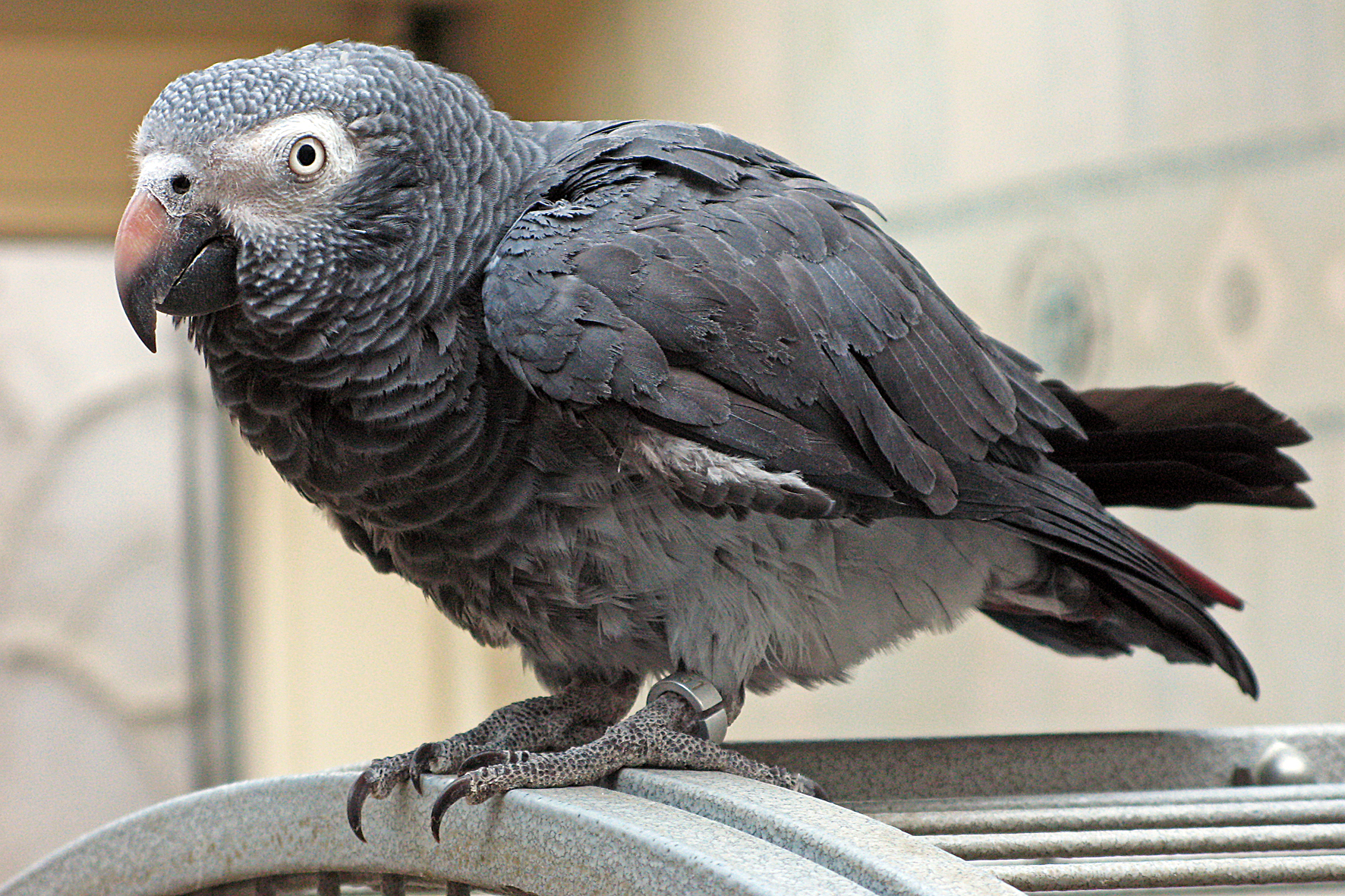
A slightly smaller, darker cousin of the Congo grey with a maroon tail and horn-colored upper beak, equally renowned for its talking ability and demanding cognitive needs. Often considered a touch more even-tempered and less prone to phobic behavior than the Congo.
ℹ️
Educational only. KinStation content is reviewed by licensed veterinarians but cannot replace an in-person exam. Always consult a licensed veterinarian or board-certified specialist for diagnosis, treatment, or any decision affecting your pet's health.
🩺 Need expert help with your timneh african grey?
Connect with a specialist near you or ask a licensed vet — never substitute online guidance for hands-on care in an emergency.
From the minimum an animal needs to be kept humanely, up to the ideal setup. Bigger is almost always better — minimums are floors, not targets.
Photo coming soon
Minimum
Single-bird flight cage
32 × 24 × 42 in, bar spacing 3/4–1 in
Timneh greys are slightly smaller than Congos but equally intelligent and sensitive. Provide a flight cage of ≥ 32 × 24 in, varied natural perches, abundant foraging and shredding toys, and a calcium/UVB consideration (greys are prone to hypocalcaemia).
Photo coming soon
Recommended
Large flight cage + foraging
40 × 30 × 60 in flight cage
Larger flight cage with rotating foraging puzzles, destructible toys, a bathing dish, and several hours of supervised out-of-cage time and mental enrichment daily. Maintain 18–24 °C and 10–12 h sleep schedule.
Photo coming soon
Ideal
Walk-in aviary or bird room
Walk-in aviary or dedicated bird room (≥ 6 ft long)
Walk-in aviary or bird-safe room with real flight, natural branches, foraging substrate, bathing, and UVB or sunlight access. A bonded mate or near-constant companionship prevents the plucking and anxiety greys are famous for.
Life & growth stages
How this animal changes through its life — each stage often has its own care, diet and space needs.
Photo coming soon
Egg
Birds develop inside a hard-shelled egg incubated by the parent(s). Egg size, shell color, and clutch size vary by species; the embryo develops over days to weeks before hatching.
Photo coming soon
Hatchling / Chick
Hatchlings are either altricial — naked, blind, and dependent on parents (typical of parrots and songbirds) — or precocial — downy, mobile, and self-feeding soon after hatching (typical of poultry and waterfowl). Down gives way to the first feathers.
Photo coming soon
Juvenile / Fledgling
Fledglings grow in their juvenile plumage and begin to fly and feed themselves, though they may still beg from parents at first. Juvenile feathering is often duller than the adult and is replaced as the bird matures.
Adult
Adults attain full body size and mature plumage, and are capable of breeding. Many species show distinct adult coloration, and in sexually dimorphic birds males and females differ in plumage, size, or markings.
Habitat & enclosure
Provide the largest cage you can accommodate, at minimum about 90 x 60 x 90 cm (36 x 24 x 36 in) with bar spacing of 1.6-2 cm, though a flight cage or dedicated bird room is far better for a bird this active. Use varied natural-wood perches of differing diameters to exercise the feet, plus stainless or powder-coated cage hardware, and place the cage against a wall in a busy but not chaotic part of the home so the bird feels secure yet socially included.
Greys are tropical West African forest and savanna birds and do best at normal comfortable room temperatures of about 18-26 C (65-80 F), out of drafts and away from kitchen fumes (Teflon/PTFE off-gassing is rapidly fatal). They need 10-12 hours of dark, quiet sleep, ideally in a covered cage or separate sleep cage, and regular exposure to natural light or full-spectrum lighting to support vitamin D and feather condition. Frequent bathing or misting helps maintain their notoriously powdery plumage.
Substrate
A pull-out tray lined with newspaper or recycled-paper bedding, changed daily, keeps the cage hygienic without dust that can irritate their sensitive respiratory tract. Skip corncob and walnut-shell litter, which can harbor mold (Aspergillus), to which greys are especially susceptible.
Equipment & setup
Provide a roomy cage with horizontal bars for climbing, varied natural-wood and rope perches, and full-spectrum (UVB) lighting to support vitamin D and calcium metabolism, since greys are prone to hypocalcemia. Maintain moderate humidity, offer regular bathing or misting, and run an air purifier to manage feather dust.
Diet
Base the diet on a high-quality formulated pellet (ideally 60-70% of intake) supplemented with generous fresh vegetables, leafy greens, and limited fruit. African greys are especially prone to dietary calcium deficiency, so offer calcium-rich greens (kale, dandelion, broccoli) and ensure adequate vitamin D from sunlight or full-spectrum light to aid calcium absorption; a cuttlebone or mineral block can help. Cooked legumes, sprouted seeds, and whole grains add variety.
Avoid all-seed diets, which cause obesity, fatty liver, and hypocalcemia. Never feed avocado, chocolate, caffeine, alcohol, or high-salt foods. Provide clean water daily and use foraging toys and puzzle feeders to make the bird work for portions of its food, which supports both nutrition and psychological health.
Behavior & temperament
Timneh greys are extraordinarily intelligent, sensitive, and observant. They bond deeply with their people, read household moods, and are famous mimics that often use words in context. They tend to be somewhat less neophobic and quicker to settle into new homes than Congo greys, but they are still reserved birds that prefer routine and gentle, predictable handling over rough play.
Enrichment is not optional. Without abundant foraging opportunities, shreddable toys, training sessions, and daily out-of-cage time, greys readily develop feather-destructive behavior, screaming, or anxiety. Positive-reinforcement training, rotating novel toys, and consistent social interaction keep them mentally healthy. They are sensitive to change and benefit from a calm, stable environment.
Health
The signature health problem is hypocalcemia (low blood calcium), which can cause seizures, weakness, and trembling, driven by poor diet and inadequate vitamin D; prevention is a balanced pelleted diet plus UVB/full-spectrum light. Greys are also predisposed to feather-destructive behavior, respiratory disease from airborne toxins and their own feather dust (consider an air purifier), aspergillosis, and obesity or fatty liver disease on seed diets.
They can carry psittacine beak and feather disease (PBFD) and are susceptible to vitamin A deficiency. Schedule annual avian-vet wellness exams with baseline bloodwork, quarantine new birds, and watch for any change in droppings, appetite, weight, or feather condition as early warning signs. (Health information is educational only and not a substitute for veterinary care.)
Tips, DIY & hacks
Greys are highly intelligent and need daily foraging and puzzle enrichment, like food hidden in paper twists or foraging wheels, to prevent feather-destructive behavior. Feed a pelleted base with vegetables and a little nut/seed, and ensure dietary calcium plus UVB exposure to head off seizures from low blood calcium.