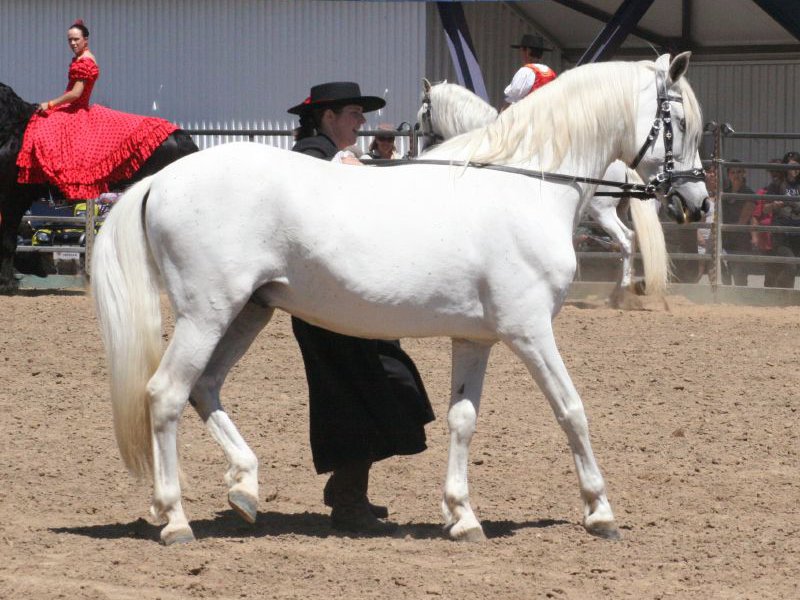
The Andalusian, or Pura Raza Española, is an elegant, strongly-built Iberian horse famed for its arched neck, abundant mane and tail, and natural aptitude for collected dressage and classical riding. Noble, sensitive, and highly trainable.
ℹ️
Educational only. KinStation content is reviewed by licensed veterinarians but cannot replace an in-person exam. Always consult a licensed veterinarian or board-certified specialist for diagnosis, treatment, or any decision affecting your pet's health.
🩺 Need expert help with your andalusian?
Connect with a specialist near you or ask a licensed vet — never substitute online guidance for hands-on care in an emergency.
From the minimum an animal needs to be kept humanely, up to the ideal setup. Bigger is almost always better — minimums are floors, not targets.
Photo coming soon
Minimum
Box stall + turnout + shed
12×12 ft stall + 1 ac turnout + run-in shed
Iberian horses meet the same welfare floor as any light riding horse: 12×12 ft stall, 1+ acre of daily turnout, a shed, and a companion. Heavy manes and tails need daily grooming but do not change the housing footprint.
Photo coming soon
Recommended
Stall + pasture + schooling arena
12×12 ft stall + 2–3 ac pasture + schooling arena
Classical training thrives with a covered schooling arena, mirrors, and good footing alongside 2–3 acres of rotated pasture and a small herd. Iberians are intelligent and hot-blooded — daily work plus generous turnout prevents boredom-driven stable vices.
Photo coming soon
Ideal
Classical dressage facility + herd
Barn + 5+ ac/horse + classical dressage arena
Dedicated classical-dressage facility: barn, indoor + outdoor arenas with quality footing, multi-paddock rotation on 5+ acres per horse, and a stable companion herd. Regular farrier and bodywork support the collected, high-impulsion movement these breeds are bred for.
Life & growth stages
How this animal changes through its life — each stage often has its own care, diet and space needs.
Photo coming soon
Newborn
Newborn mammals are nursed on their mother's milk. Many are born helpless — blind, deaf, and sparsely furred (altricial, as in dogs, cats, and rodents) — while others stand and follow within hours (precocial, as in hoofed livestock).
Photo coming soon
Juvenile
After weaning, juveniles grow quickly and become increasingly active, playful, and independent. Adult coat, proportions, and (in many species) the permanent teeth come in as they approach full size.
Photo coming soon
Adult
Adults reach full body size and sexual maturity, with the species' mature coat and build. Sexual dimorphism — differences in size, mane, horns, or markings — is pronounced in some mammals and subtle in others.
Senior
Senior animals show aging signs such as graying fur, reduced activity, and a greater need for veterinary monitoring of joints, teeth, and organ function. Lifespan and the onset of old age vary widely by species and size.
Color & pattern variants
Natural variants occur in the wild; selectively bred (man-made) variants were developed in captivity.
Suited to stabling with daily turnout or pasture-plus-shelter living. Provide a 12x12 ft (3.7x3.7 m) stall, secure fencing, and dry footing. Their luxuriant manes and tails benefit from clean, mud-managed paddocks. Tolerates a range of climates but appreciates shade in heat and a run-in shelter in wet or cold conditions.
Diet
Good-quality hay or pasture as the dietary base (1.5-2.5% of body weight daily), with concentrates matched to workload. Andalusians are reasonably easy keepers, so monitor body condition and restrict rich feed to avoid obesity and laminitis. Provide a salt/mineral source and constant fresh water.
Behavior & temperament
Purpose: classical and competitive dressage, show, driving, working equitation, bullfighting heritage, and parade/exhibition. Temperament is sensitive, intelligent, proud, and people-oriented; they bond closely with handlers and excel at collected, animated movement. Generally docile and willing but responsive enough to reward skilled, consistent training.
Health
Broadly healthy and long-lived. Reported breed predispositions include a relatively higher incidence of small-intestinal colic (including some inherited risk) and laminitis if overfed. Some lines carry conformation traits to monitor; routine dental, hoof, and parasite care apply. Buy from registries that screen for soundness and genetic disorders.
Tips, DIY & hacks
Reward their sensitivity with calm, fair, progressive training — harshness backfires. Their thick manes and tails need regular detangling and protection from mud and burrs. Body-condition score regularly to prevent obesity. PRE registration (ANCCE/LG) documents pedigree and is worth verifying when buying.