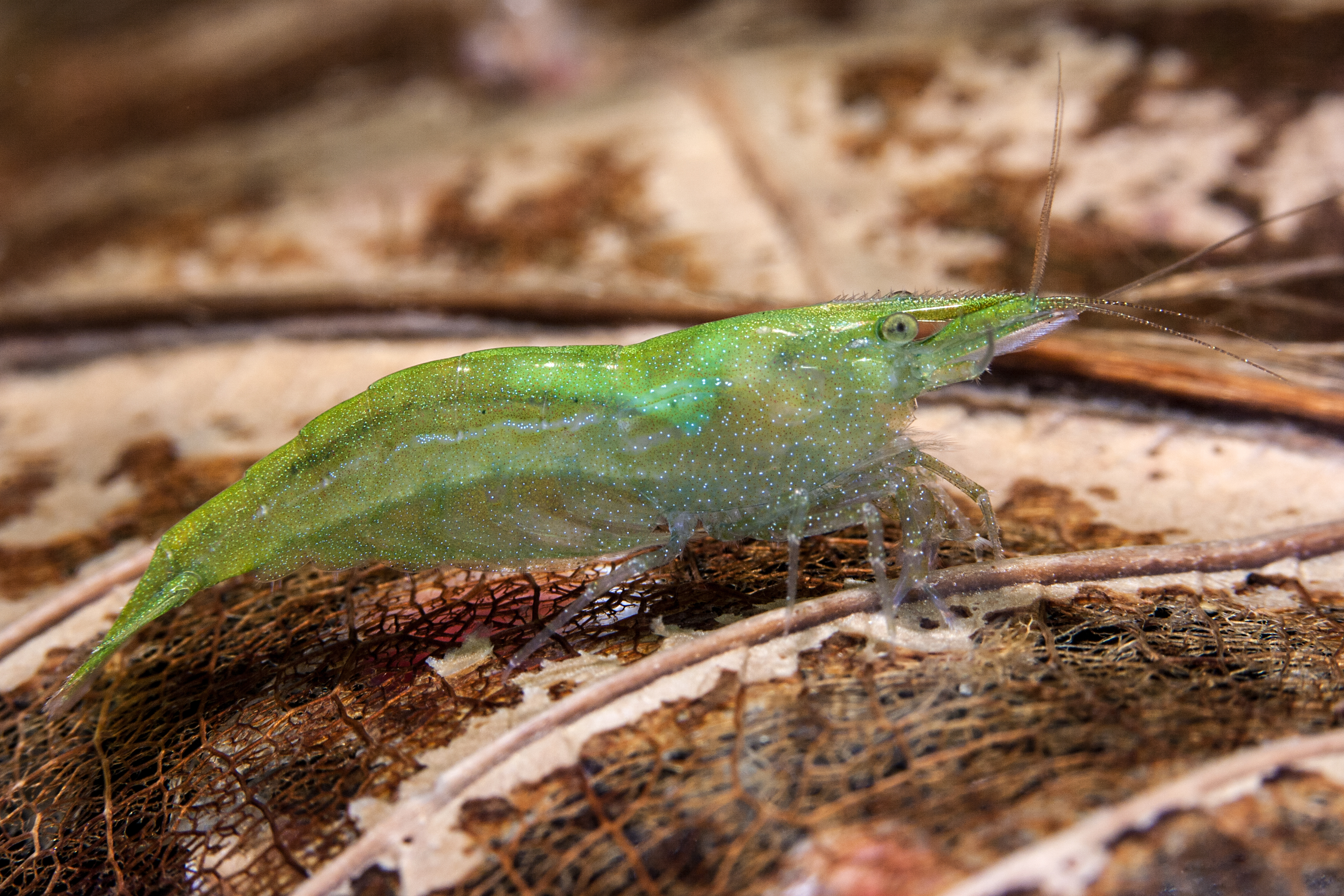
The babaulti is a slender, color-shifting Indian dwarf shrimp best known for its green form, the 'green neon' or 'green babaulti.' Hardy and prolific once established, it can change shade with mood, diet and surroundings, and unlike many Caridina its young develop directly in freshwater with no brackish-larval stage — making it far easier to breed than crystal or tiger shrimp.
ℹ️
Educational only. KinStation content is reviewed by licensed veterinarians but cannot replace an in-person exam. Always consult a licensed veterinarian or board-certified specialist for diagnosis, treatment, or any decision affecting your pet's health.
🩺 Need expert help with your babaulti shrimp?
Connect with a specialist near you or ask a licensed vet — never substitute online guidance for hands-on care in an emergency.
Adults about 2.5-4 cm (1-1.5 in); slim-bodied with a long serrated rostrum.
Lifespan
1–2 years
Social needs
group
Native region
Freshwaters of central India to Malaya, west toward Iraq
Origin
Old World
Climate
🌴 Tropical
Water type
💧 Freshwater
Family
Atyidae
Genus
Caridina
Part of the Freshwater shrimp
Small atyid and palaemonid shrimp kept in planted aquariums as peaceful algae-grazers and colorful colony animals. Care ranges from beginner-friendly Neocaridina to demanding species like the Sulawesi shrimp that need precise, stable water chemistry.
How this animal changes through its life — each stage often has its own care, diet and space needs.
Photo coming soon
Larva
Most marine invertebrates hatch into microscopic planktonic larvae (such as the zoea of crustaceans or the bipinnaria/veliger of echinoderms and mollusks) that drift and feed in the water column. The larva looks nothing like the adult and undergoes major reorganization.
Photo coming soon
Juvenile
After settling out of the plankton, the juvenile takes on a recognizable miniature of the adult body plan — a tiny shell, a small star, or a translucent shrimp. Crustaceans grow by molting, shedding the exoskeleton to enlarge.
Photo coming soon
Adult
Adults reach full size and reproductive maturity with the species' mature shell, shape, or coloration. Many continue to molt or grow throughout life, and some show sex differences in size or claw/appendage shape.
Color & pattern variants
Natural variants occur in the wild; selectively bred (man-made) variants were developed in captivity.
Natural
representative
Green
The trade-favorite 'green neon' / 'green babaulti' form, ranging from olive to vivid green; intensity shifts with mood, diet and surroundings. A natural color form, not a bred strain.
representative
Brown / Zebra
The wild-type brownish form, often showing faint stripes — the 'zebra' or 'stripe' look — that this species commonly reverts toward.
representative
Red / Yellow
Less common naturally occurring reddish or yellowish individuals; color in this species is famously changeable rather than fixed.
Habitat & enclosure
A cycled, planted tank of 20 L (5 gal) or more comfortably holds a starter colony; larger tanks give more stable color and breeding. It is forgiving for a Caridina and does not need active buffering substrate: temperature 24-28 C (75-82 F), pH 6.5-7.5 (tolerating roughly 6.2-8.0), GH 4-8, KH 3-8, TDS around 100-150 ppm. Provide gentle flow, dense mosses, leaf litter and floating plants for grazing and cover; mature, biofilm-rich tanks suit it best, as freshly imported stock can be fragile.
It is native to fresh streams and ponds from central India through to Malaya, extending west toward Iraq.
Substrate
Inert substrates (sand, fine gravel) work well and it does not require an active buffering soil the way crystal/bee shrimp do. A mature layer rich in biofilm, topped with mosses and leaf litter, provides ideal grazing for shrimplets and adults.
Equipment & setup
A gently filtered, heated nano tank is enough: sponge or pre-filtered intake (so shrimplets aren't drawn in), a heater for stable tropical temperature, and modest light to grow the plants and biofilm it grazes. No special lighting or dosing beyond steady GH/mineral replenishment.
Diet
An opportunistic grazer of algae, biofilm and detritus that constantly works plants, rock and substrate. Supplement a mature tank with shrimp pellets, blanched vegetables (spinach, zucchini), leaf litter (Indian almond/oak) and the occasional sinking algae wafer. Avoid overfeeding, which fouls the soft, stable water dwarf shrimp need.
Behavior & temperament
Peaceful, social and busy; keep 10+ for natural behavior and the best color, which can shift between green, brown, red and yellow tones. Completely plant-safe and an excellent nano cleanup crew, but shrimplets are eaten by most fish, so pair only with tiny peaceful nano fish, snails, or keep species-only. It does not interbreed with Neocaridina (different genus), and within Caridina it keeps to its own line, so color stays relatively true.
Health
Like all dwarf shrimp it is extremely sensitive to copper, which is lethal even in trace amounts, so avoid copper-based fish medications, untested plant fertilizers and copper plumbing. Stable GH and a steady mineral supply are essential for clean molting; failed molts (the 'white ring of death') usually trace to GH swings, sudden water changes or poor diet. Drip-acclimate slowly, as imports are touchy until settled. (Educational only, not a substitute for advice from an aquatic veterinarian.)
Tips, DIY & hacks
Drip-acclimate over 30-60 minutes when introducing it to new water. Because larvae develop directly in freshwater, a settled colony breeds on its own with no special setup — a 'berried' female carries eggs under her tail for about a month. Keep GH steady and feed sparingly; mature, biofilm-rich tanks are the difference between a thriving colony and slow losses.
Reviewed and signed off by: KinStation Editorial — pre-launch draft (pending DVM review) on 2026-06-09